

Tariq Mehmood
Tariq Mehmood is an award winning novelist and documentary film-maker. His first novel, Hand On the Sun (London: Penguin Books, 1983), dealt with the experience of the resistance to racism by young migrant to the UK of the 1970s and…
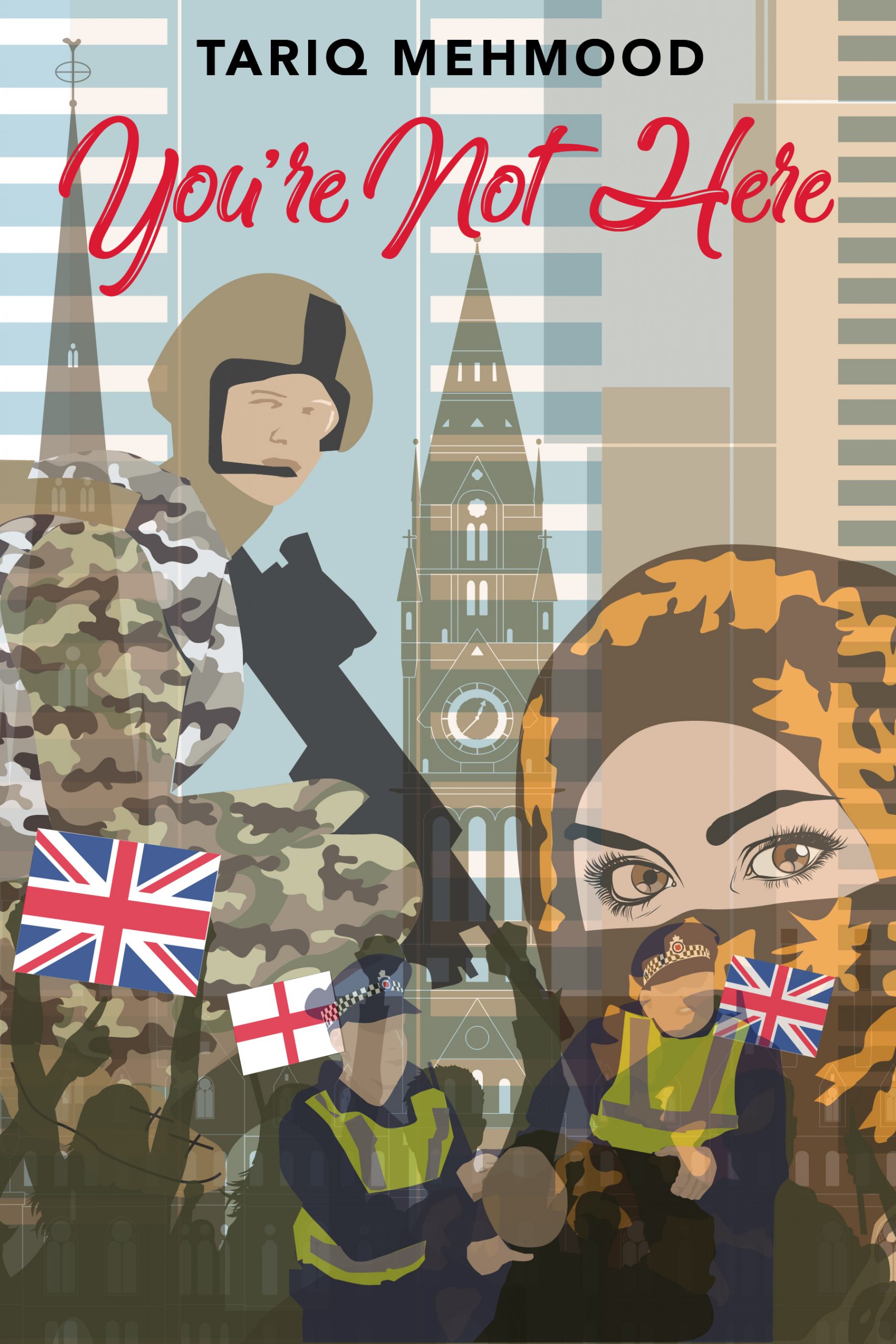
One brother goes missing in action in Afghanistan, the other falls in love with an Afghan girl in England.
Bitter divisions engulf an English town where young Muslims oppose the British army’s presence in Afghanistan, whilst white youth condemn the Muslims as traitors.
To the disgust of his white friends, 17-year-old Jake Marlesden, whose brother is missing in action in Afghanistan, is in love with Leila Khan, an Afghan. When Jake tries to find out what happened to his brother, neighbour turns against neighbour and lover against lover.
Leila joins young Muslims protesting against the returning bodies of dead British soldiers, and Jake stands with the families of the soldiers. The lovers fall apart.
But far off events, and sinister forces at home, bring the lovers together again in a journey in which they will not only discover themselves, but also heal the wounds of their families and friends.
This is the sequel to You’re Not Proper.
USD $ 5 USD $ 20Price range: USD $ 5 through USD $ 20
Tariq Mehmood is an award winning novelist and documentary film-maker. His first novel, Hand On the Sun (London: Penguin Books, 1983), dealt with the experience of the resistance to racism by young migrant to the UK of the 1970s and…
One brother goes missing in action in Afghanistan, the other falls in love with an Afghan girl in England.
Bitter divisions engulf an English town where young Muslims oppose the British army’s presence in Afghanistan, whilst white youth condemn the Muslims as traitors.
To the disgust of his white friends, 17-year-old Jake Marlesden, whose brother is missing in action in Afghanistan, is in love with Leila Khan, an Afghan. When Jake tries to find out what happened to his brother, neighbour turns against neighbour and lover against lover.
Leila joins young Muslims protesting against the returning bodies of dead British soldiers, and Jake stands with the families of the soldiers. The lovers fall apart.
But far off events, and sinister forces at home, bring the lovers together again in a journey in which they will not only discover themselves, but also heal the wounds of their families and friends.
This is the sequel to You’re Not Proper.
| Book Format | Print Book, PDF |
|---|
Only logged in customers who have purchased this product may leave a review.
A wave of mass protest movements has spread across North Africa and West Asia, including Sudan, Algeria, Iraq, Lebanon and Iran. The mass protests have much in common, from opposing authoritarian regimes and worsening economic situations to demanding radical changes in social relations. Despite their similarities, each protest movement operates under different conditions that cannot be ignored. The specific historic, political and economic contexts of each country have determined who the key actors of the uprisings are and their location across old and new divides. This book elaborates on these similarities and differences to paint a clearer picture of these movements and draw out lessons to inform future struggles.

Kitabu hiki kinaturudisha katika kipindi cha kusisimuwa cha miaka ya vita baridi, kipindi ambacho, sambamba na kipindi cha leo, madola ya kibeberu yamekuwa yakifanya njama za kubadilisha serikali zilizokuwepo na kuziweka madarakani zile zenye kufuata amri. Kwa kutumia kumbukumbu za picha za Johari, nyaraka za siri za Marekani na Uingereza, pamoja na mahojiano ya kina, kitabu kinatowa uchambuzi juu ya nafasi na satwa ya Chama cha Umma Party nchini Zanzibar na kiongozi wake mwenye upeo mkubwa wa mambo, Mwanamapinduzi mfuasi wa Itikadi ya Karl Marx, Abdulrahman Mohamed Babu. Kwa kuangalia kwa njia ya uwiano wa mifano inayokwenda sambamba ya wahka wa Marekani kuhusu Uchina ya Kikomunisti katika miaka ya 1960 na woga walionao hivi sasa kuhusu ushawishi wa Uchina, kitabu kinatafakari juu ya mivutano mipya iliyopo katika kupigania rasilmali za Afrika, kuundwa kwa kikosi cha AFRICOM, na jinsi Wanasiasa wa Afrika Mashariki wanavyoshiriki katika kuimarisha udhibiti wa Marekani katika nchi zao, na “Vita dhidi ya Ugaidi” katika ukanda wa Afrika Mashariki hivi sasa.
Now available from Mkuki Na Nyota Publishers, Tanzania: http://www.mkukinanyota.com
These poems by Issa Shivji, lawyer, activist and Tanzanian public intellectual, were written at different times in different circumstances. They give vent to personal anguish and political anger. Mostly originally written in Kiswahili, here accompanied by English translations, and they are intensely personal and political.
Poems are clustered under several headings to provide a context. The first combines personal agony at the loss of comrades and friends with poems about love and affection for living ones. The second is about robberies of freedom, resources, and dignity and the loss of justice under neoliberalism. The third section, entitled Hopes and Fears, comprises short poems tweeted over the last five years expressing despair, fear and hope in the human capacity for freedom.
The last section are poems, concerned with Shivji’s period in South Africa in 2018, reflect on the emergence of neo-apartheid with its wanton and shameless exploitation of the majority.
Wonderfully translated by Ida Hadjivayanis.

We inhabit extraordinary times: times in which we are acutely aware of the intensity of what revolutionary thinker Frantz Fanon called “the glare of history’s floodlights.” The velocity and scale at which the revolt against police murder that began in Minnesota after the death of George Floyd on May 25th and moved throughout the US, and then other parts of the world, was astonishing. It was impossible to predict, but then, in retrospect, it is George Floyd’s death becomes a nodal point: calling for action as well as rethinking and self-clarification. Thinking about this moment with the world revolutionary Frantz Fanon, we need to be aware of continuities and discontinuities — or, as he puts it, opacities — between the ages, his and ours. Fanon is always speaking to us, but often in ways we cannot hear. We have to work to listen to him and to understand the new contexts and meanings in relative opacity. It is this constant dialogue that helps illuminate the present and enable ongoing fidelity to Fanon’s call in the conclusion of The Wretched of the Earth the necessity to work out new concepts to confront one of Fanon’s greatest concerns, the betrayal of the revolutionary movement. In this pamphlet we consider how Fanon’s idea of liberation is connected with “the rationality of revolt.” The practice of engaging Fanon not only with revolt but with the reason or rationality of revolt connects with Fanon’s idea of how this liberated humanity is a product of a new consciousness of collectivity open to rethink everything.
The volume includes two sections exploring nonviolence in the long Black freedom struggle within the US. From Ella Baker to Martin Luther King, Jr. and Fannie Lou Hamer, from Vincent Harding and Grace Lee Boggs to Colin Kaepernick, the two sections on the Black liberation movement highlight the theory of nonviolence in direct and indirect ways and foreground the relevance of these historic texts for the present moment of political uprisings on both the left and the right. Black strategies for survival and power are analyzed in terms of the ongoing US economic and epidemiological crises as well as the global climate crisis and ecological collapse. A section on revolutionary nonviolence in Africa presents a previously unpublished piece on the role of armed struggle by Franz Fanon, as well as essays by Amilcar Cabral, Barbara Deming, Graca Machel, Kenneth Kaunda, and Nozizwe Madlala-Routledge This section clearly contextualizes the continent’s anti-colonial struggles with the practical thinking about military and unarmed tactics which those movements faced over the course of a half-century.
The section on nonviolence and feminist struggle highlight the work of Grace Paley, Audre Lorde, and Arundhati Roy, along with a little-read piece by Johnnie Tilmon, a leader of the 1960s welfare rights movement. The section on resistance against empire tilts toward Latin American scholars/activists with essays by Maria Lugones, Anibla Quijano and Berta Caceres. This section includes pieces that draw from current debates about the role of state power in building towards radical change and the push to build holistic perspectives on what liberation means for all peoples. The final section on social change in the 21st Century reflects on specific aspects of organizing that are facing campaigns and movements of today and tomorrow. Our goal is to provide challenges and insights for building effectively against all forms of oppression! Though primarily compiling key texts not often seen or contextualized together, the book also provides new strategic commentaries from key leaders including Ela Gandhi, Ruby Sales, ecofeminist Ynestra King, Africa World Press’ Kassahun Checole, and Palestinian Quaker Joyce Ajlouney, Hakim Williams, and Mireille Fanon Mèndes-France.

The Travails of a Tanzanian Teacher is a riveting account of the bumpy first decade of the work life of Karim F Hirji, a retired Professor of Medical Statistics. Filled with a distinctive variety of eye-opening episodes, it covers lecturing at the University of Dar es Salaam, the life of a political exile in a remote rural area and the challenges of setting up from scratch a one-of-a-kind educational institute in Africa. With a style that seamlessly combines the personal with the general, Hirji provides an illuminating description of different aspects of the Tanzanian political, educational, economic and rural landscape during the 1970s. Starting with a commentary on teacher training, he concludes with a critical comparison of modern university education in the nation with that of the earlier era.
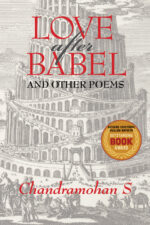
Love after Babel is a collection of poems that deal with themes such as caste, the resistance of Dalit people, Dalit literature, islamophobia and other political themes, with almost one hundred poems divided into three sections (Call Me Ishmail Tonight; Name Me a Word; Love after Babel). The introduction is by Suraj Yengde (award-winning scholar and activist from India, author of the bestseller Caste Matters, inaugural postdoctoral fellow at the Initiative for Institutional Anti-racism and Accountability, Shorenstein Center on Media, Politics and Public Policy at the Harvard Kennedy School).
Chandramohan’s poems are dialogues of the ‘ self’ with the ‘other’. He brings to life a world that subverts myths, literary canons, gender and caste stereotypes by pooling in sparklingly new metaphors with sensitivity and care. He draws his images from contemporary incidents as well as myths and legends of yore, and delves deep into the politicized realm, thus ‘rupturing the hymen of demarcations’ of identity, resistance, repression and love.

어떻게 자본주의를 넘어설 것인가라는 질문에 대한 답을, 지금 우리가 “감히” 찾아보려고 한다. 이 소책자를 통해, 자본주의를 벗어나 생태사회주의로 향하는 길을 찾는 우리의 노력이 뚜렷해지길 바란다.
자본주의에 갇힌 우리는, 어떤 형태로든 행동 또는 비행동inaction에 관여하고 있다. 행동은, 자본주의를 직접 마주하기 보다는 자본주의가 초래하는 심각한 여러 문제를 개선하기 위한 투쟁에 참여하는 모습을 띈다. 즉, 우리의 행동은 원인이 아니라 결과에 초점을 맞추는 모순을 보인다.
반면, 비행동은 동의를 의미하게 된다. 우리는 자본주의 경제 체계를 영속시키는 경제 활동에 문제 제기를 하거나 변화를 요구하는 행동을 하지 않음으로써 자본주의에 [암묵적으로] 동의하고 있다. 결과적으로 평범한 우리가 자본주의에 봉사하는 자본가 역할을 계속하고 있는 것이다.
왜 자본주의 억압의 대상인 우리가 억압에 동의하는가? 그 이유가 단지 [외부의] 탄압 때문만은 아니라고, 이탈리아 파시즘 하의 감옥에서 그람시Antonio Gramci는 말했다. 즉, “헤게모니”를 장악하는 이념이 우리의 삶을 둘러싼 억압적인 환경을 설명하고 정당화하는 것이다.
“소소한 혁명”은, 개개인의 삶 속에서, 쉽고 안전하게, 엄청 근사하지는 않지만 일상적이고 실천가능한 행동과 비행동을 얘기한다. 지금까지의 혁명사는, 혁명을 가능하게 했던 전체 민중보다는 소수의 혁명가에 주목했었지만, 자본주의에 맞서는 “우리는” 마르크스나 엥겔스가 떠올렸던 주인공들보다 훨씬 다양하고 규모가 커졌다. 자본주의를 수호하기 위해 싸우는 “그들은” 전 세계 인구의 극소수일 뿐이다.
자본주의의 어떤 특징이 억압적이고 그래서 제거되어야 하는지, 또 반대로 어떤 사회경제구조의 특징이 억압적이지 않으며 그래서 남겨져야 하는지를 뚜렷이 설명하는 전략이 필요하다. 자본주의 이후 사회가 어떤 모습이어야 할지는 점점 명확해지고 있다. 소소한 혁명은, 자본주의의 영속과 발전에 필수적인 과정에 대한 우리의 동의를 거두는 데에서 시작하여, 수 백 만의 우리가, 여전히 적은 소수이긴 하지만, 건설적인 혹은 파괴적인 노력에 창의적으로 참여할 수 있는 방법 또한 포함한다.
세상은 자본주의 그 이후로 이미 진행 중이다. 세계 곳곳에서 창의적인 모습의 공동체communal organization들이 생겨나 스스로 통치하고 구성원들의 생존과 안녕을 보장하기 위해 활동하고 있다. 복지 국가를 포함한 자본주의 국가를 넘어서는 것은 국가 자체를 넘어서는 결과로 이어진다. 연대 경제solidarity economy는 먼저, 소규모의 협동조합 성격을 띄는, 저렴하고 유쾌하고 편안한 주거 공간을 구성하는 방법을 모색하여, 착취적인 임대료, 빚, 세금, 보험에 대한 공동의 해결책을 제시한다. 또한 이러한 공동체는, 영양이 풍부한 먹거리를 지역에서 생산하여 유통하는 방법으로, 자본주의식 농업으로부터 독립을 꾀할 수 있다.
창조적 파괴는, 허가를 받아 하는 대규모의 시위가 아니라 자본주의가 순조롭게 기능할 수 없게 멈추거나 둔화시키는 직접 행동으로 가능하게 된다. 우리가 투자나 세금으로 흘러가게 내버려 두는 돈의 흐름을 비자본주의적인 연대경제에 돌리는 것도 창조적 파괴의 한 방법이다.
소소한 혁명은, 간단하고 안전하며, 자신의 삶을 조금이라도 바꾸고 싶은 의지가 있는 사람이라면 실천가능하다. 자본주의가 우리의 안녕과 행복을 파괴하는 체계라는 것을 알면서도, 부지불식간에 자본주의를 지지하고 동의하는 행동을 멈추는 즐거움을 누릴 수 있다. 놀랍게도 혁명을 위해 다치거나 죽지 않아도 되고, 심지어 큰 불편을 감수하지 않아도 된다. 우리가 해야 할 일은 단 하나. 어차피 하기 싫었던 여러 일들을 이제 정말 그만두는 것이다.
DarajaPress uses Accessibility Checker to monitor our website's accessibility.
Daraja Press
http://socialistreview.org.uk/438/youre-not-here
Set in and around Manchester, You’re Not Here is informed by Mehmood’s experience of growing up a working class Pakistani in northern England, combatting racism on the streets and being arrested. The novel explores the British Asian experience in the context of the “war on terror” and Islamophobia. “I have lived and fought against various waves of racism in Britain, but the current Islamophobic one, the new racism, is far more insidious and divisive than those which preceded it,” says Mehmood in his blog.
This novel is a sequel to You’re Not Proper, which explored, in the author’s words, “what it is to be a Muslim teenager in the west today”. While it featured two teenage women’s search for identity and belonging — one with a Pakistani father and white Christian mother, the other her Hijab-wearing school friend — Mehmood’s sequel is, interestingly, told from the point of view of a white working class British youth.
Jake’s father was in the army. His elder brother is missing in action in Afghanistan. Jake is in love with a Muslim girl. We are introduced to diverse Asian characters and to white racist friends of his brother, and to the tensions both within and between the two communities, through Jake’s eyes.
While the novel reads like a pacey thriller, the teenage love story is treated with convincing tenderness. And there is sympathy for British soldiers. One scene features physically and mentally scarred ex-soldiers discarded by the state, and Military Friends and Families Against War make an appearance.
Daraja Press
Tariq Mehmood’s new novel is uncompromising but hopeful in its portrait of the impact of the war in Afghanistan on a northern city in Britain, finds Sarbjit Johal
https://www.counterfire.org/articles/book-reviews/20045-you-re-not-here-book-review
Sarbjit Johal December 20, 2018
mehmood_novel.jpg
Tariq Mehmood, You’re Not Here (Daraja Press 2018), 238pp.
‘I feel her words more than I hear them’.
Tariq Mehmood’s latest novel, You’re Not Here, is set in Boarhead, an imaginary town in the North of England where the main character, seventeen-year-old Jake, lives and works with his Dad, who is a traditional white working-class carpenter. However, Boarhead is a place where people defy all stereotypes and devise creative ways to survive, a place where people
who have for too long been left to their own devices, to defend, protect and look after themselves. So, when the British Army goes into Afghanistan and starts killing Muslims, and destroying their homes, while the bodies of dead soldiers start coming back home, the tensions in Boarhead erupt out into the open. Young Muslims become angry and upset, and the white youth start giving their support to this horrific war, and start calling the Muslim youth ‘traitors’ for not supporting the British Soldiers.
While Jake’s brother, Dexy, goes to fight in Afghanistan, Jake falls in love with Leila Khan, an Afghan girl living in Boarhead. It is through this contradictory thread that Tariq Mehmood explores what it means to have a national identity, to be a real man and to really belong in a country which is always waging wars. From the name of the town Boarhead (pig’s head) to the names of roads and buildings (St Enoch’s Road, the Queen Victoria statue, and the cafe where the menu lists Vindaloo Porky to Trotter Tikka (opened by Curly, who can neither read nor write, and spent most of his life on the dole), Boarhead is a place facing economic decline where race, racism and present-day war shapes everything.
The novel raises questions about what is culture? What is Asian, and what is English? What happens when people do not fit their stereotypes? And how to create a people’s culture of resistance? It shows how war strengthens racism, how it affects who dies, who lives, who gets a job and who doesn’t, who belongs, who doesn’t and what happens when people dare to defy orders, refuse to follow the duty forced on them and decide to determine their own lives.
Surviving destruction and loss
It reveals the struggle of people whose lives once destroyed by war are again wiped out in the West, like the maths professor from Iraq, who is a taxi driver in Boarhead. His university in Iraq was bombed to bits and in Boarhead he is seen as a Pakistani, when in actual fact he is a Christian Arab. You’re Not Here refers to all those loved ones who are gone or missing, and in Jake’s case it refers to his mother, brother and the longing he feels for Leila. You’re Not Here shows the things people hold on to when everything else is falling apart and nothing makes sense. For example, Jake’s father starts reading the Bible when he loses his job.
The people in Boarhead have cast and recast themselves in a constantly changing backdrop. This is a place where old Victorian mills have been knocked down to be replaced by shops like Asda and new private flats for sale, and the only place where you can have any privacy is a graveyard in an unused church.
Whether it’s food, clothes, language, looks, nothing here conforms to any static idea of culture. The chapter, ‘Doris’s Kebabs’, where Jake meets Leila’s father, is absolutely hilarious. Leila’s father, who has green eyes, introduces himself as Peter but Jake finds it difficult to see him as a ‘Peter’ and keeps calling him ‘Sir’. Reading this reminded me of a close uncle who used to be a wrestler in Punjab. After coming to Britain and working in farms and factories in West London, he would insist on being called Peter Singh when his actual name is Pritam Singh.
Jake is also surprised to see Peter drinking alcohol, drinking so much, and drinking it so fast. Whereas Jake, who is expected to drink, doesn’t drink alcohol at all. Peter’s comments on the kebabs he eats, ‘Even my wife can’t make them like Doris’, the way he speaks a mix of English and his own language, give space to a dynamic culture. Peter’s words even challenge the Hindutva fascists in India who portray Muslims as people who kill cows. Peter laments the large number of animals killed in war and expresses his sorrow at the murder of a cow in his village in Afghanistan. A cow which Peter himself had named, a cow whose mother his father had raised, a cow which had been the envy of the village.
Resistance and dissent, great and small
The book is littered with laugh-out-loud moments. The challenge to conventional right-wing culture comes from unconventional places. In one chapter, Abu Khalid, a religious leader criticises the owner of a shop called ‘Paradise Foods’ for displaying his tomatoes and cucumbers in a ‘rude’ way. He asks: ‘How can you do this when there are sisters around,’ and then goes on to accuse the shop keeper of ‘promoting sex and temptation’. Abu Khalid is then confronted by an old Pakistani woman who picks up a cucumber and asks him, ‘Shall I show you what I can do with this?’ Later in the story we learn that this religious leader is linked to some ‘powerful people in high places.’
The story of another character, Ali, is of an Asian shopkeeper who is determined to keep going despite the daily onslaught of racist abuse and armed raids, in an area where there are very few non-white people left. He has even opened a photo-booth inside his off-licence to keep the business alive. Ali is tall, has a six pack and owns a huge Alsatian dog called Twinkle with whom he speaks in Punjabi.
Jake goes to ‘Ali’s Offy’ to get a photo for a visa to Pakistan and to buy a bottle of whisky for his dad. Jake’s dad either drowns his emotions in alcohol, or in his work. When he’s working, Jake’s dad looks like a totally different person, much younger and full of energy and when times get tough, his solution is to work even harder.
For Jake’s father, this pride in the work ethic, this pride in a respectable ‘soldiering’ family is also tied up with how he sees himself as a man. For example, at home, when he cooks, Jake’s dad always manages to burn the food. His opinions of what he thinks of men who cook are made clear in his comments to Jake, who enjoys cooking: ‘You’ll make someone a good wife one day’.
Leila and Jake are both outsiders in their own way. Leila is very articulate and confident in public and constantly challenges Jake, but she comes across as being more deferential in the family. However, Leila does not aspire to be a ‘respectable’ Muslim woman, and Jake does not want to be a ‘respectable’ working-class man. He doesn’t drink, smoke, and is not ‘macho’.
Dexy is the older, protective brother who has Rambo posters in his bedroom, who’s ‘all emotion one minute and off his head the next’. He wears gold rings, hates Muslims and refers to hijabs as tents. But everything is never black and white, and that’s what makes this book interesting. Some soldiers come back from the war with very different perspectives than with which they departed. The novel has a hopeful aspect, even as it highlights destruction and suffering, as some of the characters find unexpected connections and solidarities in growing disillusion and opposition to imperialist war.
The ending is great, but just like real life, it is not a ‘happy ever after’ ending. It would have been interesting to hear more about Ali and his background as well as about Leila’s brothers and mother. Another criticism is that, at times, Jake, the central character, just seems ‘too perfect’. However, the story, the characters, the way the novel is structured, all makes this a really brilliant read.
There are so many powerfully realistic scenes. For example, the passage where Jake goes to find out why his friends have turned against him, really made me empathise with Jake’s pain. This is a singular feature of this novel, the ability to bring together people who are supposed never to meet. Then there is the section where Jake is cooking a stew and you follow the whole process from the chopping stage up to the eating stage, and the tension builds right up. Then there is the bus journey with its details of bus tickets and bus stops along with the ‘policing’ of young people by drivers, which all comes alive as you read it.
There are also some very interesting facts too, like the link between a Scotch Whiskey Brewery and Pakistan, or that there are the soldiers who go to fight wars, and when they die no one ever hears about them. An important and unforgettable feature of this novel is the way in which Tariq Mehmood uses language. There are the funny names like the Mucky Duck pub, Go-East Go West travel agency, and Kurly’s Kurry Kabin. Then there is the technique of joining old words to create new ones like the ‘ohgoddoIhaveto’ look or the ‘Pleasepleaseplease’ and the ‘dontyouworryson’ smile.
Although the novel is aimed at young readers, this book speaks to adults too. It dares to give space to that humanity which connects us all. And it screams out loud:
‘No to Racism,
No to Poverty,
No to War!’
Daraja Press
The narrative is packed with authentic voices, often humorous observations and insights, The novel reads like a thriller. It reaches an action-packed and moving climax, but, unlike a thriller, we are left uneasy about what may happen next.
Helen Goodway, Red Pepper, Summer 2019