In Decolonization and Afro-Feminism, Sylvia Tamale presents a powerful and urgent call for Africa’s intellectual, cultural, and political liberation through an Afro-feminist lens. The book critically examines how colonialism has deeply entrenched systems of oppression—based on race, gender, sexuality, class, and knowledge production—and argues that true decolonization requires more than political independence; it demands a radical rethinking of African identities, histories, and futures.
Tamale challenges Eurocentric and patriarchal frameworks that continue to dominate African societies, institutions, and academia. She explores themes such as:
-
The coloniality of gender and sexuality, using case studies like Caster Semenya to expose how Western norms pathologize African bodies.
-
The importance of intersectionality in understanding overlapping systems of oppression.
-
The role of Afro-ecofeminism in reconnecting African ecological wisdom with social justice.
-
The need to decolonize African academia, law, and family structures to recenter Indigenous knowledge and epistemologies.
-
The potential of Ubuntu as a framework for justice, community, and relationality.
The book is both a scholarly critique and a visionary roadmap, emphasizing that decolonization must be a feminist, inclusive, and holistic project—one that reclaims Africa’s dignity, autonomy, and intellectual sovereignty.
Written with clarity and passion, Decolonization and Afro-Feminism is essential reading for students, activists, scholars, and anyone committed to understanding and advancing Africa’s liberation in the 21st century.








Michael Neocosmos
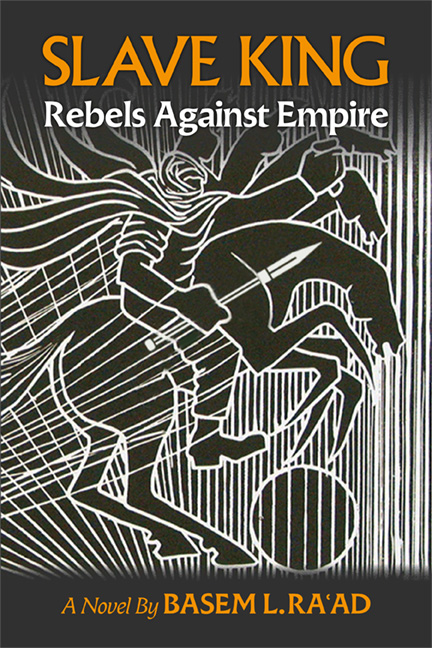
A fictionalized account of a slave rebellion in Roman Sicilia more than sixty years before Spartacus, it tells the story of the slave Younis from Afamia (now in Syria), a mystic and seer who led a great uprising sustained much longer than Spartacus’s. As with the Messinian rebellion against Spartan oppression centuries earlier, the West has been slow to take such events seriously and reinstate their presence in popular culture as expressions of human spirituality and resistance. The role of seers as leaders is reminiscent of Ayi Kwei Armah’s The Healers on ancient Africa. This book is a fascinating and brilliant telling of popular struggle. It is a minor classic. — Michael Neocosmos, Emeritus Professor in Humanities, Rhodes University, South Africa, author of Thinking Freedom; Towards a Theory of Emancipatory Politics
Adrienne Mayor
I highly recommend Basem Ra’ad’s compelling and deeply researched historical novel about the fire-breathing Syrian slave who challenged Roman might in the second century BCE, seeking independence for his thousands of followers. This little-known story of resistance deserves wide attention. … an amazing and important story. — Adrienne Mayor, author, The Poison King: The Life and Legend of Mithradates, Rome’s Deadliest Enemy
Tariq Mehmood
What Basem L. Ra’ad has done in this remarkable novel about slave uprisings against the Roman Empire is to demonstrate how ‘the history of all hitherto existing society is the history of class struggles.’ He shows why the dominant discourse needs to be revised.A moving story that casts light on many of the strifes in our times. — Tariq Mehmood, author, Song of Gulzarina, Associate Professor, American University of Beirut
Hilton Obenzinger
Slave King disrupts two millennia of malign stories about one of antiquity’s original slave revolts. Not cannibals, not demons, but slaves, farmers and herdsmen created a kingdom of equality and compassion. With deep knowledge, Ra’ad re-imagines freedom emerging from Mediterranean multicultural shores. It is a profound re-creation of history in thrilling fiction. —Hilton Obenzinger, author of Witness 2017-2020 and American Palestine: Melville, Twain, and the Holy Land Mania