

Rooted in struggle
Stories from Translocal Social Movement Learning in Ghana, South Africa, Guatemala and Canada
This book presents the work of the Translocal Learning Network (TLN), a social justice framework fostering non-hierarchical connections and mutual learning between localized social movements across the Global South and Canada. It argues that while local movements are most effective at creating tangible change, they often operate in isolation. The TLN bridges this gap, building solidarity among communities in South Africa, Ghana, and Guatemala confronting interconnected crises of social, economic, and environmental injustice. The chapters are written by the movement partners themselves, offering firsthand accounts of their struggles against state-corporate power, extractive industries, and top-down development models. These narratives detail the violent repression, dispossession, and corruption communities face when defending their land, livelihoods, and rights. Key case studies include the fight against a World Bank dam in Guatemala, the resistance to corporate salt mining in Ghana, the shack dwellers’ movement in South Africa, and opposition to large-scale gold mining in Ghana. Through these stories, common themes emerge: the use of state violence to enable corporate imperialism, the failure of nominal democracies to serve the poor, the silencing of subaltern knowledge, and the disproportionate impact on women. Crucially, the book also highlights the alternatives being built—people-centered, sustainable development visions rooted in self-determination, collective action, and grassroots theorizing. It documents how these diverse movements learn from each other’s strategies and analyses, forging a translocal theory of social movement learning that is essential for building powerful, global solidarities to contest unjust development and advance social and environmental justice.

Related products
-

Liberalism and its discontents: Social movements in West Africa
USD $ 25.99The engaging and wide-ranging discussions published here explore contemporary political realities in Africa through a ‘social movement’ lens.
Detailing the nuances of social movement politics in 12 West African countries during the 2010-2013 period, they present a chronicle of the socio-political struggles that have taken place in the region. In so doing, this volume answers key questions related to these movements. What logic drives them? What forms do they take? What has been their political impact? Can we speak of a resurgence of social movements? If so, are these a response to the crisis of ‘representative democracy’? Did they give rise to new forms of expression and democratic participation? What challenges do they bring?
Discontent vis-à-vis liberalism in its political and economic dimensions seems to be the trigger of the numerous popular uprisings and protests that occur in the region. In spite of their ambiguities and limitations, these struggles currently seek to remove a double disconnect: that between citizens and the ‘representatives’ and that between the economy and society, between what capital wants and what the people aspire to.
Ndongo Samba Sylla, the editor of this volume, is a Senegalese economist, programme and research manager at the West Africa Office of the Rosa Luxemburg Foundation. Author of The Fair Trade Scandal. Marketing poverty to benefit the Rich (translated from French by Pluto Press 2014), he is the editor of “Rethinking Development” (Rosa Luxemburg Foundation 2014). His recent research work deals with the history of the word ‘democracy’.
-

Strategic litigation and the struggle for Lesbian, Gay and Bisexual equality in Africa
USD $ 5.00 USD $ 25.00Price range: USD $ 5.00 through USD $ 25.00Select options This product has multiple variants. The options may be chosen on the product page
Strategic litigation and the struggle for Lesbian, Gay and Bisexual equality in Africa
USD $ 5.00 USD $ 25.00Price range: USD $ 5.00 through USD $ 25.00There has been a rise in the use of strategic litigation related to seeking equality for lesbian, gay, and bisexual (LGB) persons. Such developments are taking place against the backdrop of active homophobia in Africa. The law and the general public should, argues the author, treat LGB persons in the same way that heterosexuals are treated. In the past two decades,30 strategic cases have been fi led by LGB activists in the Common Law African countries, namely in Botswana, Kenya, Nigeria, South Africa, and Uganda. While the majority of the cases have been successful, they have not resulted in significant social change in any of the countries. On the contrary, there have been active backlashes, counter-mobilisations, and violence against LGB persons, as well as the further criminalisation of same-sex relations and constitutional prohibitions on same-sex marriages in some of the jurisdictions. The author argues that activists in Common Law Africa have to design LGB strategic litigation in such a way as to fi t within the actual social and political conditions in their countries if strategic litigation is to spur social change.
Adrian Jjuuko is an exceptional scholar. A rare combination of intellectual brilliance, commitment and hard work. The book is born of this. It reflects his incisive analytical skills, anchored in solid knowledge of the law and jurisprudential developments in the field. His ventures into political theory, philosophy, and the social sciences give the analysis additional clarity and empirical grounding.
In Strategic Litigation, Adrian Jjuuko has hugely succeeded in bringing to light pertinent issues regarding LGB rights in the African context today. By making reference to various scholarly works and critical analyses, the author has cleverly driven home the message that progressive decriminalization of LGB relationships and constitutional protection of LGB persons in Common Law Africa should be deliberate steps towards demystifying the erstwhile taboo of LGB persons’ equality and social justice. Yet, Jjuuko throws in a word of caution; societal attitudes towards LGB persons still remain largely negative, as exemplified in pervasive disapproval (including religious) of their rights. This implies that a lot is still required from all stakeholders to demystify and accommodate the social position of the LGB community in Common Law Africa today. Kisito, J. M. (2022). Book Review: Strategic litigation and the struggle for lesbian, gay and bisexual equality in Africa by Adrian Jjuuko. Feminism & Psychology, 32(4), 584-587. https://doi-org.proxy.library.carleton.ca/10.1177/09593535221104876 (Original work published 2022)
Select options This product has multiple variants. The options may be chosen on the product page -

Decolonization and Afro-Feminism
USD $ 8.00 USD $ 30.00Price range: USD $ 8.00 through USD $ 30.00Select options This product has multiple variants. The options may be chosen on the product page
Decolonization and Afro-Feminism
USD $ 8.00 USD $ 30.00Price range: USD $ 8.00 through USD $ 30.00In Decolonization and Afro-Feminism, Sylvia Tamale presents a powerful and urgent call for Africa’s intellectual, cultural, and political liberation through an Afro-feminist lens. The book critically examines how colonialism has deeply entrenched systems of oppression—based on race, gender, sexuality, class, and knowledge production—and argues that true decolonization requires more than political independence; it demands a radical rethinking of African identities, histories, and futures.
Tamale challenges Eurocentric and patriarchal frameworks that continue to dominate African societies, institutions, and academia. She explores themes such as:
-
The coloniality of gender and sexuality, using case studies like Caster Semenya to expose how Western norms pathologize African bodies.
-
The importance of intersectionality in understanding overlapping systems of oppression.
-
The role of Afro-ecofeminism in reconnecting African ecological wisdom with social justice.
-
The need to decolonize African academia, law, and family structures to recenter Indigenous knowledge and epistemologies.
-
The potential of Ubuntu as a framework for justice, community, and relationality.
The book is both a scholarly critique and a visionary roadmap, emphasizing that decolonization must be a feminist, inclusive, and holistic project—one that reclaims Africa’s dignity, autonomy, and intellectual sovereignty.
Written with clarity and passion, Decolonization and Afro-Feminism is essential reading for students, activists, scholars, and anyone committed to understanding and advancing Africa’s liberation in the 21st century.
Select options This product has multiple variants. The options may be chosen on the product page -
-

Under-Education in Africa
USD $ 22.00Select options This product has multiple variants. The options may be chosen on the product page
Under-Education in Africa
USD $ 22.00Under-Education in Africa: From Colonialism to Neoliberalism is a collection of essays on diverse aspects of educational systems that were written over a period of four and a half decades, written from the point of view of an activist educator.
With the focus on Tanzania, they cover education in the German colonial era, the days of Ujamaa socialism and the present neo-liberal times. Themes include the social function of education, the impact of external dependency on education, practical versus academic education, democracy and violence in schools, the role of computers in education, the effect of privatization on higher education, misrepresentation of educational history, good and bad teaching styles, book reading, the teaching of statistics to doctors and student activism in education.
Two essays provide a comparative view of the situation in Tanzania and the USA. Linking the state of the educational system with society as a whole, they explore the possibility of progressive transformation on both fronts. They are based on the author’s experience as a long-term educator, his original research, relevant books, newspaper reports and discussions with colleagues and students.
The author is a retired professor of medical statistics who has taught at colleges and universities in Tanzania and at universities in the USA and Norway.
Select options This product has multiple variants. The options may be chosen on the product page -

Transforming ourselves, Transforming the World: An open conspiracy for social change – Second Edition
USD $ 5.00 USD $ 20.00Price range: USD $ 5.00 through USD $ 20.00Select options This product has multiple variants. The options may be chosen on the product page
Transforming ourselves, Transforming the World: An open conspiracy for social change – Second Edition
USD $ 5.00 USD $ 20.00Price range: USD $ 5.00 through USD $ 20.00This book is for all those—community workers, adult educators, social activists of every kind—who want to overcome pessimism and play a part in changing society in the direction of peace, justice and dignity for all human beings. As author Brian Murphy points out, many of us are pessimistic about our ability to change the world when confronted by the powerful forces of big corporations and big government. Murphy reveals the social and personal dilemmas which hold people back from social engagement, and argues that the various constraints we face can be overcome.
In this new edition, David Austin explains in his Introduction why this book, first published in 1999, is perhaps more relevant to our times than ever, offering insights from his own experiences of engaging critically with the book and with others. And in his Afterword, Brian Murphy reflects on the continued relevance of the original text, emphasizing how our humanity is being corroded and commodified. To reclaim our humanity, he argues, we must transform ourselves to transform the world.
Brian Murphy’s immensely inspiring book,Transforming Ourselves, Transforming the World, deeply challenges us to think and rethink everything we knew and thought we knew.—Nnimmo Bassey, Executive Director, Health of Mother Earth Foundation & Right Livelihood Award Laureate in 2010
We need more conversations like the one in this book, which are rooted in hope while honestly working through a foundational way of seeing and understanding ourselves in the bigger picture.— Christina Warner, Co-Executive Director and Director of Campaigns and Organising, Council of Canadians.
This is one of the coolest, enjoyable and important books I have read in recent years. Written from the heart as well as the head, it is a breathtakingly visionary, unique and insightful take on the life of the ultimate activist.—Hope Chigudu, Feminist activist
Select options This product has multiple variants. The options may be chosen on the product page -
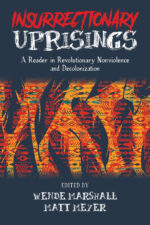
Insurrectionary Uprisings: A Reader in Revolutionary Nonviolence and Decolonization
USD $ 10.00 USD $ 25.00Price range: USD $ 10.00 through USD $ 25.00Select options This product has multiple variants. The options may be chosen on the product page
Insurrectionary Uprisings: A Reader in Revolutionary Nonviolence and Decolonization
USD $ 10.00 USD $ 25.00Price range: USD $ 10.00 through USD $ 25.00The volume includes two sections exploring nonviolence in the long Black freedom struggle within the US. From Ella Baker to Martin Luther King, Jr. and Fannie Lou Hamer, from Vincent Harding and Grace Lee Boggs to Colin Kaepernick, the two sections on the Black liberation movement highlight the theory of nonviolence in direct and indirect ways and foreground the relevance of these historic texts for the present moment of political uprisings on both the left and the right. Black strategies for survival and power are analyzed in terms of the ongoing US economic and epidemiological crises as well as the global climate crisis and ecological collapse. A section on revolutionary nonviolence in Africa presents a previously unpublished piece on the role of armed struggle by Franz Fanon, as well as essays by Amilcar Cabral, Barbara Deming, Graca Machel, Kenneth Kaunda, and Nozizwe Madlala-Routledge This section clearly contextualizes the continent’s anti-colonial struggles with the practical thinking about military and unarmed tactics which those movements faced over the course of a half-century.
The section on nonviolence and feminist struggle highlight the work of Grace Paley, Audre Lorde, and Arundhati Roy, along with a little-read piece by Johnnie Tilmon, a leader of the 1960s welfare rights movement. The section on resistance against empire tilts toward Latin American scholars/activists with essays by Maria Lugones, Anibla Quijano and Berta Caceres. This section includes pieces that draw from current debates about the role of state power in building towards radical change and the push to build holistic perspectives on what liberation means for all peoples. The final section on social change in the 21st Century reflects on specific aspects of organizing that are facing campaigns and movements of today and tomorrow. Our goal is to provide challenges and insights for building effectively against all forms of oppression! Though primarily compiling key texts not often seen or contextualized together, the book also provides new strategic commentaries from key leaders including Ela Gandhi, Ruby Sales, ecofeminist Ynestra King, Africa World Press’ Kassahun Checole, and Palestinian Quaker Joyce Ajlouney, Hakim Williams, and Mireille Fanon Mèndes-France.Select options This product has multiple variants. The options may be chosen on the product page -
 Select options This product has multiple variants. The options may be chosen on the product page
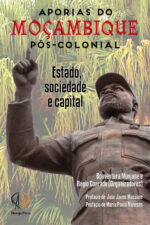
Aporias de Moçambique pós-colonial: Estado, Sociedade e Capital
USD $ 20.00Moçambique celebrou, em Junho de 2020, 45 anos de sua independência. Os ganhos e avanços que o país alcançou nesta quase meia década de independência são inegáveis, mas os desafios que subsistem são muitos. Este livro reflecte sobre Moçambique contemporâneo nos seus vários aspectos, destacando a formação e o papel do Estado, a democracia, a participação dos cidadãos, a política económica e social e o desenvolvimento. Como se pode ver, o livro não é temático e oferece diversas perspectivas de autores e autoras que se dedicam à investigação, ao jornalismo e ao activismo. O livro pretende exactamente oferecer uma leitura do país a partir dos olhos daqueles que não ocupam uma posição de poder mas que vivem, experienciam e lêem a realidade do país a partir de uma perspectiva crítica da sociedade.
O objectivo deste livro é dar uma melhor compreensão do que tem sido o processo de independência em Moçambique e porque é que o país pós-colonial ainda é ‘colonial’ na sua estrutura política e económica. Assim, são dados muitos exemplos para dar ao leitor a possibilidade de confrontar as perspectivas teóricas aqui utilizadas com os casos concretos.
Todos os estudos deste livro mostram que quarenta e cinco anos de independência não foram vividos da mesma forma pelas elites que governam o país e pelas populações que vivem sob o seu domínio. Por um lado, as elites no poder e os seus parentes beneficiaram, e ainda beneficiam, dos recursos do país, enquanto que uma grande parte da população continua à espera das promessas da independência. De um ponto de vista político e económico, os estudos que compõem o livro destacam como o “desenvolvimento” em Moçambique tem estado em contradição com as necessidades do país. Significa que o actual modelo de desenvolvimento responde muito mais ao capital internacional do que à transformação social de Moçambique.Select options This product has multiple variants. The options may be chosen on the product page -

For the love of the struggle: Memoirs from El Salvador
USD $ 5.00 USD $ 18.00Price range: USD $ 5.00 through USD $ 18.00Select options This product has multiple variants. The options may be chosen on the product page
For the love of the struggle: Memoirs from El Salvador
USD $ 5.00 USD $ 18.00Price range: USD $ 5.00 through USD $ 18.00From his home in El Salvador, the author shares an intimate personal and political memoir that follows his remarkable journey from the comfort and security of a picturesque New England town to a stirring and heroic engagement in common cause with the struggle for peace and justice in El Salvador. After four years as a Peace Corp worker in northern Liberia beginning in the late 1960’s, followed by a stretch back in the United States as a street worker in the ghettos of North Philadelphia, McKinley finds himself in Central America as an aid worker in 1978. He quickly becomes engulfed by the political violence of the region and engaged with the people and their struggles against five decades of military dictatorship, centuries of poverty and exploitation. The story is marked by terror, adventure and courage, by trials and tragedy redeemed by the beauty and transcendence of people in struggle. Originally based in Guatemala heading up a Catholic relief agency, his commitment to the struggles for change in the country attracts the attention of the military, and his own government, forcing him to leave the country in late 1980. He moves to El Salvador where he begins a gradual incursion into the revolutionary struggle of this country, in a commitment that will last the rest of his life. Interwoven with this personal journey, is the story of Teresa Rivas, her husband Antonio, and their five children, a peasant family It also describes their life after the war, with resettlement in the lowlands of Guazapa where many ex-combatants were building a new life. It explains in detail the gradual emergence of the objective and subjective conditions for revolution in El Salvador, including the difficult choice for the use of violence as the only available option for transformative change in the country. The book also details the challenges of reconstruction after the Peace Accords that end the war in 1992, and the tragedy of opportunities lost during the immediate post-war period in the face of the ongoing resistance of traditional opponents to reform. As the memoir closes, the author reflects on his choice to be in El Salvador over the past 43 years, and the country as he finds it in these changing times; on the family with whom he has shared love and life there; on his continuing relationship with Antonio Rivas and his surviving family; and his gradual reconciliation, from a distance, with the country of his birth.
Select options This product has multiple variants. The options may be chosen on the product page