

Jade Saab
Jade Saab is a Lebanese/Canadian writer and activist currently finishing a PhD at the University of Glasgow on Ideology and the Process of Social- ist Revolution. He is a regional organiser with the Industrial Workers of the World.
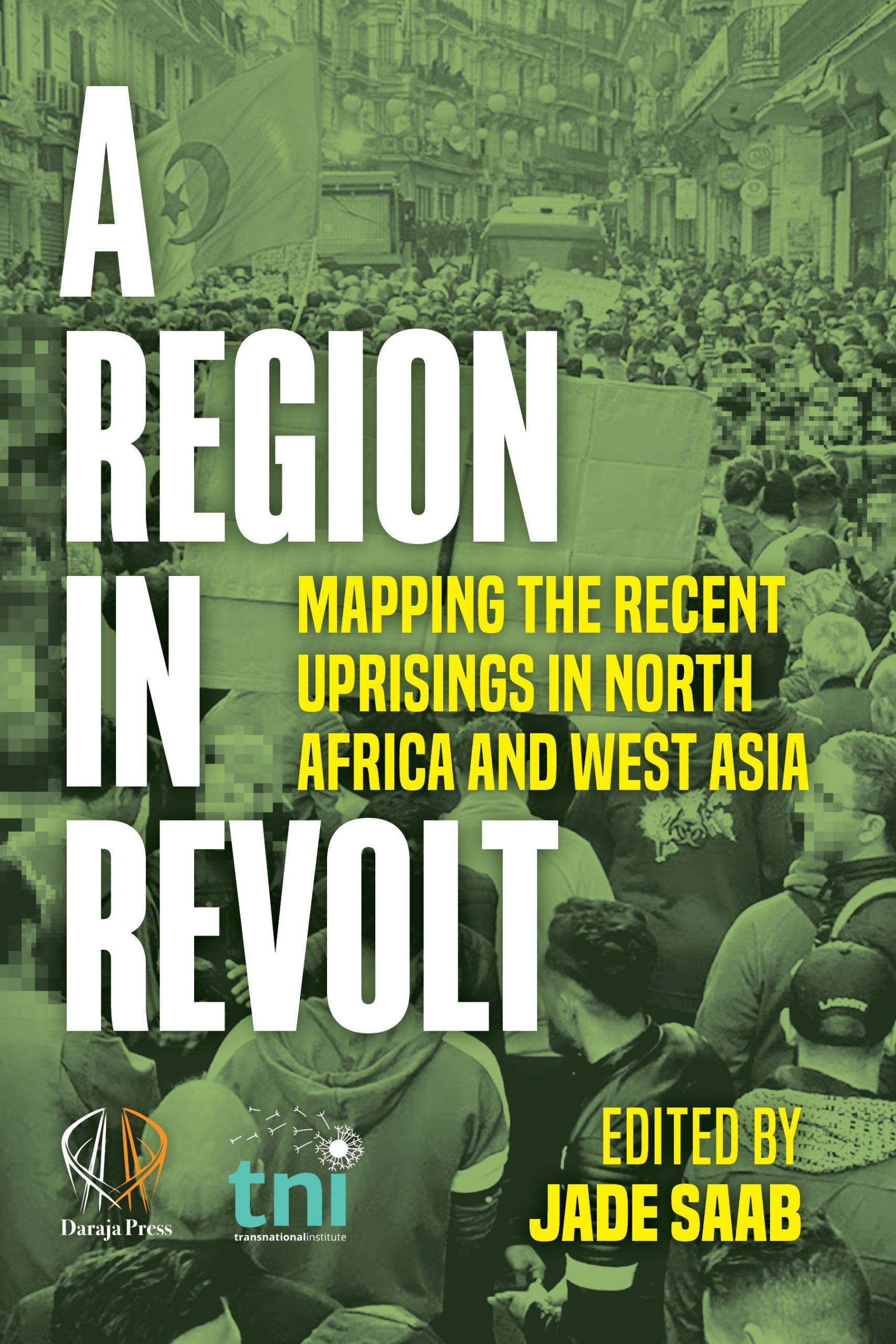
A wave of mass protest movements has spread across North Africa and West Asia, including Sudan, Algeria, Iraq, Lebanon and Iran. The mass protests have much in common, from opposing authoritarian regimes and worsening economic situations to demanding radical changes in social relations. Despite their similarities, each protest movement operates under different conditions that cannot be ignored. The specific historic, political and economic contexts of each country have determined who the key actors of the uprisings are and their location across old and new divides. This book elaborates on these similarities and differences to paint a clearer picture of these movements and draw out lessons to inform future struggles.
Price range: USD $ 5.00 through USD $ 15.00
Jade Saab is a Lebanese/Canadian writer and activist currently finishing a PhD at the University of Glasgow on Ideology and the Process of Social- ist Revolution. He is a regional organiser with the Industrial Workers of the World.
A wave of mass protest movements has spread across North Africa and West Asia, including Sudan, Algeria, Iraq, Lebanon and Iran. The mass protests have much in common, from opposing authoritarian regimes and worsening economic situations to demanding radical changes in social relations. Despite their similarities, each protest movement operates under different conditions that cannot be ignored. The specific historic, political and economic contexts of each country have determined who the key actors of the uprisings are and their location across old and new divides. This book elaborates on these similarities and differences to paint a clearer picture of these movements and draw out lessons to inform future struggles.
| Book Format | Print Book, PDF |
|---|
Moçambique celebrou, em Junho de 2020, 45 anos de sua independência. Os ganhos e avanços que o país alcançou nesta quase meia década de independência são inegáveis, mas os desafios que subsistem são muitos. Este livro reflecte sobre Moçambique contemporâneo nos seus vários aspectos, destacando a formação e o papel do Estado, a democracia, a participação dos cidadãos, a política económica e social e o desenvolvimento. Como se pode ver, o livro não é temático e oferece diversas perspectivas de autores e autoras que se dedicam à investigação, ao jornalismo e ao activismo. O livro pretende exactamente oferecer uma leitura do país a partir dos olhos daqueles que não ocupam uma posição de poder mas que vivem, experienciam e lêem a realidade do país a partir de uma perspectiva crítica da sociedade.
O objectivo deste livro é dar uma melhor compreensão do que tem sido o processo de independência em Moçambique e porque é que o país pós-colonial ainda é ‘colonial’ na sua estrutura política e económica. Assim, são dados muitos exemplos para dar ao leitor a possibilidade de confrontar as perspectivas teóricas aqui utilizadas com os casos concretos.
Todos os estudos deste livro mostram que quarenta e cinco anos de independência não foram vividos da mesma forma pelas elites que governam o país e pelas populações que vivem sob o seu domínio. Por um lado, as elites no poder e os seus parentes beneficiaram, e ainda beneficiam, dos recursos do país, enquanto que uma grande parte da população continua à espera das promessas da independência. De um ponto de vista político e económico, os estudos que compõem o livro destacam como o “desenvolvimento” em Moçambique tem estado em contradição com as necessidades do país. Significa que o actual modelo de desenvolvimento responde muito mais ao capital internacional do que à transformação social de Moçambique.
In recent years southern Africa has aroused the interest of domestic and foreign investors targeting several sectors. Agrarian and extractive capital has been penetrating the countryside, causing land conflicts, displacement of local peasant communities and in worse cases, deaths. Rural people in general have not, been passive—alone or in alliance with non-governmental organizations and activists, they have organized raised their voices. Resistance movements to capital are taking place throughout the region, even when faced with repression. The book provides critical assessments of the dynamics of agrarian and extractive capital in southern Africa: with contributions from DRC, Namibia, Zambia, Malawi, Zimbabwe, Swaziland, Mozambique, Mauritius and Madagascar.
A piercing historical explanation of poverty and inequality in African societies today and the social impact of resource-driven growth, Extracting Profit explains why Africa, in the first decade and a half of the twenty-first century, has undergone an economic boom. Rising global prices in oil and minerals have produced a scramble for Africa’s natural resources, led by investment from U.S., European and Chinese companies, and joined by emerging economies from around the globe. African economies have reached new heights, even outpacing rates of growth seen in much of the rest of the world. Examined through the lens of case studies of the oil fields of the Niger River Delta, the Chad-Cameroon Pipeline and the East African infrastructure boom, this period of “Africa rising” did not lead to the creation of jobs, but has instead fueled the extraction of natural resources, profits accruing to global capital, and an increasingly wealthy African ruling class.
Extracting Profit argues that the roots of today’s social and economic conditions lie in the historical legacies of colonialism and the imposition of so-called “reforms” by global financial institutions such as the World Bank and International Monetary Fund. The chokehold of debt and austerity of the late twentieth century paved the way for severe assaults on African working classes through neoliberal privatization and deregulation. And while the scramble for Africa’s resources has heightened the pace of ecological devastation, examples from Somalia and the West African Ebola outbreak reveal a frightening surge of militarization on the part of China and the U.S.
Yet this “new scramble” has not gone unchallenged. With accounts of platinum workers’ struggles in South Africa, Nigerian labor organizing and pro-democracy upheavals in Uganda and Burkina Faso, Extracting Profit offers several narratives of grassroots organizing and protest, pointing to the potential for resistance to global capital and fundamental change, in Africa and beyond.
And in an updated Preface, the author analyses the implications of the Covid-19 pandemic and escalating climate emergency, as both the crises and resistance to extraction accelerate across the continent.
“Lee Wengraf’s Extracting Profit – Imperialism, Neoliberalism and The New Scramble for Africa is at once historical and contemporary. It unpacks ongoing resource crimes by analytically exposing its historical roots and pointing to ways by which the oppressed can cut off the bonds that lock in their subjugation.” —Nnimmo Bassey, Director, Health of Mother Earth Foundation
“Lee Wengraf provides an important reminder that Africa’s position within the world economy is heavily determined by its unequal insertion into the global capitalist system and ongoing manifestations of imperialism.” –James Chamberlain, Sheffield Political Economy Research Institute
“Lee Wengraf’s Extracting Profit provides a breathtakingly detailed account and analysis of some of the major socioeconomic ills that have been plaguing Africa for centuries. Amongst the host of issues she tackles, arguably the most consequential are mass poverty in African societies, their indefensible economic inequalities and the steady plundering of the continent’s resources, starting from the slave-trade era up till the present-day.” –Remi Adekoya, Review of African Political Economy
“Extracting Profit offers several narratives of grassroots organizing and protest, pointing to the potential for resistance to global capital and fundamental change, in Africa and beyond.” –Developing Economics
“Evidently, this book is well-researched and it contributes to the expansion of the frontiers of Marxist scholarship on Africa’s development dilemma within the global capitalist order. This book lends credence to the pioneering works of such notable radical scholars as Andre Gunder Frank, Walter Rodney, and Samir Amin among several others. It should be read by students and teachers of political economy, development studies, Marxism and philosophy.” –Marx & Philosophy Review of Books
“Extracting Profit provides a great arch of scutiny from the earliest carve-up of the African continent, through colonialism, war, imperialism, to the recent neoliberal takeover. The book demonstrates the continued importance of Marxist analysis on the continent, asserting the centrality of class analysis and a project of revolutionary change. Wengraf provides us with a major contribution, that highlights contemporary developments and the role of China on the African continent that has perplexed and baffled scholars. An indispensable volume.” —Leo Zeilig, author of Frantz Fanon: The Militant Philosopher of Third World Revolution
“The history of resource frontiers everywhere is always one of lethal violence, militarism, empire amidst the forcing house of capital accumulation. Lee Wengraf in Extracting Profit powerfully reveals the contours of Africa’s 21st century version of this history. The scramble for resources, markets, and investments have congealed into a frightening militarization across the continent, creating and fueling the conditions for further political instability. Wengraf documents how expanded American, but also Chinese, presence coupled with the War on Terror, point to both the enduring rivalry among global superpowers across the continent and a perfect storm of resource exploitation. Wengraf offers up a magisterial synopsis of the challenges confronting contemporary Africa.” —Michael Watts, University of California, Berkeley
“One of the most well-known stylized facts of Africa’s recent growth experience is that it has been inequality-inducing in ways that previous growth spurts were not. Lee Wengraf, in her new book Extracting Profit , expertly utilises the machinery of Marxian class analysis in making sense of this stylized fact. Along the way we learn much about Africa’s historical relationship with imperialism and its contemporary manifestations. This book should be required reading for all those who care about Africa and its future.” —Grieve Chelwa, Contributing Editor, Africa Is A Country
“In recent years countries in the African continent have experienced an economic boom—but not all have benefited equally. Extracting Profit is a brilliant and timely analysis that explodes the myth of “Africa Rising,” showing how neoliberal reforms have made the rich richer, while leaving tens of millions of poor and working class people behind. Lee Wengraf tells this story within the context of an imperial rivalry between the United States and China, two global superpowers that have expanded their economic and military presence across the continent. Extracting Profit is incisive, powerful, and necessary: If you read one book about the modern scramble for Africa, and what it means for all of us, make it this one.” —Anand Gopal, author, No Good Men Among the Living: America, the Taliban, and the War Through Afghan Eyes
“Thorough and thoughtful, Wengraf’s book has a radical depth that underscores its significance. It’s definitely a must-read for anyone who cherishes an advanced knowledge on the exploitation of Africa as well as the politics that undermines Africa’s class freedom.” —Kunle Wizeman Ajayi, Convener, Youths Against Austerity and General Secretary of the United Action for Democracy, Nigeria
“Extracting Profit is a very important book for understanding why the immense majority of the African population remain pauperised, despite impressive growth rates of mineral-rich countries on the continent. It continues the project of Walter Rodney’s How Europe Underdeveloped Africa. And in several ways, it also goes beyond it, capturing the changing dynamics of global capitalism 45 years after Rodney’s magnus opus.
In this book, Lee Wengraf debunks the myth of “Africa Rising” and the supposed expansion of an entrepreneurial middle-class, revealing “reforms” imposed by international financial institutions as mechanisms for fostering imperialism in an era of sharpening contradictions of the global capitalist economy. The adverse social, economic, political and environmental impact of these are elaborated on as a systemic whole, through the book’s examination of the sinews of capital’s expansion in the region: the extractive industries.
But, Wengraf does not stop at interrogating the underdevelopment of Africa. Her book identifies a major reason for the failures of national liberation projects: while the working masses were mobilised to fight against colonial domination, the leadership of these movements lay in the hands of aspiring capitalists, and intellectuals. The urgency of the need for a strategy for workers’ power internationally, she stresses correctly, cannot be overemphasized.
Reading Extracting Profit would be exceedingly beneficial for any change-seeking activist in the labour movement within and beyond Africa.” —Baba Aye, editor, Socialist Worker (Nigeria)

John S. Saul, born and first educated in Toronto, Canada, moved to Tanzania almost sixty years ago and, since then, has also taught in Mozambique and South Africa as well as back in Canada at York University. In Tanzania, he discovered the centrality of the war for freedom from white rule and global capitalist dictate then taking shape further south – in Mozambique, Angola, Zimbabwe, Namibia and South Africa. Both his scholarly interest and his activist bent drew him to support and to seek to better understand the struggles in these nations-in-the-making, a political choice that now culminates in a final trilogy of books under the general title, The Rethinking Southern African Liberation Trilogy. The first volume of this trilogy, On Building a Social Movement: The North American Campaign for Southern African Liberation Revisited, was published by Africa World Press / Fernwood Books (2017). The present book is the second in that trilogy, with a third volume entitled Class, Race and the Thirty Years War for Southern African Liberation – A History set to conclude his work to be published by Cambridge University Press in 2022.
Here, Saul’s extended first chapter lays out the broad premises of the thinking that has guided his endeavours, ideas that takes the core reality of economic production and exploitation centrally but that are alive to the tangible impact on outcomes of a wide range of other social realities, including class, race, gender, sexuality, nationalism, the environment, politics and the state. A second section covers the essential unity of theory and political practice that underpins Saul’s findings. And a third and final section paints illuminating pictures of some core aspects of the diverse regional contexts — sites of both recolonization and continuing struggle, and all contexts whose trajectories will be further explored in his forthcoming third volume.

Kitabu hiki kinaturudisha katika kipindi cha kusisimuwa cha miaka ya vita baridi, kipindi ambacho, sambamba na kipindi cha leo, madola ya kibeberu yamekuwa yakifanya njama za kubadilisha serikali zilizokuwepo na kuziweka madarakani zile zenye kufuata amri. Kwa kutumia kumbukumbu za picha za Johari, nyaraka za siri za Marekani na Uingereza, pamoja na mahojiano ya kina, kitabu kinatowa uchambuzi juu ya nafasi na satwa ya Chama cha Umma Party nchini Zanzibar na kiongozi wake mwenye upeo mkubwa wa mambo, Mwanamapinduzi mfuasi wa Itikadi ya Karl Marx, Abdulrahman Mohamed Babu. Kwa kuangalia kwa njia ya uwiano wa mifano inayokwenda sambamba ya wahka wa Marekani kuhusu Uchina ya Kikomunisti katika miaka ya 1960 na woga walionao hivi sasa kuhusu ushawishi wa Uchina, kitabu kinatafakari juu ya mivutano mipya iliyopo katika kupigania rasilmali za Afrika, kuundwa kwa kikosi cha AFRICOM, na jinsi Wanasiasa wa Afrika Mashariki wanavyoshiriki katika kuimarisha udhibiti wa Marekani katika nchi zao, na “Vita dhidi ya Ugaidi” katika ukanda wa Afrika Mashariki hivi sasa.
Now available from Mkuki Na Nyota Publishers, Tanzania: http://www.mkukinanyota.com

The industrial food system is a major driver of climate change. Food sovereignty is critical to any lasting and just solution. The Great Climate Robbery shows readers how the industrial food system causes climate change, how food and agribusiness corporations are getting away with it and what can be done to turn things around.
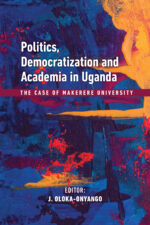
As the oldest (and arguably best-known) university in Uganda and the wider eastern and central Africa region, Makerere University looms large in the history of higher education on the continent. Alma mater to presidents, public intellectuals and pundits of all disciplines, Makerere has attracted considerable scholarly and popular attention, both in respect of its prominence and achievements, and well as with regard to its failures and foibles. The proposed book focuses on a particularly understudied aspect of the place of higher education in the African context, i.e. the relationship between a public university of unique historical importance and the contestations over democratization that have taken place both within campus and outside of it. It is built around the late-1980s struggle by the Makerere University Academic Staff Association (MUASA) for improved living conditions against the backdrop of the early programs of structural adjustment and economic reform that the National Resistance Army/Movement (NRA/M) government adopted soon after taking power in 1986. Although seemingly introverted in focus, in many respects the MUASA action represented the earliest forms of political struggle against a regime of governance that promised a great deal, but disappointingly delivered considerably less.
The focus on MUASA provides a critical entry-point to a wider debate about the place of organized democratic action by academics in a post-conflict context where the traditional institutions of political and civil society, i.e. political parties and non-governmental organizations (NGOs) have either been severely compromised or discredited, or where they are too weak and inorganic to provide any form of significant counter-juxtaposition to the government in power. By organizing the first strike by academic staff in the sixty-seven (67) year history of the university, for a time MUASA became the focal-point for democratic organizing against a regime that was yet to fully expose its nefarious and anti-democratic colours. The book examines the broader issues concerning the relationship between organized academic action and democratization; the place of the Media in reviewing these struggles; the position of students as a critical component of academe; “big P” and “small p” politics affecting female academics, and finally, the paradoxical role of the School of Law in both aiding and inhibiting the struggle against dictatorship in a country which has enjoyed

This pamphlet tackles the question: how do we get from A to B, capitalism to post-capitalism?
It is critical reading to understand why:
* Capitalist-oriented industrial agriculture and its destruction of habitat are the upstream causes that led to the COVID-19 pandemic as well as other past and future pandemics of devastating, emerging viral pathogens.
* COVID-19 may trigger a collapse of the global capitalist system but it is not the cause.
* Health-care and public-health systems organized around capitalist principles don’t do well in pandemics, compared to those not organized around capitalist principles.
* The current economic collapse, triggered by a pandemic, opens a door for revolutionary transformation.
The pamphlet is also available in Spanish and Korean.