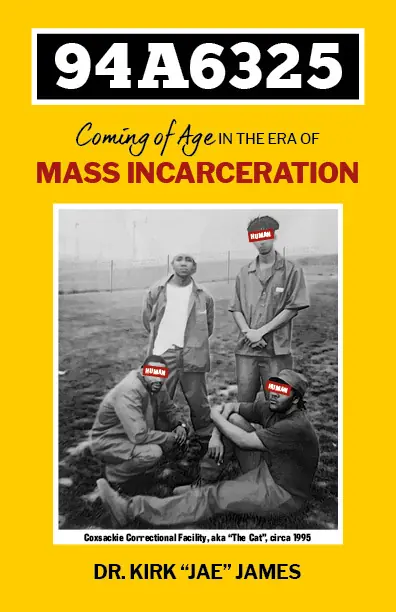
94A6325 is the compelling coming-of-age memoir of Dr. Kirk “Jae” James, a Black male, Jamaican immigrant, and father, chronicling his nearly decade-long experience (3,268 days) within the New York State carceral apparatus. The narrative is anchored by his arrest on April 13, 1994, when he was 18 years old, charged under the draconian Rockefeller Drug Laws and subsequently sentenced to life in prison. The story details his survival in infamous facilities such as Rikers Island, the maximum-security adolescent prison “The Cat” (Coxsackie), and Wyoming, where he fought to maintain his humanity while facing overwhelming fear and anxiety.
The book powerfully illustrates how legislative actions like the 13th Amendment, “tough on crime” rhetoric, the 1994 Crime Bill, and the 1996 Immigration laws acted as contemporary black codes and slave catchers, perpetually dehumanizing and criminalizing Black and brown populations. Jae endures three denials by the Parole Board while simultaneously fighting a six-year battle against a mandatory deportation order.
Drawing inspiration from mentors and comrades—including revolutionaries and activists like George Jackson and Pops—Jae transforms his time in prison into a quest for knowledge and self-actualization, culminating in earning an Associate Degree and winning his 212c waiver hearing against deportation in 2002.
More than just a survival story, 94A6325 serves as a vital first-person account and a call to embrace Abolition. The author, now a Clinical Assistant Professor at NYU, shares his journey as essential knowledge needed to confront the historical violence and systemic white supremacy woven into American democracy, urging readers to imagine a world without human cages, grounded in abundance and love. The story officially ends with his release on March 25, 2003.
This book is the first part in a series, with this one focusing on his incarceration from 1994 to 2003.
Dr Kirk “Jae James” talks about the book. The event centered on Dr. Kirk James’ memoir “94A6325: Coming of Age in the Era of Mass Incarceration,” which explores his nearly 9-year incarceration experience and its broader implications for systemic injustice. The panel discussion included Councilman Yusuf Salam, Dr. Michelle Munson, and Dr. Pierre Hargrove, who engaged in a conversation about the human impact of mass incarceration, the importance of community support during incarceration, and the ongoing challenges faced by formerly incarcerated individuals. The participants shared personal experiences and insights, highlighting the need for systemic change, the power of storytelling, and the resilience of those affected by the criminal justice system. The event aimed to foster reflection and dialogue on the structural harms of mass incarceration and the potential for collective healing and transformation. Watch the video here.
Dr. Kirk “Jae” James is an activist, scholar, writer, and speaker whose work sits at the intersection of love, critical consciousness, and collective liberation. Grounded in lived experience and academic research, Jae challenges systems of oppression through abolitionist scholarship,…
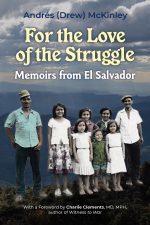
From his home in El Salvador, the author shares an intimate personal and political memoir that follows his remarkable journey from the comfort and security of a picturesque New England town to a stirring and heroic engagement in common cause with the struggle for peace and justice in El Salvador. After four years as a Peace Corp worker in northern Liberia beginning in the late 1960’s, followed by a stretch back in the United States as a street worker in the ghettos of North Philadelphia, McKinley finds himself in Central America as an aid worker in 1978. He quickly becomes engulfed by the political violence of the region and engaged with the people and their struggles against five decades of military dictatorship, centuries of poverty and exploitation. The story is marked by terror, adventure and courage, by trials and tragedy redeemed by the beauty and transcendence of people in struggle. Originally based in Guatemala heading up a Catholic relief agency, his commitment to the struggles for change in the country attracts the attention of the military, and his own government, forcing him to leave the country in late 1980. He moves to El Salvador where he begins a gradual incursion into the revolutionary struggle of this country, in a commitment that will last the rest of his life. Interwoven with this personal journey, is the story of Teresa Rivas, her husband Antonio, and their five children, a peasant family It also describes their life after the war, with resettlement in the lowlands of Guazapa where many ex-combatants were building a new life. It explains in detail the gradual emergence of the objective and subjective conditions for revolution in El Salvador, including the difficult choice for the use of violence as the only available option for transformative change in the country. The book also details the challenges of reconstruction after the Peace Accords that end the war in 1992, and the tragedy of opportunities lost during the immediate post-war period in the face of the ongoing resistance of traditional opponents to reform. As the memoir closes, the author reflects on his choice to be in El Salvador over the past 43 years, and the country as he finds it in these changing times; on the family with whom he has shared love and life there; on his continuing relationship with Antonio Rivas and his surviving family; and his gradual reconciliation, from a distance, with the country of his birth.
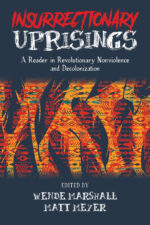
The volume includes two sections exploring nonviolence in the long Black freedom struggle within the US. From Ella Baker to Martin Luther King, Jr. and Fannie Lou Hamer, from Vincent Harding and Grace Lee Boggs to Colin Kaepernick, the two sections on the Black liberation movement highlight the theory of nonviolence in direct and indirect ways and foreground the relevance of these historic texts for the present moment of political uprisings on both the left and the right. Black strategies for survival and power are analyzed in terms of the ongoing US economic and epidemiological crises as well as the global climate crisis and ecological collapse. A section on revolutionary nonviolence in Africa presents a previously unpublished piece on the role of armed struggle by Franz Fanon, as well as essays by Amilcar Cabral, Barbara Deming, Graca Machel, Kenneth Kaunda, and Nozizwe Madlala-Routledge This section clearly contextualizes the continent’s anti-colonial struggles with the practical thinking about military and unarmed tactics which those movements faced over the course of a half-century.
The section on nonviolence and feminist struggle highlight the work of Grace Paley, Audre Lorde, and Arundhati Roy, along with a little-read piece by Johnnie Tilmon, a leader of the 1960s welfare rights movement. The section on resistance against empire tilts toward Latin American scholars/activists with essays by Maria Lugones, Anibla Quijano and Berta Caceres. This section includes pieces that draw from current debates about the role of state power in building towards radical change and the push to build holistic perspectives on what liberation means for all peoples. The final section on social change in the 21st Century reflects on specific aspects of organizing that are facing campaigns and movements of today and tomorrow. Our goal is to provide challenges and insights for building effectively against all forms of oppression! Though primarily compiling key texts not often seen or contextualized together, the book also provides new strategic commentaries from key leaders including Ela Gandhi, Ruby Sales, ecofeminist Ynestra King, Africa World Press’ Kassahun Checole, and Palestinian Quaker Joyce Ajlouney, Hakim Williams, and Mireille Fanon Mèndes-France.
There was nothing but darkness in the spring of 2020 as the Covid-19 pandemic raged and shut down the economy. But as right-wing protesters demanded an end to the lockdown, a much bigger social conflict was brewing under the surface. A rebellion exploded in Minneapolis in response to the brutal police murder of George Floyd in late May, during which a police station was overtaken and burned down. The uprising quickly spread across the United States as protesters looted downtown urban centers, set fire to cop cars, vandalized government buildings, and fought the police. The Black proletariat led the charge, but white, Latinx, Asian, and Indigenous proletarians also joined the fight, demonstrating new possibilities for building alliances. While anti-police rebellions continued throughout the summer and fall, the uprising receded with the start of the winter. But this conflict is far from over.
In an effort to think through the experience of the uprising and prepare for the great struggles that are coming, The Revolutionary Meaning of the George Floyd Uprising provides an in-depth analysis of what exactly happened during the 2020 uprising, its potentials, internal limits, and strategic implications.
Ce livre est un apport précieux pour demander à changer de focale et de perspective au sujet des migrations à l’intérieur du continent africain. Celles-ci sont bien plus importantes quan- titativement, mais aussi économiquement et historiquement, que les migrations de l’Afrique vers l’Europe. Elles sont beaucoup plus silencieuses et infiniment moins étudiées que celles du Sud vers le Nord. Ces migrations sont vitales, tant pour les pays de départ que pour ceux d’arrivée. Ainsi, des millions de jeunes partent chaque année pour les pays de la côte, et cela sans susciter les mêmes résistances, fantasmes et peurs qu’en Europe.
Cet ouvrage a le grand mérite d’intégrer les migrations dans la perspective plus large des mobilités, puis d’en examiner les liens avec le développement. Il est rédigé par de jeunes chercheurs africains, qui produisent à partir de leurs terrains spécifiques des analyses à valeur générale sur les sociétés contemporaines. Ils contribuent ainsi au renouvellement des sciences sociales à partir des pays africains.
On peut en revanche souligner que l’ouvrage a relevé un défi important : celui d’éclairer à la fois les dynamiques de l’expérience migratoire, des trajectoires suivies par les migrants et des espaces migratoires à l’intérieur de l’Afrique. — Sylvie Ayimpam, « Mobilités, circulations et frontières. Migrations, mobilités et développement en Afrique », Anthropologie & développement [En ligne], 51 | 2020, mis en ligne le 01 décembre 2020, consulté le 23 février 2021. URL : http://journals.openedition.org/anthropodev/1068 ; DOI : https://doi.org/10.4000/anthropodev.1068
These companion volumes are refreshing because they introduce us to many less well- known instances which amply illustrate just how mobile African populations really are at the regional, intra-regional and global scales. – Paul NUGENT, University of Edinburgh (United Kingdom)
Un ouvrage d’une grande actualité qui aborde la question des migrations sous un angle radicalement nouveau et original : l’articulation dynamique entre la migration, la mobilité et le développement en Afrique de l’Ouest. Ces deux volumes bilingues renouvellent le débat sur les migrations : de quoi faire réfléchir ensemble l’Afrique et l’Europe. – Marie-Caroline SAGLIO-YATZIMIRSKY, INALCO, CESSMA Paris (France)
Christian Bouquet, « Quelques éclairages nouveaux sur les migrations africaines », EspacesTemps.net [En ligne], Books, 2020 | Mis en ligne le 20 November 2020, consulté le 20.11.2020. URL : https://www.espacestemps.net/en/articles/quelques-eclairages-nouveaux-sur-les-migrations-africaines/ ; DOI : 10.26151/esapcestemps.net-jc2a-6b03
Avec la participation de Naluwembe BINAISSA, Alimou DIALLO, Nyalo Barkissa DRABO, Sylvester KOHOL, A. Aziz MOSSI, Loppa NGASSOU, Lawrence Rafaih OKELLO, Mutiat Titilope OLADEJO, Zakaria SORÉ, Astadjam YAOUBA et Irissa ZIDNABA.
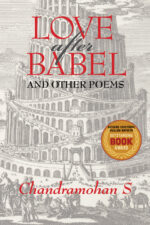
Love after Babel is a collection of poems that deal with themes such as caste, the resistance of Dalit people, Dalit literature, islamophobia and other political themes, with almost one hundred poems divided into three sections (Call Me Ishmail Tonight; Name Me a Word; Love after Babel). The introduction is by Suraj Yengde (award-winning scholar and activist from India, author of the bestseller Caste Matters, inaugural postdoctoral fellow at the Initiative for Institutional Anti-racism and Accountability, Shorenstein Center on Media, Politics and Public Policy at the Harvard Kennedy School).
Chandramohan’s poems are dialogues of the ‘ self’ with the ‘other’. He brings to life a world that subverts myths, literary canons, gender and caste stereotypes by pooling in sparklingly new metaphors with sensitivity and care. He draws his images from contemporary incidents as well as myths and legends of yore, and delves deep into the politicized realm, thus ‘rupturing the hymen of demarcations’ of identity, resistance, repression and love.
À rebours des thèses soutenant que la migration contribue au développement ou que l’in- vestissement dans le développement réduit la croissance de la migration « irrégulière », ce livre marque une rupture tonifiante avec les idées communes abondamment véhiculées dans la littérature sur les liens entre migration, mobilités et développement en Afrique. Il accorde un intérêt manifeste pour la plus grande part des mobilités africaines, lesquelles se situent à l’intérieur du continent, et à la formation des diasporas en dehors des fron- tières nationales et continentales. Cette considération conjointe des mobilités « Sud-Sud » et « Sud-Nord » permet de remettre en cause l’hypothèse selon laquelle il existe des diffé- rences fondamentales entre elles.
Cet ouvrage examine les fluctuations ordinaires des mouvements de populations – à travers l’Afrique, comme dans le reste du monde –, qui étendent les familles, génèrent de nouvelles relations, reconfigurent les connexions économiques et politiques, et sont intégrées dans l’expérience quotidienne des millions de personnes qui y prennent part.
The in-depth knowledge of the mostly African authors adds to the quality of a research field, which was for long far too Eurocentric. – Ilke ADAM, Vrije Universiteit Brussel (Belgium)
Il était temps de mettre en lumière ce que migration et mobilité représentent en Afrique. L’ouvrage offre une perspective originale et décoloniale sur le sujet. – Eric HAHONOU, Roskilde Universitet (Denmark)
Christian Bouquet, « Quelques éclairages nouveaux sur les migrations africaines », EspacesTemps.net [En ligne], Books, 2020 | Mis en ligne le 20 November 2020, consulté le 20.11.2020. URL : https://www.espacestemps.net/en/articles/quelques-eclairages-nouveaux-sur-les-migrations-africaines/ ; DOI : 10.26151/esapcestemps.net-jc2a-6b03
Avec la participation de John O. IGUE, Saydou KOUDOUGOU, Pierre-Joseph LAURENT, Bassirou MALAM SOULEY, Hamidou MANOU NABARA, Marème NIANG NDIAYE, Amadou SARR DIOP, Sadio SOUKOUNA , Eric Stève TAMO MBOUYOU et Astadjam YAOUBA.
The collection of essays in Partisan Universalism celebrates the work of Ato Sekyi-Otu, a scholar, teacher and friend, marking his extraordinary contribution to the philosophy, politics and praxis of liberation. As Ato Sekyi-Otu has argued in his recent book, Left Universalism, Africacentric Essays (Routlege 2019), universalism is an ‘inescapable presupposition of ethical judgment in general and critique in particular, especially indispensable for radical criticism of conditions of existence in postcolonial society and for vindicating visions of social regeneration’. Universalism must and can only be partisan.
“Responding to the invitation ‘to re-member severed but shareable things’, these lovers of truth, freedom, and dignity celebrate the searing intellect, generosity, wit, and compassion of the person and the scholar Ato Sekyi-Otu. … this is a precious contribution. Not to be missed!” —Jane Anna Gordon, author of Statelessness and Contemporary Enslavement and co-editor (with Drucilla Cornell) of Creolizing Rosa Luxemburg. /
“Critically engaging Ato Sekyi-Otu’s notion of partisan universalism, this timely volume of essays speaks directly to the onto-metaphysical issues that will give Africana thought the new foundations that will enable it to move beyond the linguistic turn, brush aside the ashes of Afro-pessimism. … A must read for all concerned with the future of Africana theory and praxis.” —Paget Henry, author of Caliban’s Reason/
“Ato Sekyi-Otu’s thought is one of the most important and exciting in Africa today. The texts compiled in this volume celebrate and engage with the work of Sekyi-Otu … They bear eloquent witness to Sekyi-Otu’s stature as a thinker and to his consistent commitment to the universalization of humanity in both theory and practice.” — Michael Neocosmos, Emeritus Professor in the Humanities, Rhodes University, South Africa.
The pamphlet begins with two letters written by Paul the Apostle in which Christianity first acquires a universal address. The new religion came to exclude people who were not Christians from the count of the human. This became explicit around a thousand years later when Pope Urban II authorised the First Crusade.
In 1492 planetary history was split in to two. Muhammad XII of Granada conceded defeat to Isabella and Ferdinand, the Catholic monarchs of Portugal and Spain, who went on to expel the Jews from the territory under their control. Europe became a Christian project. In the same year Christopher Columbus arrived in the Caribbean and Europe also became an imperial project with a planetary reach.
The origins of the racial ideology can be seen in this period, in which ideas about religion came to be entangled with fantastical ideas about the imagined purity of blood. But it was in the English colony of Virginia in the seventeenth century that the legitimation for the exclusion from the count of the human began to move from claims made in the name of religion to claims made in the name of science. This is the point at which modern racism, rooted in the appearance of the body, began to cast its malignant shadow across the planet.
The author argues that the struggle to put an end to the epoch of world history that opened in 1492 will require new ideas, and new practices. It follows the Caribbean tradition that runs from Aimé Césaire to Frantz Fanon and Sylvia Wynter in affirming the need for a counter-humanism, a radical humanism, a humanism that, in Césaire’s famous phrases, is “made to the measure of the world”. There is a need for a shift in the ground of reason towards the lived experience and struggles of people rendered, in Wynter’s phrase, as ‘pariahs outside of the new order’.