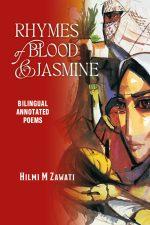
Rhymes of Blood and Jasmine is far more than a bilingual poetry collection; it is a poetic and cultural testimony that merges lyrical beauty with critical depth. Spanning over five decades of creative expression, Dr. Hilmi Zawati weaves verses charged with spiritual and romantic love, exile, memory, resistance, and identity. Symbols like jasmine, oranges, figs, and blood evoke a profound sense of homeland, sacrifice, and longing, forming an emotional tapestry firmly rooted in the Palestinian experience. This is poetry that does not simply describe a reality but embodies it, offering readers an intimate portal into a world shaped by history and sustained by hope.
What makes this collection truly singular is its self-translation—a rare act that unites author and translator into a single, cohesive poetic voice. Zawati transcends conventional translation by recreating the essence of his Arabic poems in English with unmatched emotional and stylistic fidelity. His bilingual artistry breathes life into both texts, allowing them to resonate authentically across languages and cultures, ensuring that the nuance and musicality of the original are never lost.
This work speaks to a broad audience of readers, scholars, poets, translators, and students of translation studies, comparative literature, Palestinian history, and Arab diaspora cultures. It asserts translation as a form of cultural sovereignty—rejecting distortion, simplification, and marginalisation—while affirming the enduring presence of Arab poetic tradition within global literature. Rhymes of Blood and Jasmine is not just to be read; it is to be lived. A poetic bridge between languages and worlds, it revives silenced memories and restores the voice of love and homeland with grace, dignity, and truth. This collection is an essential contribution to world literature, offering a poignant reminder of poetry’s power to heal, resist, and connect.