

Paul Kelemen
Paul Kelemen b.1946 taught at Manchester University School of Social Sci- ences from 1976 until he retired in 2014. He has written mainly on colo- nialism and the labour movement and is the author of British Left and Zionism, History…
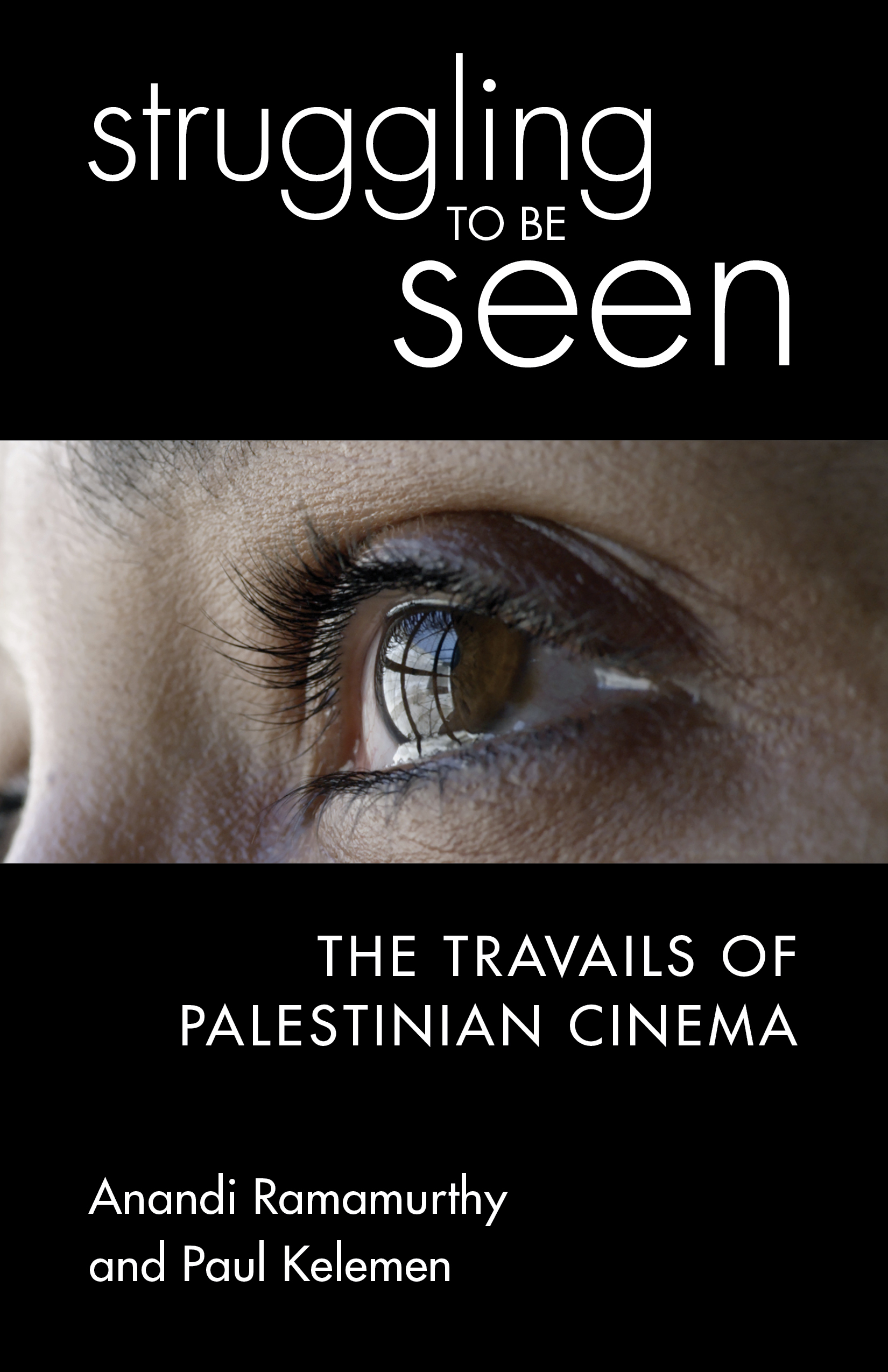
The book explores the challenges Palestinian filmmakers confront to develop a cinema that gives expression to the national narrative. The research is based on collaborative work to research and screen Palestinian films involving Film Lab Palestine, Sheffield Palestine Cultural Exchange and Sheffield Hallam University as part of the Creative Interruptions research project (https://creativeinterruptions.com/palestiniancinema/). We explored the political, economic and cultural factors that impact on Palestinian film production and some of the barriers encountered in profiling and screening Palestinian films in Britain.
USD $ 5 USD $ 15Price range: USD $ 5 through USD $ 15
Paul Kelemen b.1946 taught at Manchester University School of Social Sci- ences from 1976 until he retired in 2014. He has written mainly on colo- nialism and the labour movement and is the author of British Left and Zionism, History…
The book explores the challenges Palestinian filmmakers confront to develop a cinema that gives expression to the national narrative. The research is based on collaborative work to research and screen Palestinian films involving Film Lab Palestine, Sheffield Palestine Cultural Exchange and Sheffield Hallam University as part of the Creative Interruptions research project (https://creativeinterruptions.com/palestiniancinema/). We explored the political, economic and cultural factors that impact on Palestinian film production and some of the barriers encountered in profiling and screening Palestinian films in Britain.
| Book Format | Print Book, PDF |
|---|
As the oldest (and arguably best-known) university in Uganda and the wider eastern and central Africa region, Makerere University looms large in the history of higher education on the continent. Alma mater to presidents, public intellectuals and pundits of all disciplines, Makerere has attracted considerable scholarly and popular attention, both in respect of its prominence and achievements, and well as with regard to its failures and foibles. The proposed book focuses on a particularly understudied aspect of the place of higher education in the African context, i.e. the relationship between a public university of unique historical importance and the contestations over democratization that have taken place both within campus and outside of it. It is built around the late-1980s struggle by the Makerere University Academic Staff Association (MUASA) for improved living conditions against the backdrop of the early programs of structural adjustment and economic reform that the National Resistance Army/Movement (NRA/M) government adopted soon after taking power in 1986. Although seemingly introverted in focus, in many respects the MUASA action represented the earliest forms of political struggle against a regime of governance that promised a great deal, but disappointingly delivered considerably less.
The focus on MUASA provides a critical entry-point to a wider debate about the place of organized democratic action by academics in a post-conflict context where the traditional institutions of political and civil society, i.e. political parties and non-governmental organizations (NGOs) have either been severely compromised or discredited, or where they are too weak and inorganic to provide any form of significant counter-juxtaposition to the government in power. By organizing the first strike by academic staff in the sixty-seven (67) year history of the university, for a time MUASA became the focal-point for democratic organizing against a regime that was yet to fully expose its nefarious and anti-democratic colours. The book examines the broader issues concerning the relationship between organized academic action and democratization; the place of the Media in reviewing these struggles; the position of students as a critical component of academe; “big P” and “small p” politics affecting female academics, and finally, the paradoxical role of the School of Law in both aiding and inhibiting the struggle against dictatorship in a country which has enjoyed

Edited by Demba Moussa Dembele and Carlos Cardoso
This book is based on a conference held in October 2012, African Countries and the Franc Zone: Remaining in the Trap or Opting for Monetary Independence. It reviews the global context, characterized by the systemic crisis of capitalism and the questioning of its legitimacy in several regions of the world, particularly in the global South. It provides an overview the challenges of economic and monetary emancipation; the consequences of the Franc Zone and its implications for the development of African countries, including the analysis of the latter’s economic and social record; and reviews the experiences of countries that gained their monetary sovereignty and the lessons for the creation of a West African currency.
In addition to providing the proceedings of the conference, the book includes essays by Nicolas Agbohou, Sanou Mbaye, Demba Moussa Dembele, Mohamed Ben Omar Ndiaye, Yash Tandon and Lansana Keita.

Africa Matters: Cultural politics, political economies, & grammars of protest provides a sampling of insightful articles from the first five issues of Nokoko, journal of the Institute of African Studies, Carleton University, Ottawa, Canada. It brings together pieces that the journal’s editorial board felt were particularly perspicacious in their analysis and resonant in their crafting. Uniting them in this book permits a new dialogue to emerge around the key themes of cultural politics, political economies and grammars of protest. Their intersection here sheds light on important issues for Africans in the twenty-first century.

Críticas da obra:
“Uma provocante crítica à extração contemporânea dos recursos (talvez mais adequadamente, “exploração” dos recursos) na África Subsariana. Na sua convincente análise, e em momentos abrasadora, Bassey apresenta uma critica cativante e abrangente da crise social e ambiental que se vive na África” – Chatham House
“De escravos a diamantes e passando pelo petróleo, há muito que os países mais consumistas têm vindo a pilhar a África a seu bel-prazer. Bassey explica muito bem como tudo isso tem vindo a acontecer, frisando bem o que procura a África: Justiça. Leia a obra e junte-se ao apelo de Bassey” – Annie Leonard, autora d´A estória das coisas
“Um livro que explica, de forma perspicaz e eloquente, o que a África pode fazer para travar as novas formas de colonização exacerbadas pelo caos das mudanças climáticas” – Pablo Solon, ex-embaixador da Bolívia nas Nações Unidas
“É uma obra que, a par da forte denúncia que faz da ganância e do saque da riqueza africana, apresenta perspetivas de esperança” – Camilla Toulmin, presidente do Instituto Internacional de Desenvolvimento e Meio Ambiente
“A África e o seu ambiente. Com um estilo refrescante, o autor torna as suas ideias extremamente acessíveis. Um dos mais proeminentes ambientalistas da África, faz uma análise abrangente dos desafios que enfrenta o continente, inspirando as pessoas a agir.” – David Fig, Presidente da Biowatch South Africa e autor do Staking Their Claims
“Para aqueles que ainda estão sépticos dos efeitos das mudanças climáticas, este livro vai deixa-los não apenas incomodados e preocupados, mas também motiva-los a fazer alguma coisa” – Nigerian Compass
O nigeriano Nnimmo Bassey é arquiteto, ativista ambiental e escritor. Foi presidente dos Amigos da Terra Internacional (Friends of the Earth International) de 2008 a 2012 e Diretor Executivo da Ação pelos Direitos Ambientais (Environmental Rights Action) durante duas décadas. Em 2009, foi nomeado “Herói do Ambiente” pela revista Time e, em 2010, foi co-vencedor do prestigiado Right Livelihood Award (considerado o Prémio Nobel Alternativo). Em 2012, ganhou o Rafto Prize. É atualmente diretor da Fundação Health of Mother Earth, uma organização ambientalista de reflexão e advocacia.

Soon after its publication in 1972, Walter Rodney’s How Europe Underdeveloped Africa gained global popularity among students, scholars, activists and people concerned with African affairs. His innovative application of the method of political economy transformed the paradigm for rendition of the continent’s past. Because it stridently took the traditional historians and the prevailing neo-colonial order to task, it was also pilloried by the defenders of the status quo. And, in these neoliberal times, mainstream scholars and pundits proclaim that it is no longer relevant for Africa.
In Walter Rodney: An Enduring Legacy, Karim Hirji makes a systematic case that, on the contrary, Rodney’s seminal work retains its singular value for understanding where Africa has come from, where it is going, and charting the path towards genuine development for its people. After giving a broad picture of Rodney and his times, Hirji examines in detail the criticisms levelled against his work, and conducts a focused review of modern day textbooks on African history. It is seen that most of the claims against Rodney lack a sound basis and that direct representations of his ideas are replete with distortions, unfair selectivity and political bias. Yet, the long term influence of Rodney on African history is unmistakable.
Hirji’s succinct, coherent defence of an intellectual giant who lived and died for humanity is an essential read for anyone with an interest in Africa and related regions.
Love after Babel is a collection of poems that deal with themes such as caste, the resistance of Dalit people, Dalit literature, islamophobia and other political themes, with almost one hundred poems divided into three sections (Call Me Ishmail Tonight; Name Me a Word; Love after Babel). The introduction is by Suraj Yengde (award-winning scholar and activist from India, author of the bestseller Caste Matters, inaugural postdoctoral fellow at the Initiative for Institutional Anti-racism and Accountability, Shorenstein Center on Media, Politics and Public Policy at the Harvard Kennedy School).
Chandramohan’s poems are dialogues of the ‘ self’ with the ‘other’. He brings to life a world that subverts myths, literary canons, gender and caste stereotypes by pooling in sparklingly new metaphors with sensitivity and care. He draws his images from contemporary incidents as well as myths and legends of yore, and delves deep into the politicized realm, thus ‘rupturing the hymen of demarcations’ of identity, resistance, repression and love.

This book is for all those—community workers, adult educators, social activists of every kind—who want to overcome pessimism and play a part in changing society in the direction of peace, justice and dignity for all human beings. As author Brian Murphy points out, many of us are pessimistic about our ability to change the world when confronted by the powerful forces of big corporations and big government. Murphy reveals the social and personal dilemmas which hold people back from social engagement, and argues that the various constraints we face can be overcome.
In this new edition, David Austin explains in his Introduction why this book, first published in 1999, is perhaps more relevant to our times than ever, offering insights from his own experiences of engaging critically with the book and with others. And in his Afterword, Brian Murphy reflects on the continued relevance of the original text, emphasizing how our humanity is being corroded and commodified. To reclaim our humanity, he argues, we must transform ourselves to transform the world.
Brian Murphy’s immensely inspiring book,Transforming Ourselves, Transforming the World, deeply challenges us to think and rethink everything we knew and thought we knew.—Nnimmo Bassey, Executive Director, Health of Mother Earth Foundation & Right Livelihood Award Laureate in 2010
We need more conversations like the one in this book, which are rooted in hope while honestly working through a foundational way of seeing and understanding ourselves in the bigger picture.— Christina Warner, Co-Executive Director and Director of Campaigns and Organising, Council of Canadians.
This is one of the coolest, enjoyable and important books I have read in recent years. Written from the heart as well as the head, it is a breathtakingly visionary, unique and insightful take on the life of the ultimate activist.—Hope Chigudu, Feminist activist

This book collects four decades of writings on dialectics, a number of them published here for the first time, by Kevin B. Anderson, a well-known scholar-activist in the Marxist-Humanist tradition. The essays cover the dialectics of revolution in a variety of settings, from Hegel and the French Revolution to dialectics today and its poststructuralist and pragmatist critics. In these essays, particular attention is given to Lenin’s encounter with Hegel and its impact on the critique of imperialism, the rejection of crude materialism, and more generally, on world revolutionary developments. Major but neglected works on Hegel and dialectics written under the impact of the struggle against fascism like Lukács’s The Young Hegel and Marcuse’s Reason and Revolution are given full critical treatment. Dunayevskaya’s intersectional revolutionary dialectics is also treated extensively, especially its focus on a dialectics of revolution that avoids class reductionism, placing gender, race, and colonialism at the center alongside class. In addition, key critics of Hegel and dialectics like Jacques Derrida, Michel Foucault, Antonio Negri, Pierre Bourdieu, and Richard Rorty, are themselves analysed and critiqued from a twenty-first century dialectical perspective. The book also takes up the dialectic in global, intersectional settings via a reconsideration of the themes of Anderson’s Marx at the Margins, where nationalism, race, and colonialism were theorized alongside capital and class as key elements in Marxist dialectical thought. As a whole, the book offers a discussion of major themes in the dialectics of revolution that still speak to us today at a time of radical transformation in all spheres of society and of everyday life.
DarajaPress uses Accessibility Checker to monitor our website's accessibility.