
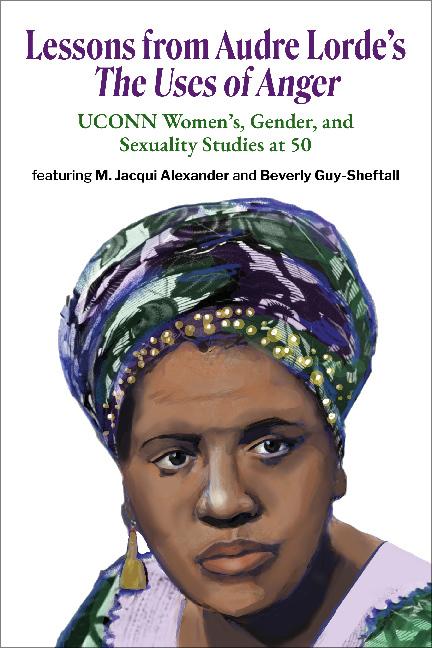
Lessons from Audre Lorde’s The Uses of Anger: UCONN Women’s, Gender, and Sexuality Studies at 50
In recent years, we have witnessed renewed calls for women to embrace anger as a source of power. These voices have Lorde’s “The Uses of Anger”, first delivered at the University of Connecticut (UCONN), Storrs, in 1981, to thank for charting an innovative scholarly and poetic terrain that theorizes anger as much more empowering and liberating than conventional discussions of the term typically allow.
Lorde’s essay redefined anger productively, approaching it as an epistemological tool igniting a desire for self and collective liberation. The result was a remarkable critical reflection that laid the groundwork for deconstructing broader systems of oppression, particularly, heteronormativity, heteropatriarchy, institutionalized racial poverty, racial capitalism, and white privilege. Lorde’s essay moved with precision, centering Black women’s struggles in a world built around the use – and abuse – of racialized people subjected to systematic dehumanization.
In their introduction, Jane Anna Gordon, Elva Orozco Mendoza, and Sherry Zane reflect on the inheritance, lessons, and responsibilities that Women’s, Gender, and Sexuality Studies must grapple with if it is to deepen and fulfill its radical mission.
Guided by the imperative to look backward to understand the present and forge a future, the book closes with a sankofic interview with M. Jacqui Alexander and Beverly Guy-Sheftall, conducted by Briona Simone Jones.
USD $ 15.00

| Book Format | Print Book, PDF |
|---|
Customer Reviews
There are no reviews yet.
Only logged in customers who have purchased this product may leave a review.
Related products
-

Cozinhar Um Continente: A Extração Destrutiva e a Crise Climática na África
USD $ 25.99Críticas da obra:
“Uma provocante crítica à extração contemporânea dos recursos (talvez mais adequadamente, “exploração” dos recursos) na África Subsariana. Na sua convincente análise, e em momentos abrasadora, Bassey apresenta uma critica cativante e abrangente da crise social e ambiental que se vive na África” – Chatham House
“De escravos a diamantes e passando pelo petróleo, há muito que os países mais consumistas têm vindo a pilhar a África a seu bel-prazer. Bassey explica muito bem como tudo isso tem vindo a acontecer, frisando bem o que procura a África: Justiça. Leia a obra e junte-se ao apelo de Bassey” – Annie Leonard, autora d´A estória das coisas
“Um livro que explica, de forma perspicaz e eloquente, o que a África pode fazer para travar as novas formas de colonização exacerbadas pelo caos das mudanças climáticas” – Pablo Solon, ex-embaixador da Bolívia nas Nações Unidas
“É uma obra que, a par da forte denúncia que faz da ganância e do saque da riqueza africana, apresenta perspetivas de esperança” – Camilla Toulmin, presidente do Instituto Internacional de Desenvolvimento e Meio Ambiente
“A África e o seu ambiente. Com um estilo refrescante, o autor torna as suas ideias extremamente acessíveis. Um dos mais proeminentes ambientalistas da África, faz uma análise abrangente dos desafios que enfrenta o continente, inspirando as pessoas a agir.” – David Fig, Presidente da Biowatch South Africa e autor do Staking Their Claims
“Para aqueles que ainda estão sépticos dos efeitos das mudanças climáticas, este livro vai deixa-los não apenas incomodados e preocupados, mas também motiva-los a fazer alguma coisa” – Nigerian CompassO nigeriano Nnimmo Bassey é arquiteto, ativista ambiental e escritor. Foi presidente dos Amigos da Terra Internacional (Friends of the Earth International) de 2008 a 2012 e Diretor Executivo da Ação pelos Direitos Ambientais (Environmental Rights Action) durante duas décadas. Em 2009, foi nomeado “Herói do Ambiente” pela revista Time e, em 2010, foi co-vencedor do prestigiado Right Livelihood Award (considerado o Prémio Nobel Alternativo). Em 2012, ganhou o Rafto Prize. É atualmente diretor da Fundação Health of Mother Earth, uma organização ambientalista de reflexão e advocacia.
-
Abolitionist Agroecology, Food Sovereignty and Pandemic Prevention
Price range: USD $ 5.00 through USD $ 15.00Select options This product has multiple variants. The options may be chosen on the product page
Abolitionist Agroecology, Food Sovereignty and Pandemic Prevention
Price range: USD $ 5.00 through USD $ 15.00COVID-19 has exposed the racialized nature of food systems, but also potentially grants opportunities to build anew. Maywa Montenegro explores a series of breakdowns, from fractured supply chains to uncontrolled infection among essential food workers to Black, Brown, and Indigenous communities scythed through by the virus along old grooves of race-class oppression. She traces the likely origins of COVID-19 to spillover sites forged by agroindustrial expansion into forested regions where pathogens spring free and infect humans. Industrial animal agriculture drives these ecological changes that incubate future outbreaks. Pandemics have their roots in the violent separation of communities from their territories, seeds, knowledge and wealth. Racism enables such theft as fundamental to capitalist expansion.
To tackle pandemics and food injustices, Montenegro calls for an abolitionist agroecology. No anti-capitalist alternative can ignore the racism that is central to the transnational industrial food system. Scholars including Angela Davis, Ruth Wilson Gilmore, and Mariame Kaba have argued that although abolition is frequently seen as an oppositional strategy — to eradicate, for example, prisons and police — abolition is equally propositional. An abolitionist agroecology cracks open multiple possibilities that respond to the exigencies of a pandemic planet — there is no ‘normal’ to which we can safely return.
Select options This product has multiple variants. The options may be chosen on the product page -

Wither the Franc Zone in Africa?
USD $ 10.00Edited by Demba Moussa Dembele and Carlos Cardoso
This book is based on a conference held in October 2012, African Countries and the Franc Zone: Remaining in the Trap or Opting for Monetary Independence. It reviews the global context, characterized by the systemic crisis of capitalism and the questioning of its legitimacy in several regions of the world, particularly in the global South. It provides an overview the challenges of economic and monetary emancipation; the consequences of the Franc Zone and its implications for the development of African countries, including the analysis of the latter’s economic and social record; and reviews the experiences of countries that gained their monetary sovereignty and the lessons for the creation of a West African currency.
In addition to providing the proceedings of the conference, the book includes essays by Nicolas Agbohou, Sanou Mbaye, Demba Moussa Dembele, Mohamed Ben Omar Ndiaye, Yash Tandon and Lansana Keita.
-
 Select options This product has multiple variants. The options may be chosen on the product page
The Enduring Relevance of Walter Rodney’s ‘How Europe Underdeveloped Africa’
USD $ 15.00Soon after its publication in 1972, Walter Rodney’s How Europe Underdeveloped Africa gained global popularity among students, scholars, activists and people concerned with African affairs. His innovative application of the method of political economy transformed the paradigm for rendition of the continent’s past. Because it stridently took the traditional historians and the prevailing neo-colonial order to task, it was also pilloried by the defenders of the status quo. And, in these neoliberal times, mainstream scholars and pundits proclaim that it is no longer relevant for Africa.
In Walter Rodney: An Enduring Legacy, Karim Hirji makes a systematic case that, on the contrary, Rodney’s seminal work retains its singular value for understanding where Africa has come from, where it is going, and charting the path towards genuine development for its people. After giving a broad picture of Rodney and his times, Hirji examines in detail the criticisms levelled against his work, and conducts a focused review of modern day textbooks on African history. It is seen that most of the claims against Rodney lack a sound basis and that direct representations of his ideas are replete with distortions, unfair selectivity and political bias. Yet, the long term influence of Rodney on African history is unmistakable.
Hirji’s succinct, coherent defence of an intellectual giant who lived and died for humanity is an essential read for anyone with an interest in Africa and related regions.
Select options This product has multiple variants. The options may be chosen on the product page -

Dialectics of revolution : Hegel, Marxism, and its critics through a lens of race, class, gender, and colonialism
Price range: USD $ 5.00 through USD $ 18.00Select options This product has multiple variants. The options may be chosen on the product page
Dialectics of revolution : Hegel, Marxism, and its critics through a lens of race, class, gender, and colonialism
Price range: USD $ 5.00 through USD $ 18.00This book collects four decades of writings on dialectics, a number of them published here for the first time, by Kevin B. Anderson, a well-known scholar-activist in the Marxist-Humanist tradition. The essays cover the dialectics of revolution in a variety of settings, from Hegel and the French Revolution to dialectics today and its poststructuralist and pragmatist critics. In these essays, particular attention is given to Lenin’s encounter with Hegel and its impact on the critique of imperialism, the rejection of crude materialism, and more generally, on world revolutionary developments. Major but neglected works on Hegel and dialectics written under the impact of the struggle against fascism like Lukács’s The Young Hegel and Marcuse’s Reason and Revolution are given full critical treatment. Dunayevskaya’s intersectional revolutionary dialectics is also treated extensively, especially its focus on a dialectics of revolution that avoids class reductionism, placing gender, race, and colonialism at the center alongside class. In addition, key critics of Hegel and dialectics like Jacques Derrida, Michel Foucault, Antonio Negri, Pierre Bourdieu, and Richard Rorty, are themselves analysed and critiqued from a twenty-first century dialectical perspective. The book also takes up the dialectic in global, intersectional settings via a reconsideration of the themes of Anderson’s Marx at the Margins, where nationalism, race, and colonialism were theorized alongside capital and class as key elements in Marxist dialectical thought. As a whole, the book offers a discussion of major themes in the dialectics of revolution that still speak to us today at a time of radical transformation in all spheres of society and of everyday life.
Select options This product has multiple variants. The options may be chosen on the product page -
Extracting Profit: Imperialism, Neoliberalism and the New Scramble for Africa
A piercing historical explanation of poverty and inequality in African societies today and the social impact of resource-driven growth, Extracting Profit explains why Africa, in the first decade and a half of the twenty-first century, has undergone an economic boom. Rising global prices in oil and minerals have produced a scramble for Africa’s natural resources, led by investment from U.S., European and Chinese companies, and joined by emerging economies from around the globe. African economies have reached new heights, even outpacing rates of growth seen in much of the rest of the world. Examined through the lens of case studies of the oil fields of the Niger River Delta, the Chad-Cameroon Pipeline and the East African infrastructure boom, this period of “Africa rising” did not lead to the creation of jobs, but has instead fueled the extraction of natural resources, profits accruing to global capital, and an increasingly wealthy African ruling class.
Extracting Profit argues that the roots of today’s social and economic conditions lie in the historical legacies of colonialism and the imposition of so-called “reforms” by global financial institutions such as the World Bank and International Monetary Fund. The chokehold of debt and austerity of the late twentieth century paved the way for severe assaults on African working classes through neoliberal privatization and deregulation. And while the scramble for Africa’s resources has heightened the pace of ecological devastation, examples from Somalia and the West African Ebola outbreak reveal a frightening surge of militarization on the part of China and the U.S.
Yet this “new scramble” has not gone unchallenged. With accounts of platinum workers’ struggles in South Africa, Nigerian labor organizing and pro-democracy upheavals in Uganda and Burkina Faso, Extracting Profit offers several narratives of grassroots organizing and protest, pointing to the potential for resistance to global capital and fundamental change, in Africa and beyond.
And in an updated Preface, the author analyses the implications of the Covid-19 pandemic and escalating climate emergency, as both the crises and resistance to extraction accelerate across the continent.
Reviews-
“Lee Wengraf’s Extracting Profit – Imperialism, Neoliberalism and The New Scramble for Africa is at once historical and contemporary. It unpacks ongoing resource crimes by analytically exposing its historical roots and pointing to ways by which the oppressed can cut off the bonds that lock in their subjugation.” —Nnimmo Bassey, Director, Health of Mother Earth Foundation
“Lee Wengraf provides an important reminder that Africa’s position within the world economy is heavily determined by its unequal insertion into the global capitalist system and ongoing manifestations of imperialism.” –James Chamberlain, Sheffield Political Economy Research Institute
“Lee Wengraf’s Extracting Profit provides a breathtakingly detailed account and analysis of some of the major socioeconomic ills that have been plaguing Africa for centuries. Amongst the host of issues she tackles, arguably the most consequential are mass poverty in African societies, their indefensible economic inequalities and the steady plundering of the continent’s resources, starting from the slave-trade era up till the present-day.” –Remi Adekoya, Review of African Political Economy
“Extracting Profit offers several narratives of grassroots organizing and protest, pointing to the potential for resistance to global capital and fundamental change, in Africa and beyond.” –Developing Economics
“Evidently, this book is well-researched and it contributes to the expansion of the frontiers of Marxist scholarship on Africa’s development dilemma within the global capitalist order. This book lends credence to the pioneering works of such notable radical scholars as Andre Gunder Frank, Walter Rodney, and Samir Amin among several others. It should be read by students and teachers of political economy, development studies, Marxism and philosophy.” –Marx & Philosophy Review of Books
“Extracting Profit provides a great arch of scutiny from the earliest carve-up of the African continent, through colonialism, war, imperialism, to the recent neoliberal takeover. The book demonstrates the continued importance of Marxist analysis on the continent, asserting the centrality of class analysis and a project of revolutionary change. Wengraf provides us with a major contribution, that highlights contemporary developments and the role of China on the African continent that has perplexed and baffled scholars. An indispensable volume.” —Leo Zeilig, author of Frantz Fanon: The Militant Philosopher of Third World Revolution
“The history of resource frontiers everywhere is always one of lethal violence, militarism, empire amidst the forcing house of capital accumulation. Lee Wengraf in Extracting Profit powerfully reveals the contours of Africa’s 21st century version of this history. The scramble for resources, markets, and investments have congealed into a frightening militarization across the continent, creating and fueling the conditions for further political instability. Wengraf documents how expanded American, but also Chinese, presence coupled with the War on Terror, point to both the enduring rivalry among global superpowers across the continent and a perfect storm of resource exploitation. Wengraf offers up a magisterial synopsis of the challenges confronting contemporary Africa.” —Michael Watts, University of California, Berkeley
“One of the most well-known stylized facts of Africa’s recent growth experience is that it has been inequality-inducing in ways that previous growth spurts were not. Lee Wengraf, in her new book Extracting Profit , expertly utilises the machinery of Marxian class analysis in making sense of this stylized fact. Along the way we learn much about Africa’s historical relationship with imperialism and its contemporary manifestations. This book should be required reading for all those who care about Africa and its future.” —Grieve Chelwa, Contributing Editor, Africa Is A Country
“In recent years countries in the African continent have experienced an economic boom—but not all have benefited equally. Extracting Profit is a brilliant and timely analysis that explodes the myth of “Africa Rising,” showing how neoliberal reforms have made the rich richer, while leaving tens of millions of poor and working class people behind. Lee Wengraf tells this story within the context of an imperial rivalry between the United States and China, two global superpowers that have expanded their economic and military presence across the continent. Extracting Profit is incisive, powerful, and necessary: If you read one book about the modern scramble for Africa, and what it means for all of us, make it this one.” —Anand Gopal, author, No Good Men Among the Living: America, the Taliban, and the War Through Afghan Eyes
“Thorough and thoughtful, Wengraf’s book has a radical depth that underscores its significance. It’s definitely a must-read for anyone who cherishes an advanced knowledge on the exploitation of Africa as well as the politics that undermines Africa’s class freedom.” —Kunle Wizeman Ajayi, Convener, Youths Against Austerity and General Secretary of the United Action for Democracy, Nigeria
“Extracting Profit is a very important book for understanding why the immense majority of the African population remain pauperised, despite impressive growth rates of mineral-rich countries on the continent. It continues the project of Walter Rodney’s How Europe Underdeveloped Africa. And in several ways, it also goes beyond it, capturing the changing dynamics of global capitalism 45 years after Rodney’s magnus opus.
In this book, Lee Wengraf debunks the myth of “Africa Rising” and the supposed expansion of an entrepreneurial middle-class, revealing “reforms” imposed by international financial institutions as mechanisms for fostering imperialism in an era of sharpening contradictions of the global capitalist economy. The adverse social, economic, political and environmental impact of these are elaborated on as a systemic whole, through the book’s examination of the sinews of capital’s expansion in the region: the extractive industries.
But, Wengraf does not stop at interrogating the underdevelopment of Africa. Her book identifies a major reason for the failures of national liberation projects: while the working masses were mobilised to fight against colonial domination, the leadership of these movements lay in the hands of aspiring capitalists, and intellectuals. The urgency of the need for a strategy for workers’ power internationally, she stresses correctly, cannot be overemphasized.
Reading Extracting Profit would be exceedingly beneficial for any change-seeking activist in the labour movement within and beyond Africa.” —Baba Aye, editor, Socialist Worker (Nigeria)
-
-
Africa Matters
Price range: USD $ 5.00 through USD $ 18.00Select options This product has multiple variants. The options may be chosen on the product page
Africa Matters
Price range: USD $ 5.00 through USD $ 18.00Africa Matters: Cultural politics, political economies, & grammars of protest provides a sampling of insightful articles from the first five issues of Nokoko, journal of the Institute of African Studies, Carleton University, Ottawa, Canada. It brings together pieces that the journal’s editorial board felt were particularly perspicacious in their analysis and resonant in their crafting. Uniting them in this book permits a new dialogue to emerge around the key themes of cultural politics, political economies and grammars of protest. Their intersection here sheds light on important issues for Africans in the twenty-first century.
Select options This product has multiple variants. The options may be chosen on the product page -
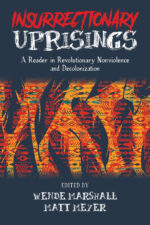
Insurrectionary Uprisings: A Reader in Revolutionary Nonviolence and Decolonization
Price range: USD $ 10.00 through USD $ 25.00Select options This product has multiple variants. The options may be chosen on the product page
Insurrectionary Uprisings: A Reader in Revolutionary Nonviolence and Decolonization
Price range: USD $ 10.00 through USD $ 25.00The volume includes two sections exploring nonviolence in the long Black freedom struggle within the US. From Ella Baker to Martin Luther King, Jr. and Fannie Lou Hamer, from Vincent Harding and Grace Lee Boggs to Colin Kaepernick, the two sections on the Black liberation movement highlight the theory of nonviolence in direct and indirect ways and foreground the relevance of these historic texts for the present moment of political uprisings on both the left and the right. Black strategies for survival and power are analyzed in terms of the ongoing US economic and epidemiological crises as well as the global climate crisis and ecological collapse. A section on revolutionary nonviolence in Africa presents a previously unpublished piece on the role of armed struggle by Franz Fanon, as well as essays by Amilcar Cabral, Barbara Deming, Graca Machel, Kenneth Kaunda, and Nozizwe Madlala-Routledge This section clearly contextualizes the continent’s anti-colonial struggles with the practical thinking about military and unarmed tactics which those movements faced over the course of a half-century.
The section on nonviolence and feminist struggle highlight the work of Grace Paley, Audre Lorde, and Arundhati Roy, along with a little-read piece by Johnnie Tilmon, a leader of the 1960s welfare rights movement. The section on resistance against empire tilts toward Latin American scholars/activists with essays by Maria Lugones, Anibla Quijano and Berta Caceres. This section includes pieces that draw from current debates about the role of state power in building towards radical change and the push to build holistic perspectives on what liberation means for all peoples. The final section on social change in the 21st Century reflects on specific aspects of organizing that are facing campaigns and movements of today and tomorrow. Our goal is to provide challenges and insights for building effectively against all forms of oppression! Though primarily compiling key texts not often seen or contextualized together, the book also provides new strategic commentaries from key leaders including Ela Gandhi, Ruby Sales, ecofeminist Ynestra King, Africa World Press’ Kassahun Checole, and Palestinian Quaker Joyce Ajlouney, Hakim Williams, and Mireille Fanon Mèndes-France.Select options This product has multiple variants. The options may be chosen on the product page