

Karim Hirji
Karim F Hirji is a retired Professor of Medical Statistics and a Fellow of the Tanzania Academy of Sciences. A recognized authority on statistical analysis of small sample discrete data, the author of the only book on the subject, he…

The underlying objective of this book is to promote equality, global peace, harmony, transparency, inter-faith solidarity and broad-based awareness so that new technologies like AI can be developed, controlled and harnessed in the endeavor to tackle problems like hunger, poverty, disease, poor education, misinformation, pandemics, loss of biodiversity, environmental damage, authoritarianism, militarism, irresponsible consumerism, mental alienation and corporate domination that are facing the human race today.
This objective is pursued by adopting an interdisciplinary approach to explore the intriguing confluence of artificial intelligence, social structure and faith at many levels. Numerous illustrative examples from religion majority and other nations grace these pages. They elucidate the structure, uses, benefits, and productivity gains of AI as well as the flaws, abuses, biases, hype, hallucinations, and harms associated with AI systems. Secular and religious ethical codes for AI are examined. It is seen that despite theological concerns, religion―Hinduism, Buddhism, Christianity, Islam, or Secularism―is not a barrier to wide practical adoption of AI. AI in education, medical diagnosis, science research and industry, the impact of AI on mental health and the environment, the notion of artificial super intelligence, military uses of AI, especially in the genocidal war on Gaza, AI in the Global South and the views of late Pope Francis on AI garner central attention. This book makes the case that corporate driven AI operating in the profit-oriented neoliberal, imperial setting will harm human cognitive abilities and mental health, undermine education, foster bias and mediocrity, facilitate the spread of misinformation, exacerbate national and international inequality, support authoritarian rule, worsen climate change and make warfare deadlier. AI can benefit humanity only under an egalitarian, genuinely democratic, environmentally aware social order.
Based on a depth of research, Karim Hirji’s Artificial Intelligence, Society and Religion presents, in readable prose, a comprehensive portrait of the inter-relationship between an ancient human pre- occupation and a modern multi-faceted instrument that may presage a post-human future. Covering Hinduism, Buddhism, Christianity, Islam and Secularism, it explores how these traditions use AI tools and navigate the ethical challenges of AI. The perspectives of religious dignitaries like the late Pope Francis and the Dalai Lama on AI are compared. Providing a broad introduction to the attainments as well as limitations of AI systems, the book also discusses the potential for the emergence of super-intelligent AI systems. Unlike other books on AI, Hirji’s magnum opus contextualizes AI and religions within the global neoliberal system and discusses how AI systems enable violations of human rights and facilitate the commission of genocide. —Abdul Paliwala, Emeritus Professor of Law, University of Warwick
Using a broad range of sources with fascinating insight, Karim Hirji explores the ever-expanding world of Artificial Intelligence to inquire: Will AI benefit or endanger humanity? Using numerous country-level case studies, he explores multiple instances of the utility and harms of AI and argues that corporate-controlled AI will not only exacerbate inequality, but also cause more harm than good. Focusing on Hinduism, Buddhism, Christianity, Islam and secularism, he critically examines faith-based reactions to AI. Among other topics cogently covered are the ethics of AI, education and AI, military applications of AI and the possibility of a superintelligent AI. Addressing questions vital for our and the future generations from a progressive perspective, this book deserves attention from all concerned with where AI is driving our world. —Elizabeth Jones, MA, Teacher, Quaker, Former Co-editor of Christian Today, UK.
Karim Hirji’s Artificial Intelligence, Society and Religion: Crossroads of Algorithm, Neoliberalism and Faith is a path-breaking, inspiring and challenging book on AI that will help strengthen the social movements of resistance throughout the world. It delegitimizes the ideological obfuscations of imperialism—from the crimes of Eugenics to the fantasy of a happy AI future. It takes us on a fascinating and challenging journey, warns us of the grave dangers posed by corporate AI, and prepares us for the next stage of the lifetime battle for anti-imperialist and socialist humanity. —Eric Mann, Author and Co-Director, Labor/Community Strategy Center, South Central Los Angeles.
USD $ 10.00 USD $ 55.00Price range: USD $ 10.00 through USD $ 55.00
Karim F Hirji is a retired Professor of Medical Statistics and a Fellow of the Tanzania Academy of Sciences. A recognized authority on statistical analysis of small sample discrete data, the author of the only book on the subject, he…
Preface
Introduction
Chapter 01 Intelligence
Chapter 02 Artificial Intelligence
Chapter 03 Religion
Chapter 04 Hinduism
Chapter 05 Buddhism
Chapter 06 Christianity
Chapter 07 Islam
Chapter 08 Secularism
Chapter 09 Neoliberalism
Chapter 10 Ruminations
Chapter 11 Genocidal AI
Chapter 12 AGI and ASI
Chapter 13 Mental Health
Chapter 14 AI Pitfalls
Chapter 15 AI Enigmas
Chapter 16 The Realm of AI
Appendix A AI Mechanism
Appendix B Palestine
Credits
References
Author Profile
| Book Format | Print Book, EPub, PDF |
|---|
Only logged in customers who have purchased this product may leave a review.

This is not a book about films in the conventional sense. It is a book about the conditions under which films become legible, forgettable, weaponised, or necessary.
Across essays that move between review and reportage, festival and platform, myth and documentary, Narendra Pachkhédé reads global cinema as a moral technology of the present. He follows the contemporary attention regime, the coercions of watchability, the choreography of awards and public virtue, and the quiet ways propaganda teaches a society what to feel plausible. The question is not only what we watch, but how we have been conditioned to watch: how viewing is trained by ideological settings, how sensibility is numbed by repetition and spectacle, how attention is corralled into habits that feel like choice.
This is a book about the world of cinema and its assemblages. It attends to cinema’s extended life in media ecologies: streaming interfaces and festival circuits, platform logics and institutional gatekeeping, the politics of narrative and the global circulation of stories. It returns repeatedly to the politics of reception, where a work is domesticated or rejected, where controversy polices a field, where filmmakers bond, quarrel, protect, and betray, and where institutions decide what counts as witness. Cinema, here, is not only an art form but a system of mediation that defines the political terms under which stories are consumed.
The book crosses geographies and film worlds, tracing how nations dream through genre and how history is refashioned into culture, suspended between memory and forgetting. From the seductions of nostalgia to the endurance of Béla Tarr, from Korean modernity’s neutralised ruptures to Palestinian cinema’s custody under pressure, these essays insist that cinema is never only an image. It is an argument about reality, and a rehearsal for what a public can bear to know.
The Cinema of Unfinished Witnessing asks a simpler, harsher question: why do some stories become global vigils while others vanish into the feed? It is a book about how we come to believe what we believe, and what cinema has to do with that failure. It is also a wager that, by looking closely and naming the terms of looking, one can still be a form of care.
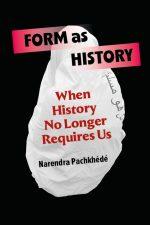
A rigorous and unsettling meditation on what it means to live in a world where history continues to function, but no longer feels compelled to answer to human life.
What becomes of history when it no longer requires struggle, meaning, or even us, yet continues efficiently all the same?
Refusing nostalgia and moralizing alike, the book examines how forms of life, particularly within Muslim legal and commercial traditions, have sustained obligation and necessity even after political centrality receded. Its aim is diagnostic rather than prescriptive: to make visible the quiet threshold where life is managed rather than addressed, and to clarify how historical necessity depends not on power or visibility, but on the survival of forms that still compel the world to answer.

“Once I Forget,” a collection of poems by John P. Portelli, originally written in Maltese and translated by Aaron Aquilina and John Martin. These sections include the title page, a preface by Professor Norbert Bugeja, and portions of the poems themselves, which explore themes of memory, exile, loss, and the poet’s childhood village, Ħad-Dingli. The preface highlights Portelli’s struggle with forgetfulness and his focus on the vanishing past, connecting his work to literary figures like Yeats and Walcott. Furthermore, the source provides biographical notes on the author, translators, and cover artist, Carmel Micallef, along with endorsements that praise the poetry’s transcendence of the lyric and its powerful exploration of nostalgia and the impossibility of return.
Translated from the Maltese by Aaron Aquilina and John Martin.
John P. Portelli treads along those nebulous cliff-edges where forgetfulness attempts to pick at the treacherous scabs of recall, capturing the vertigo of a distant childhood as it inches outward
into the land’s end of metaphor. — Prof. Norbert Bugeja
Portelli’s gorgeous poems speak of exile, searching, and loss in such a way that the reader becomes one with the village of his birth, the cliffs, the smells, his frail body, and the sea. —Jennifer Hosein, Tiohtià:ke/ Montreal-born writer, visual artist and educator, author A Map of Rain Days
..the poems of Once I Forget restore our faith in the transcendence of the lyric, in the power of song and secular psalm. — Karen Shenfeld, Canadian writer and film-maker,
author The Law of Return

In nearly three years, starting from early January 2020, the coronavirus directly and indirectly consumed the lives of nearly 20 million people worldwide. This book explores the interplay between the coronavirus pandemic and religion on the theological, institutional and societal dimensions. It focuses on Hinduism, Buddhism, Christianity, Islam and secularism, but some minor faith systems are also covered. Exploring the evolution of the pandemic in seventeen nations, it asks: Was religious belief an obstacle or a positive factor in understanding the scientific basis of the coronavirus pandemic? Did religious institutions, leaders and laity facilitate or block the implementation of the official pandemic control measures? Was the role played by religion in the coronavirus pandemic affected by historical, social, economic and political factors? How did secularism operate in the coronavirus pandemic? Did the coronavirus pandemic enhance or undermine religiosity? The basic aim is to draw lessons from this pandemic that will facilitate how humanity may deal with future pandemics in a just and egalitarian social order.

Religion, Eugenics, Science and Mathematics by Karim F Hirji examines the dynamic relationship between religion, on the one hand, and science and mathematics, on the other, on historical and conceptual grounds. It focuses on Hinduism, Buddhism, Christianity, Islam, and various shades of secularism, including Marxism. Where relevant, other faiths are integrated into the analysis. The questions it addresses include: Are religion and science mutually exclusive, opposing entities? Do divine beings and divine realms exist? Are science and religion valid but different forms of truth? What are the societal roles of science and religion? Can science provide a tenable, exalted code of ethics? What are the futures of religion and science? Can religion and science cooperate in resolving the daunting, existential problems facing humanity today? All issues are explored in an interdisciplinary, historical manner. Examination of the religious dimension of the doctrine of eugenics, which culminated in the Nazi era extermination pogroms, forms a major case study in the book.
Among other things, the book peruses scriptures, explores practice, enjoins analysis with anecdotes, and contrasts the beliefs of scientists and religious luminaries. Though it is directed toward the general reader, its novel approach, broad consideration of social and economic factors, and the nature of the evidence it has marshalled makes it of interest to theologians and scientists as well.
Religion, Eugenics, Science and Mathematics builds on the foundation laid in Religion, Politics and Society by Karim Hirji. In addition to eugenics, by relating religion to mathematics, genetics, neurology, climate change and other issues, the book reveals that the relationship between religion and science is a complex, entangled knot, not reducible to a simplistic summary.
The ultimate message of the book is that science and religion can exist harmoniously on the moral plane and that the primary obstacle facing human progress today is neither religion nor science but the dominant neoliberal system that generates vast inequality, deep social divisions, including religious divisions and a callous disregard for the global biosphere.

Written by Karim F Hirji, a retired professor of Medical Statistics, Religion, Politics and Society focuses on the four major global religions—Hinduism, Buddhism, Christianity and Islam—together with minor religions like the Ahmadiyya, Confucianism, Sikhism, Seventh Day Adventism and Traditional African Religion as well as on Secularism, New Age beliefs and the ancient Paleolithic and Neolithic era belief systems to explore the origin, spiritual import and social function of religion in human society. Utilizing the canons, beliefs, practices, history, eminent personages, institutions of the diverse faiths, it tackles matters like: How did the social function of religion evolve over time? How does religion relate to the power structure of society? Does religion promote or hinder social harmony, justice and equality? Under what circumstances? Is religion necessary for morality? What are the roots of interfaith conflict? How do modern religions and neoliberalism interact with each other? Does religion have a future? Can religion and secularism be harnessed for resolving the globally vexing yet pivotal concerns of human society? If so, how?
These and related issues are tackled with the help of a variety of past and contemporary individual level and broader type of richly illustrated examples. The role of women in religion a topic of focus throughout the text. The varied functions of religion under slavery, feudalism, capitalism, colonialism, neo-colonialism, imperialism. socialism, and neoliberalism are also attended to.
The foundational premise of this book is that while spiritual beliefs differ, all humans are equal in dignity and have equal rights. No religion is more exalted than others; there are no chosen people. We all belong to the global human family. Our religious and cultural diversity is a cause for celebration, not conflict.
Respectful in style and targeted towards the general and knowledgeable readers, Religion, Politics and Society is the first of a two-book project. The second book, Religion, Science and the Pandemic, addresses the relationship between religion, science and mathematics. The key objective of these books is to help uplift the quality and tenor of the current discourse on religion and explore how faith can promote human dignity, equality, social justice and harmony. A genuine consensus and peaceful coexistence cannot emerge from diluting the truth.
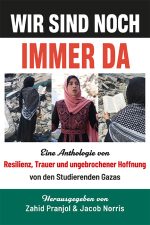
Professor Zahid Pranjol ist Professor für Biomedizinische Wissenschaften an der University of Sussex. Er ist eine führende Stimme in der inklusiven Wissenschaftsbildung und Lehrplanreform und leitet Bestrebungen zur Dekolonisierung des Lehrplans der Biowissenschaften, indem er eurozentrische Vorurteile hinterfragt und Leselisten diversifiziert. Seit April 2024 unterstützt er über 2.000 Studierende an drei großen Universitäten in Gaza, indem er Lehrmaterialien, Forschungsmentorate, Englischsprachtraining sowie Zugang zu professioneller und psychologischer Unterstützung bereitstellt.
Jacob Norris ist außerordentlicher Professor für Geschichte des Nahen Ostens an der University of Sussex. Er hat umfassend zur palästinensischen Geschichte im 19. und 20. Jahrhundert publiziert und arbeitet derzeit zur Geschichte der palästinensischen Solidarität in Lateinamerika.
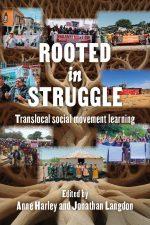
Edited by
Anne Harley and Jonathan Langdon
With
Edward Adeti, Coleman Agyeyomah, Sheena Cameron, Amanor Dzeagu, Leocadio Juracan Salome, Thapelo Mohapi, Zodwa Nsibande, Ro Paradela, Alhassan Shani, Wojciech Tokarz, & Nyeya Yen
This book is the culmination of several years of partnership between social movements, social justice organizations and academics in Ghana, South Africa, Guatemala and Canada. Called the Translocal Learning Network, this partnership has generated a space for those facing the multiple and overlapping crises of our time to come together and share knowledge and mutually solidarize with each other’s struggles. This knowledge exchange and mutual solidarity has been non-hierarchical and collaborative in nature, and has taken the form of sharing and commenting on complex stories of these struggles through a participatory research methodology known as narrative restorying. As such, this book will focus on the stories each partner has shared, along with engagement with these stories by other members of the network. This interplay of knowledge sharing will provide a window into the social movement learning of network members.
The central argument of the book was best captured by Thapelo Mohapi from South Africa’s Abahlali baseMjondolo: “It is always assumed that when you are poor, when you are living in a shack, when you live in a rural area, when you are marginalized, that you cannot think for yourself, that you cannot be involved in development, because you are poor”; instead of this “People must make decisions and must be consulted, and they must have a voice to speak about their own development. It must be initiated and completed with the people.” This book is literally a space where those on the front line of struggles against land & livelihood dispossession, violent resource exploitation, climate-fueled emergencies, and the denigration of cultural and traditional indigenous knowledge share their experiences, learning, successes, and defeats, with those facing similar and related struggles but in different contexts.
In addition to the stories of these front-line voices, scholars working alongside these struggles also share some of their learnings and ideas that have emerged from the partnership in the book. Students supporting the partnership also share their learning in the book, as well as describing how their activism also provoked learning in the network. In other words, this book provides a window into a rich, ongoing dialogue of mutual learning and support that will speak to audiences in the activist and critical academic communities.
To that point, this translocal network uses the notion of translocality to push back on the capitalist, colonial, and neo-liberal agenda of a) maintaining divisions between people struggling against oppression in different parts of the world (through border controls, language divisions, and colonial racialized othering); and, b) maintaining a knowledge hierarchy that states, international institutions, intellectual institutions, and corporations are those best able to contend with the many crises we face, and even within activists, it is those movements and organizations with broad, multinational reach that can best speak for the affected. Translocality argues that it is those with local knowledge of crises and context that are best positioned to speak to what needs to change, and that local struggles meeting each other as equals, translocally, is the best way to learn from one another without imposing new forms of knowledge hierarchies. Everaldo Morales Baján, from Commité Campisino del Altiplano (CCDA) in Guatemala captures this sentiment well when he says: “This book captures the essence and importance of the different struggles that exist in various parts of the world, but which converge on always caring for the planet and human rights.”
Chapter Summaries
Introduction: Translocal social movement learning: building mutual solidarity and contesting development for social and environmental justice
Jonathan Langdon; Sheena Cameron; Rodrigo Paradela; Wojciech Tokarz
In an effort to encourage connection and mutual learning between local movements, the Translocal Learning Network (TLN) serves as an effective social justice framework that attempts to build and maintain local to local (i.e. translocal) non-hierarchical connections between movements. The overall goal of this research partnership is to catalyze and animate translocal learning as a means to build capacity among localized movements in their struggles for a climate just and anti-capitalist future, and in so doing trace the contours of a theory of translocal learning – learning based on local to local learning as opposed to top down learning that mimics the very problematic of global dominance these movements contest. Key to this process is an insistence that movements and groups rooted in local social change efforts are crucial authors and actors of a climate just and anti-capitalist future. The members of the TLN address ongoing and emergent injustices to claim rights, assert agency, and demand representation and the redistribution of resources for marginalized communities in South Africa, Ghana, Guatemala and Canada. Creating shared spaces for connection, support, and learning through the ongoing struggles of each social movement has provided continuous moments of solidarity and opportunities for reimagining being in the world. This book showcases the perspectives of our partners, providing rich accounts of their experiences that illuminate struggles, insights, and successes. It also includes academic reflections on intercultural exchanges and offers an in-depth analysis of the collaborative learning process.
‘Players change but the game remains the same’: current realities of the poor, particularly in KwaZulu Natal
Zodwa Nsibande, Church Land Programme
This phrase was used by one member of Abahlali baseMjondolo in a meeting where we were talking about elections and the impact it has on people on the ground, especially who are marginalized and yet they are still expected to participate in the upcoming elections. She cautions that we need to be mindful that even if we change the ruling party, the ‘game’, the electoral system, remains the same, producing elites. Apartheid system favored ‘white’ people. Now the current system favors the elite. The ones who are poor remain poor and left with hope that someday things will change; hope that is shattered yet renewed every five years.
While there is less intense focus on South Africa now that apartheid is over, the sociological legacies continue and the fundamental nature or rules of the game remain intact. It points to the idea that regardless of who is involved, the main objectives, strategies, and overall dynamics of the game do not change. It emphasizes the notion that although the participants may alter, the essence of the game remains unchanged.
CLP will discuss the current realities of the poor, particularly in KwaZulu Natal, under the ongoing oppressive systems in South Africa, that permeates to all aspects of life, including the electoral system that favors the elites, the failing electricity system with load-sharing, and the improper stormwater drainage systems in townships and shack settlements, flood-prone areas (compounded by climate change) that results in loss of homes, food, and lives when it rains.
The Talensi-Nabdam Gold Rush: Local Complicity, Resource Exploitation, and the Crisis of Dignity
Coleman Agyeyomah Venceremos & Alhanssan Shani
This discussion will delve into the profound impact of multi-national mining activities on the communities of the Upper East Region in Ghana, specifically focusing on the alarming stories of dispossession of ancestral lands. The region, rich in cultural heritage and agricultural livelihoods, faces a growing threat as multi-national mining companies seek to exploit its abundant gold resources in collusion with State Institutions.
Through an exploration of real-life stories, light will be shed on the multifaceted consequences of multinational mining-induced dispossession of community lands. From the loss of cultural identity to the disruption of traditional farming practices and land degradation, this narrative will highlight the social, economic, and environmental toll on the affected communities.
The discussion will also provide a comprehensive overview of the mechanisms employed by multinational mining companies to acquire land and the subsequent displacement of local populations. Additionally, throws light on the challenges and complicity faced by these communities in seeking justice and recognition of their rights in the face of powerful corporate interests.
Gold Slavery in Talensi
Edward Adeti & Yen Nyeya, Savannah Research and Advocacy Network
Talensi is a small community in the Upper East Region of Ghana. The Upper East is one of the smallest regions in the country in terms of land size. The people of Talensi are predominantly subsistence farmers who rely on livestock and crop cultivation for their livelihoods.
Mining is one of the commercial activities that require huge parcels of land. Lands earmarked for mining are often fenced and are not available for any other activity even grazing of animals is often not allowed.
The people of Talensi stand the risk of losing their livelihoods due to the influx of a number of mining companies taking up almost 70% of lands earmarked for farming activities
The Río Negro massacre: The abandonment and criminalization of communities in Resistance by the State of Guatemala
Leocadio Juracan Salome, Commité Campisino del Altiplano (CCDA)
The water resource in the highlands of Guatemala, especially in the Verapaces region, has been the scene of large massacres against Indigenous peoples for the implementation of Hydroelectric Plants.
In the 70’s, resistance communities in the banks of Río Negro began facing persecution, dispossession, and criminalization. Río Negro is one of the great rivers that supply the largest Hydroelectric Plant in Guatemala called Chixoy. There were massacres, many disappeared, others forcibly displaced, exiled from their territories where they were born and others who remained in resistance.
With the largest hydroelectric plant in the country 4 kilometers away and despite suffering dispossession and criminalization, more than 500 families from the departments of Quiché, Alta and Baja Verapaz live in conditions of abandonment, without electricity, without development programs for health, housing, education etc.
Despite all the violations against humanity committed in the Río Negro Massacre, many Q’eqch’i’ Mayan families are still waiting for compliance with the resolutions of the Inter-American Court of Human Rights -IACHR-, which mandates the recognition of the violations of Human Rights, the compensation to the families and the legalization of some 1,500 caballerías of territory in favor of the families by the State of Guatemala.
We are not opposed to the energy transition, but respect for the lives of families, their development, respect for the life cycle of Rivers and Mother Nature.
Nothing about us without us – Everybody Thinks!
Thapelo Mohapi, Abahlali baseMjondolo
The dignity of the poor can only be achieved if they are part of their own development, becoming stewards and active participants on their own terms and by their own design. This must be a process undertaken from below, democratically, with people being consulted and making decisions, having a voice to speak about their own development. It must be initiated and completed with the people. “Nothing about us, without us”, the slogan used by many movements to demand that the full and direct participation of members must be integral to decision-making, grounds the work of Abahlali baseMjondolo, a shack dwellers movement in South Africa, with more than 180,000 members that was formed in 2005 to fight for, promote and advance the interests of the poor and marginalized.This contribution grows out of a critique of development and is grounded in the understanding that development is neo-colonial and neo-imperial and that is something that is imposed and done to poor people in the formerly colonized countries, with the backing and financial support of Western governments, aid agencies, companies, and local governments. It is always assumed that when you are poor, when you are living in a shack, when you live in a rural area, when you are poor and marginalized, that you cannot think for yourself, that you cannot be involved in development, because you are poor. AbM demonstrates that people and movements are capable of determining what is best for themselves and to ensure the dignity and rights of the poor.
Ada Songor Lagoon; Our Heartbeat!
Amanor Dzeagu, Radio Ada
November 6, 2023 has become another taboo day for the local salt producers in Ada, just as the police confrontation with community members that led to the death of a pregnant woman in 1985. The Story of the Songor Lagoon: Who Killed Maggie?
Mr. John Korletey Agormedah, a 52 year old salt winner died of bullet wounds after he has been shot three times during an attempt to protect his salt winning business. His killing occurred when a joint taskforce and state police sent by Electrochem Ghana Limited, a private company awarded the entire Ada Songor Lagoon in a monopoly lease by the government and some local chiefs to destroy the community members salt winning equipment in the lagoon communities. Local chiefs fail to condemn the barbaric killing of their subject after three months, rather, they quickly reacted and condemn a political candidate for his comments which has been deemed, uncultured language in a viral video. He has been fined 30,000 Ghana cedis, 4 Rams, 4 foreign schnapps or face a ban in the elections. The police continue to arrest, detain and prosecuting community members including chiefs with the offence of inciting community members against the private company.
Translation, Care, and Political Commitment in the Translocal Learning Network
Ro Paradela; Wojciech Tokarz
This chapter examines translation within the Translocal Learning Network as political infrastructure that shapes collaborative knowledge production. Through translator Ro Paradela’s work – employing gender-inclusive Spanish, strategic domestication, and simultaneous interpretation – translation emerges as relational labor that negotiates power, affirms identities, and fosters belonging across linguistic boundaries, transforming communication into an act of care and solidarity.
Research Assistant Learning from Social Movements (Pending)
Sheena Cameron; Ro Paradela
Cameron and Paradela add another dimension of learning in their chapter, sharing their own learnings and reflections from their participation in this network as research assistants, in relation to the changing context and expressed learnings of other former research assistants over the last twelve years, while simultaneously engaged in their own studies – Paradela as an undergraduate honours student, and Cameron as a PhD student.
Learning from subaltern social movements
Anne Harley; Jonathan Langdon
As engaged scholars, with a long interest in social movements, we have been working with some of the social movements who form part of this group over a number of years. We have learned a great deal from our interaction with them, and have worked together to begin to theorize this learning. In this contribution, we discuss what we mean by the concept ‘subaltern social movement’, and why we feel that the learning from such social movements is critical in current times.
Concluding Chapter
Translocal Learning Network
This chapter emerges from the collective reflections of the network on the process of creating the book, and what we have learned along the way. It will respond to the emergent themes and interlinkages identified in the opening chapter, but also highlight the ways in which we have all responded to each other’s stories, comments and analyses.
Author Bios
Edward Adeti, is a Ghanaian-born investigative journalist widely known for his anti-corruption work and courageous journalism despite facing threats. He was named Ghana’s best journalist in 2024 and won the best investigative journalist award the same year. Some of his notable works include: exposing Ghana’s justice system, leading to a judge’s recusal and a minister’s resignation; the documentary “Cash for Justice”, which led to a senior state attorney’s dismissal; “Stealing from the Sick”, an investigative piece exposing medicine theft at a government hospital, leading to arrests and prosecution of some members of a syndicate; and “Blood Gold”, a series he co-authored with Eryk Bagshaw, an Australian investigative journalist, on human rights violations by mining companies in Ghana, winning multiple international awards in 2023. He is a member of SRAN.
Coleman Agyeyomah formerly of Venceremos Development Consult is currently the Director, of Innovation Development Alternatives (IDEAs), a devolvement and organizational change NGO. Agyeyomah has over 20 years in facilitating and the mobilizing of Community Based Organizations/leaders for social change in poor and vulnerable communities of northern Ghana. Above all, he also teaches and provides field-based experiential learning support for students from Universities of Trent and St. Francis Xavier Canada.
Sheena Cameron is a Lecturer at St. Francis Xavier University (Canada) as well as a Research Coordinator of the Translocal Learning Network. She brings decades of community work in West Africa, Guatemala and Canada and community radio and podcasting experience to the writing of her chapter. She holds a Masters in Communication and Social Justice and she is currently completing a PhD in Social Justice Education at the Ontario Institute for the Study of Education (OISE) at the University of Toronto.
Amanor Dzeagu is a community radio practitioner and development communicator working with Radio Ada, a community radio station in the Greater Accra Region of Ghana. He works closely with local communities to tell their stories, document their traditions, and advocate for inclusive development through radio and community engagement. With a deep respect for the Dangme culture and indigenous systems, Amanor uses the community radio as a bridge between tradition, development, and the voices of the people. He brings more than two decades of community broadcasting experience to the writing of this chapter.
Anne Harley is a senior lecturer in adult education at the University of KwaZulu-Natal (Pietermaritzburg) in South Africa. Working within the radical adult education tradition, she is particularly interested in informal adult education/learning in/through/with struggle, and her work focuses on counter-hegemonic learning and theorising, particularly in subaltern social movements, and is thus related to issues of emancipatory politics, the notion of civil society, and discourses of ‘development’ in South Africa and beyond.
Leocadio Juracan Salome is one of the leaders of the Comité Campasino del Altiplano (CCDA), a large movement of peasant farmers in Guatemala. Leocadio brings decades of political and community organizing experience to CCDA’s contribution to the book.
Jonathan Langdon is a Professor at St. Francis Xavier University (Canada) in Development Studies and Adult Education. Langdon has over 20 years of community engagement, activist organizing and facilitation work, as well as being the convener of the Translocal Learning Network for the last 3 years.
Thapelo Mohapi was born in Matatiele in the Eastern Cape and raised in Durban, KwaZulu Natal. He is the current elected General Secretary of Abahlali baseMjondolo Movement SA, the movement of informal settlements in South Africa, numbering over 180,000 members. Prior to that, he was the chairperson of the Briardene branch in Durban within the movement. He also served as the Provincial Secretary of KwaZulu Natal. AbM is a movement that fights for land, housing and the dignity of the poor in South Africa.
Zodwa Nsibande is a social justice advocate and community leader from Durban, South Africa. She served as General Secretary of the Abahlali baseMjondolo youth league in 2009, she spoke out against the harmful effects of the FIFA 2010 World Cup on shack settlements , leading to threats that forced her into hiding. In 2011, she joined the South African delegation to the Ecumenical Accompaniment Programme in Israel and Palestine (EAPPI), spending three months advocating for peace and human rights. Since 2013, Zodwa has served as a Programme Activist at the Church Land Programme, supporting marginalized communities in securing land rights and dignified living conditions in both rural and urban areas. Most recently, she was a visiting scholar at the University of Sheffield’s School of Law in the United Kingdom from June 24 to July 26, 2024.
Ro Paradela (they/she) is a transfeminist activist from Mexico City. They graduated St. Francis Xavier University with Honours in Sociology and a Subsidiary in Women’s and Gender Studies. They are currently organizing in the fight against the crisis of transfemicidal violence in Mexico.
Alhassan Shani is a development practitioner and works with IDEAs, Northern-Ghana. He has over nine (9) years of experience in development research, community mobilization, social accountability, monitoring and evaluation of projects and development planning process. Alhassan’s development orientation is firmly rooted in participatory development. Additionally, he is passionate about research that encourages community participation, learning and action.
Wojciech Tokarz is a scholar and administrator serving as Associate Professor of Spanish and Interim Dean of the Faculty of Arts at St. Francis Xavier University (Canada). His research examines post-dictatorship Argentine literature, Indigenous representation, and translation theory, in particular how translation facilitates negotiation of Indigenous and LGBTQ+ identities, fostering belonging and advancing decolonial ethics. More information: https://wojciechtokarz.academia.edu
Nyeya Yen is a lifelong social justice activist with over 50 years of advocacy in Ghana and Africa. Exiled in 1982 under the Rawlings regime, he lived in Togo and the UK while campaigning for political justice. Returning in 2014, he continues to fight marginalization in mining-affected communities in Ghana’s Upper East Region.
DarajaPress uses Accessibility Checker to monitor our website's accessibility.
Eric Mann
Karim Hirji has written a deep, thoughtful, mind-boggling book about AI and Neoliberalism. Artificial Intelligence, Society and Religion: Crossroads of Algorithm, Neoliberalism and Faith (Daraja Press in collaboration with Zand Press) is a deeply theoretical and dense book—in the best sense of that word. I have read many pages more than three times because the subject is so complex and cannot be fully grasped in one reading—and each re-reading is a new journey of consciousness and insight. Eric Man: https://www.counterpunch.org/2025/10/24/a-space-odyssey-for-the-anti-imperialist-movement/