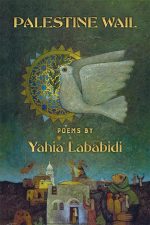
Lababidi’s Palestine Wail calls for the simplest, barest humanity, and it reminds us that loss of life, occupation, and genocide take an impossible toll on everyone. Finally, it holds us all accountable to address injustice, to dispel oppression and to work toward collaborative and restorative justice. In our interview, we focused on what he saw as our responsibility to humanity. — How Hope Outlasts Despair: An Interview with Yahia Lababidi — https://www.clereviewofbooks.com/writing/how-hope-outlasts-despair-an-interview-with-yahia-lababidi
…a poignant message of compassion and hope, the kind beautifully expressed by Yahia Lababidi in his #book #Palestine Wail,
@DarajaPress.
“Since purchasing the book, I have read the poem every day—it tends to feed my imagination.” https://boundlessphilanthropy.com/writings/tending-the-imagination-the-practice-of-creativity-care-challenge-compassion #poetry #Gaza
Renowned aphorist Yahia Lababidi’s Palestine Wail writes alongside a catastrophe beyond words, trying to shelter in words what remains of our humanity. To be a Minister of Loneliness and Lightkeeper, tending to the light. — Philip Metres, author of Fugitive/Refuge
Palestine is personal for writer, Yahia Lababidi. His Palestinian grandmother, Rabiha Dajani — educator, activist & social worker — was forced to flee her ancestral home in Jerusalem, at gunpoint, some eighty years ago.
As an Arab-American, Lababidi feels deeply betrayed by the USA’s blind support of Israel’s genocide of Palestinians.
In Palestine Wail, he reminds us that religion is not politics, Judaism is not Zionism, and to criticize the immoral, illegal actions of Israel is not antisemitism — especially since, as an Arab, Lababidi is a Semite, himself.
Using both poetry and prose, Lababidi reflects on how we are neither our corrupt governments, nor our compromised media. Rather, we are partners in humanity, members of one human family. Not in Our Name will the unholy massacres of innocent Palestinians be committed (two-thirds of whom are women and children) nor in the false name of ‘self-defense’.
In turn, Lababidi reminds us that starvation as a weapon of war is both cruel and criminal, as is collective punishment.
Palestine Wail invites us to bear witness to this historical humanitarian crisis, unfolding in real-time, while not allowing ourselves to be deceived, intimidated or silenced. We are made aware of the basic human truths that no lasting peace can be founded upon profound injustice and that the jailor is never Free…
Yahia Lababidi, an Arab-American writer of Palestinian background, has crafted a poignant collection which serves as a heartfelt tribute to the Palestinian people, their struggles, and their resilience in the face of an ongoing genocide and ethnic cleansing.
The collection, described as a love letter to Gaza, draws inspiration from the rich literary tradition of Palestinian resistance literature. Lababidi, known for his critically-acclaimed books of aphorisms, essays, and poetry, brings his unique voice to this personal, political and spiritual work.
Palestine Wail addresses us in a variety of voices: outrage, lamentation and pity, in attempting to honor the pain of the oppressed Palestinian people, while also celebrating their enduring spirit.
Lababidi’s Wail, ultimately, is a prayerful work seeking peace, healing and reconciliation—a testament to the transformative power of literature to keep hope alive in the face of seemingly insurmountable odds.
These are necessary and truthful poems. Yahia Lababidi powerfully illuminates this heartbreaking time and terrible season in the history of our world. This book, like a lantern in darkness, brings to light the truth of lives we must learn to honor and remember. — James Crews, author of Unlocking the Heart: Writing for Mindfulness, Creativity, and Self-Compassion
Yahia Lababidi’s stunning and resonant collection, Palestine Wail, addresses the outrage felt by many of the oppressed Palestinian supporters and more. He also speaks of the lamentations of his people and the show of pity, compassion, and empathy from many members of the human family from all around the world. — The Indefatigable Longing For Peace And Rapprochement In Yahia Lababidi’s Palestine Wail By Michael Parker.





Ana Bradley
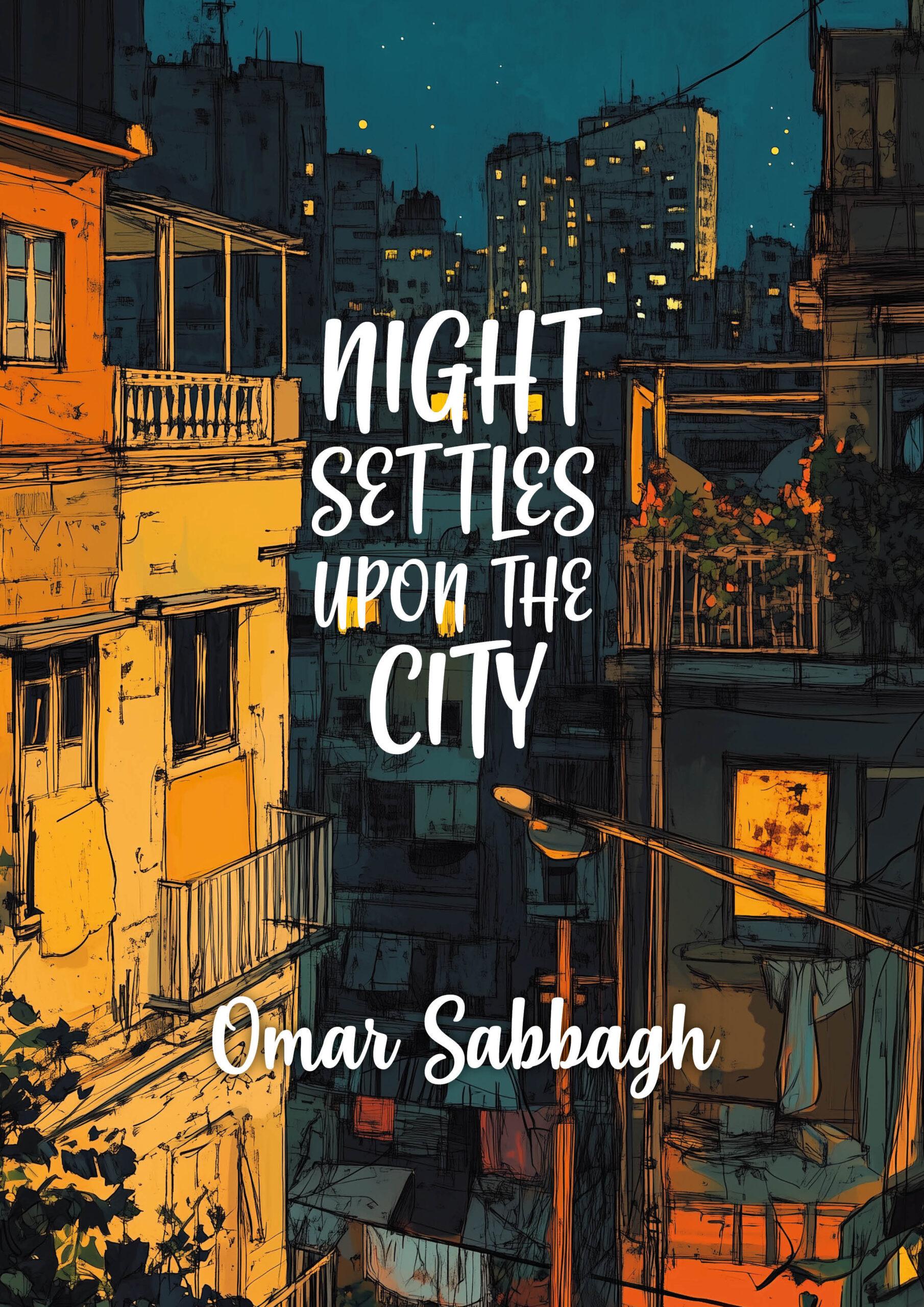
‘Dear Diary,’ writes Exeter alumnus Omar Sabbagh (1999, PPE) in the final stanza of his new poem, ‘War Diary’ (which can be read below). He goes on to ask his diary, or perhaps the reader, to ‘listen…log and gauge…be a refuge…be a place made sure’. Writing from Beirut, Sabbagh’s ‘War Diary’ is his way of documenting Israel’s attacks on Lebanon, ‘to make objective what is subjective and thereby control it and ease and quiet the anxiety that way’. The poem is part of his latest collection, Night Settles Upon the City, which acts, according to Fiona Sampson MBE FRSL, as a ‘book of witness to what cannot happen, and yet does’. …—Ana Bradley, Exeter College, Oxford University, https://www.exeter.ox.ac.uk/alumnus-omar-sabbagh-publishes-night-settles-upon-the-city/
RUTH AYLETT
In his collection Night Settles Upon the City, Omar Sabbagh tackles [the] question: how does a poet respond when war comes to his city? A British Lebanese poet, he now lives in Beirut, and his collection, published very quickly, begins with a Diary of the War, his real-time responses. This section includes some powerful pieces: Besieged begins: “It is morning again, but they have killed/ the morning. The book of life is blood-smattered/ and death is all we read.” In Noises of War: “Sirens wail their way across the streets below,/ and once again, the distance between life/ and death intoxicates the air.”