

Amrit Wilson
Amrit Wilson is a writer and activist on issues of race and gender in Britain and South Asian politics. She is a founder member of South Asia Solidarity Group and the Freedom Without Fear Platform, and board member of Imkaan,…

هندوتفا
وارتباطها بالصهيونية
أمريت ويلسون
سلسلة محاضرات عن إسرائيل
المساهمة: لاهور ألباست، مؤسسة الدراسات الفلسطينية، الولايات المتحدة الأمريكية
المشرف: الدكتور فيريندر سينغ كالرا
المحرر: طارق محمود، الجامعة الأميركية في بيروت
كتب هذا النص في كانون الأول/ديسمبر 2022، وهو مقتبس من محاضرة ألقيت بدعوة من مؤسسة الدراسات الفلسطينية. ومنذ ذلك الحين، تعمقت العلاقات بين إسرائيل والهند وتصاعدت الفظائع في كلا البلدين. في 5 إبريل 2023، اقتحمت قوات الاحتلال الإسرائيلي باحات المسجد الأقصى في القدس الشرقية المحتلة، واعتدت على المصلين بداخله. وفي الوقت نفسه، تواجه إسرائيل اضطرابات داخلية في الصراع بين مجموعة متنوعة، بما في ذلك أولئك الذين يعتقدون أن المستعمرة الاستيطانية الحالية هي دولة ديمقراطية ويريدون أن تبقى الأمور على ما هي عليه، وكذلك أولئك الذين يقفون على اليمين. والأهم من ذلك أن الحزب الحاكم في الهند، حزب بهاراتيا جاناتا، يدعم الخيار الأخير. يدور الكتاب حول هندوتفا، الأيديولوجية التي تحرك حكومة رئيس الوزراء ناريندرا مودي، حزب بهاراتيا جاناتا الذي يهيمن عليه الهندوس، والصهيونية، أيديولوجية دولة الفصل العنصري الإسرائيلية. وفي هذا العصر الذي يتسم بالفاشية الناشئة، تشكل هاتان الأيديولوجيتان المتشابهتان إلى حد لافت للنظر أهمية بالغة في تعزيز التحالفات الاقتصادية والعسكرية بين اثنتين من أكثر الدول اليمينية قمعية في العالم ـ وفي الوقت نفسه إضفاء الشرعية عليها في الساحات الثقافية. إن إسرائيل بلا شك دولة استعمارية استيطانية، لكنها أيضًا دولة فاشية، مثل الهند، ليس فقط بسبب “الأحزاب المتطرفة التي تشكل جزءًا من الحكومة” ولكن أيضًا “على حد تعبير مسؤوليها – نتنياهو ومروان بشارة”. نتنياهو هو “الأب الروحي للفاشية الإسرائيلية الحديثة”.
Written in December 2022, this text is based on a lecture given earlier at the invitation of the Institute of Palestine Studies. Since then, the relationship between Israel and India has deepened further and atrocities have skyrocketed in both countries. On 5 April 2023, Israeli forces stormed Al Aqsa Mosque compound in occupied East Jerusalem and attacked worshippers inside. At the same time, Israel is facing internal turmoil in a battle between a diverse group, including those who think the current settler colony is a democratic nation and want things to remain as they are, and those who stand even further to the right. Significantly, the BJP, India’s ruling party, supports the latter. This book is about Hindutva, the ideology which drives the Hindu-supremacist Bharatiya Janata Party (BJP) regime of Prime Minister Narendra Modi, and Zionism, the ideology of the Israeli apartheid state. In this era of rising fascism, these two remarkably similar ideologies are crucially important in cementing the economic and military alliance between two of the world’s most repressive right-wing states – while helping to legitimize them in cultural arenas. Israel is, of course, a settler colonial state, but it is also, like India, a fascist state, not only because of ‘the extremist parties that [are] part of the government’ but also because of ‘their enablers – Netanyahu and his chauvinistic Likud party which long strove for a Jewish state dominating both sides of the Jordan River.’ In the words of Marwan Bishara, Netanyahu is ‘the godfather of modern Israeli fascism.’
Amrit Wilson is a writer and activist on issues of race and gender in Britain and South Asian politics. She is a founder member of South Asia Solidarity Group and the Freedom Without Fear Platform, and board member of Imkaan,…
| Book Format |
|---|
There are no reviews yet.
Only logged in customers who have purchased this product may leave a review.

The Spanish translation of original English edition of Gaza Held in Time is now available, published by Nota al margen in Spain. Copies of this publication are available here: https://www.notalmargen.com/libros/gaza-abrazada-en-el-tiempo/
«Sigo sin saber por qué amamos a Gaza. Tal vez porque nadie más lo hará. O porque dejar de amarla significaría renunciar a nosotros mismos. Ta vez nunca entienda el por qué, o bien sea algo que no necesito explicar. Quizá el amor es lo que queda cuando no queda nada. O quizá, solo quizá, no sea amor en absoluto, sino dolor. Una negativa a dejar de preocuparse, incluso cuando está en llamas. Esto no es una respuesta. Es lo que descubrí cuando empecé a preguntar. Sentir amor por Gaza no es lógico»
Le solía contar cuentos a mi hermana pequeña antes de dormir. Inventaba ciudades con árboles mágicos y bicicletas voladoras, donde la gente no se escondía bajo el hueco de la escalera ni revisaba el depósito de agua a diario, donde nadie se moría ni se suspendían las clases porque la escuela había sido bombardeada.Ella se reía y me preguntaba:
—¿De verdad, eso existe?
—Todavía no —le respondía.
Ese era el truco en Gaza. Decíamos «todavía no», en lugar de «nunca».
Porque la esperanza era lo único que no podían bombardear.
El cielo gritaba fuerte. Y sigue haciéndolo.
Ahora, en lo más hondo de mí, espero el día en que todo se quede en silencio.
Y cuando eso ocurra, alzaré la mirada, no con miedo, sino en paz.
Ese día no ha llegado.
Pero seguimos soñando.
Y seguimos viviendo.
«Busco por todas partes un cielo del que esté ausente la muerte. Estoy segura de que está ahí, cuando compruebo los callejones y las avenidas. Se dice que existe justicia bajo ese cielo. Justicia es lo que siempre he anhelado y buscado».
«¿Seguiremos durmiendo en tiendas de campaña durante años? ¿Crecerán los niños entre paredes de nailon, aprendiendo a dibujar con cenizas? ¿Qué ocurrirá cuando el mundo siga adelante —de nuevo— y los únicos que queden para recordar este horror sean quienes no pudieron huir de él?».
«si dejo de escribir, / el silencio escribirá en mi lugar. / Y temo lo que pueda contar».

In Partitions of the Heart: Unmaking the Idea of India, human rights and peace worker Harsh Mander takes stock of whether the republic has upheld the values it set out to achieve and offers painful, unsparing insight into the contours of hate violence. Through vivid stories from his own work, Mander shows that hate speech, communal propaganda and vigilante violence are mounting a fearsome climate of dread, that targeted crime is systematically fracturing our community, and that the damage to the country’s social fabric may be irreparable. At the same time, he argues that hate can indeed be fought, but only with solidarity, reconciliation and love, and when all of these are founded on fairness.
‘At last a book that turns a powerful searchlight on the evil tide of hatred and violence stalking our country, where our minorities live in fear, and Muslims among us are killed under a government that has declared war on Islam.’ —Nayantara Sahgal, journalist, author of Day of Reckoning: Stories (2015).
‘Harsh Mander’s is the voice of Kabir come alive in our violent times. We can hear it to our redemption, ignore it to our peril.’ —Gopalkrishna Gandhi, former administrator and diplomat, Governor of West Bengal 2004-2009
This book is absolutely mandatory reading. You owe it to the much-vaunted “motherland” which is being abused so shamelessly.’—Kiran Nagarkar, novelist, playwright, film critic and screenwriter.

While awareness and global solidarity with Palestine have grown, mainstream frameworks often remain narrowly focused. Common approaches typically confine the issue to Israel, the West Bank, and Gaza, or reduce solidarity to a matter of human rights and international law violations.
Although engaging formal institutions to end Israel’s genocide, apartheid, and occupation is a necessary strategy, such a focus can inadvertently depoliticize the Palestinian struggle. It frequently overlooks the foundational settler-colonial nature of the Israeli state, the unwavering material and ideological support it receives from Western powers, and Palestine’s profound significance within broader historical and contemporary anti-colonial movements.
The ongoing Western-backed genocide has starkly revealed the political divergence between the West and the Global South. In contrast to institutional complicity and failure, the enduring legacy of anti-colonial solidarity across the Global South has resurfaced as a vital force. As liberal international systems prove ineffective, rebuilding and strengthening transnational solidarity networks has become an urgent imperative to halt the genocide and achieve a liberated Palestine.
A deeper understanding requires a framework that connects Palestine to wider regional dynamics, global power structures, and the long arc of anti-colonial resistance. Towards Palestinian Liberation is an edited volume that reaffirms the Palestinian struggle as an intersectional and transnational anti-colonial fight.
Bringing together diverse perspectives from scholars and activists worldwide, this collection moves beyond mainstream narratives. It explores the interconnectedness of global struggles, examines the role of economic and political interests, and critically assesses the opportunities and challenges facing international solidarity movements. This book is essential for anyone committed to understanding—and advancing—the cause of justice and liberation in Palestine.
I can think of no other book that addresses the question of solidarity with Palestine and Palestinians as urgently and as eloquently as this collection – Laleh Khalili, author of Heroes and Martyrs of Palestine: The Politics of National Commemoration
A crucial intervention in these tumultuous times – Yara Hawari, co-director at Al-Shabaka: The Palestinian Policy Network
A book that proves once again that writing and recording is itself resistance – Anuradha Chenoy, Adjunct Professor, Jindal Global University, India; Associate, Transnational Institute
Wide-ranging yet coherent, intellectually ambitious yet grounded in praxis – Hossam El-Hamalawi, scholar specialising in the Egyptian military and policing
An astonishing book – an answer to despair … I can think of no more necessary or important book for those of us determined to revolutionise our world – Leo Zeilig, writer, novelist and author of A Revolutionary of Our Time: The Walter Rodney Story
It stands as both an ode to hope and a practical manual for liberation – Shahd Hammouri, Lecturer in International Law and Legal Theory, University of Kent
This book is a living archive of resistance – unfolding across geographies, histories, and generations … If there is one book to read in these times, this is it – Madhuresh Kumar, Resistance Studies Fellow, University of Massachusetts Amherst; former national convener of the National Alliance of People’s Movements, India.
The authors in this urgent collection demonstrate the world-historic character of the struggle for Palestinian liberation – Thea Riofrancos, author of Extraction: The Frontiers of Green Capitalism
This is the book our moment demands – Omar Abdeljawad, writer and Assistant Professor at Birzeit University, Palestine
This book is essential reading for anyone who wants to understand why Palestinian liberation cannot be separated from revolutionary and anti-colonial struggles across the world… [it] will play a vital role in educating a new generation of activists – Anne Alexander, author of Revolution is the Choice of People
This timely and generous collective effort by renowned scholars and activists is a must-read – Ndongo Samba Sylla, Head of Research and Policy for the Africa Region at International Development Economics Associates (IDEAs)
An indispensable book about one of our times’ most important political causes – Miriyam Aouragh, professor and author of Palestine Online
This book is a lesson in internationalism and the need to organise in order to practise it – Sabrina Fernandes, Brazilian economist, author and ecosocialist activist
This book is an indispensable resource for anyone committed to the belief that a better world is necessary and must be fought for – from many rivers to many seas – Salim Vally, Professor, Faculty of Education, University of Johannesburg
An indispensable intervention … Reading this book is an essential antidote to the darkness and despair that permeates this moment – Grieve Chelwa, Associate Professor of Political Economy, The Africa Institute, Global Studies University
This work stands as a guiding light for those committed to a liberated Palestine in a liberated world – ClaraMattei, author of Escape from Capitalism, founder of The Forum For Real Economic Emancipation (FREE)
What distinguishes this collection is its refusal to treat Palestine as an exception. It places Palestinian liberation where it belongs — at the centre of a global confrontation with empire, fossil capitalism, and the architectures of racial domination – Yanis Varoufakis, Greek economist and author of Technofeudalism: What Killed Capitalism
An essential read to keep hope alive and to remember Ghassan Kanafani’s words: ‘As long as we struggle, we are not defeated’ – Olfa Lamloum, political scientist, filmmaker and president of The Legal Agenda, Tunisia
Historically informed, strategically oriented … crucially important and timely – Gyekye Tanoh, Freedom and Justice for Palestine (Ghana) and member of Global Ecosocialist Network
A must-read for anyone interested in understanding the struggle for Palestine and beyond – Rima Majed, Associate Professor of Sociology at the American University of Beirut
Indispensable for an acquaintance with Palestinian resistance that goes beyond reading the headlines – Walden Bello, Filipino scholar-activist and Right Livelihood awardee 2003
This book could not be more timely. … A book from the movement and for the movement, it provides us with essential tools to continue and globalise the anti-imperialist struggle – Lucia Pradella, Reader in International Political Economy, King’s College London
Here, for the first time, we get a chance to see Palestine and its struggle through the eyes of the majority of humanity – the global South, that is … an invaluable resource – Andreas Malm, author of The Destruction of Palestine Is the Destruction of the Earth.
Shines a new and revealing light on decades of anti-colonial, anti-imperialist struggles … This book will be welcomed by both analysts and activists – Brid Brennan, Transnational Institute Fellow
The Palestinian struggle for liberation is inseparable from histories of anti-colonial resistance and internationalist solidarity … this volume reclaims that radical tradition – Omar Jabary Salamanca, Professor of Social Sciences, Université libre de Bruxelles.
A crucial collection for those of us trying to find a way forward in a world shaped by genocide, rising fascism, aggressive imperialism, and climate catastrophe. – Sai Englert, author of Settler Colonialism: An Introduction
For full versions of these endorsements, view the ‘Review’ tab below.

Professor Zahid Pranjol ist Professor für Biomedizinische Wissenschaften an der University of Sussex. Er ist eine führende Stimme in der inklusiven Wissenschaftsbildung und Lehrplanreform und leitet Bestrebungen zur Dekolonisierung des Lehrplans der Biowissenschaften, indem er eurozentrische Vorurteile hinterfragt und Leselisten diversifiziert. Seit April 2024 unterstützt er über 2.000 Studierende an drei großen Universitäten in Gaza, indem er Lehrmaterialien, Forschungsmentorate, Englischsprachtraining sowie Zugang zu professioneller und psychologischer Unterstützung bereitstellt.
Jacob Norris ist außerordentlicher Professor für Geschichte des Nahen Ostens an der University of Sussex. Er hat umfassend zur palästinensischen Geschichte im 19. und 20. Jahrhundert publiziert und arbeitet derzeit zur Geschichte der palästinensischen Solidarität in Lateinamerika.
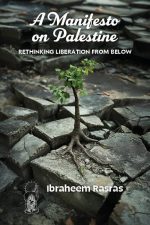
We are excited to share a summary of a truly transformative new work, A Manifesto on Palestine: Rethinking Liberation from Below, by Ibraheem Rasras. This manifesto offers a profound and challenging re-evaluation of the Palestinian struggle, urging us to look beyond conventional political and diplomatic frameworks to envision a radically different path to freedom and self-determination.
The Core Diagnosis: Beyond Material Occupation
Rasras argues that the Palestinian crisis is not merely a material one of occupation, dispossession, and statelessness, but also a deep “epistemological crisis”. The very structures intended for liberation, the manifesto asserts, have been “subverted, diverted, or rendered ineffective by the very forces they seek to fight”. This is evident in the recurrence of atrocities, reminiscent of past massacres, seen in Gaza from 2023 onwards. A central critique is leveled against the adoption of hierarchical, statist, and technocratic forms of liberation, which have come to tragically resemble the configuration of the oppressor, shedding their ethical and revolutionary essence. The Oslo Accords are cited as a prime example, transforming the language of liberation into one of “formalized managerial governance” and “conditional sovereignty”. This has contributed to a profound “void in the political contextualization and ethical framework of the political ruling”.
The Problem of “Stylistic” Resistance and Internalized Colonialism
The manifesto identifies how Palestinian resistance has, over decades, shifted from revolutionary, bottom-up rhetoric to institutionalized and compromised modes, particularly after the Oslo Accords. It introduces the concept of “stylistic” liberation, where leaders impose their imagined schemes rather than adapting to the realities on the ground, leading to an “alienus” leadership that lacks genuine popular allegiance. This “stylistic” approach also manifests when liberation is pursued through “tools of trivialization” that are external to the collective’s specific needs, such as placing prolonged peace negotiations *before* achieving liberation. This externalization, mirroring the colonizing process itself, leads to a form of alienation, obstructing collective self-control and, in many cases, resulting in the unconscious participation of the colonized in their own subjugation. Distrust stemming from unfulfilled promises by factions like Hamas and Fatah has further deepened fragmentation and a sense of “strangeness” among Palestinians.
A New Strategy: The Ethics of Resistance and Anarchic Programs
To counter this multifaceted crisis, the manifesto proposes a radical alternative: a “bottom-up resistance” grounded in a unified mode of ethics, a collective understanding of the cause, and consistent practices. This “ethics of resistance” is not a rigid dogma but an “emancipatory code” and a regulatory framework for all aspects of Palestinian daily life, directly confronting neoliberal values like profit-maximization. It is intertwined with the urgent need for a “cultural revolution” that aims to restructure social circumstances and foster a “revolutionary consciousness”. This cultural shift, implemented in successive waves, includes intensive education on human rights and rooting new “networking-elements” within Palestinian social and cultural life. The goal is to establish a “solid reference-point” that can unify Palestinians, whose power has been fragmented by internal divisions and external pressures.
The manifesto champions “anarchic programs” as a strategic framework to dismantle subjugation. This involves collectively disengaging from oppressive laws and creating a vacuum for temporary self-management, thereby strengthening local grassroots power. It envisions an “anarchic rule” based on “organic units” and “free cooperation,” emphasizing self-management, direct worker control, and integrated agriculture and industry. This approach aims to organize Palestinians without the fear of division or surveillance that has plagued traditional political structures.
The Power of the Everyday
Crucially, the manifesto points to the already existing “affirmative, anarchic, and ethical politics” in fragments throughout Palestinian society. These are not found in the monopolies of NGOs or political parties, but in the “spontaneous and often-unrecognized social inventions of ordinary people”. Examples include mutual aid networks in Gaza during siege, informal community schooling, grassroots organizing, and the refusal to cooperate with surveillance. These acts of “everyday resistance”—like a student crossing a checkpoint or a mother going to work despite immense barriers—are seen as foundational for a new paradigm of collective ethics and political orientation.
Toward a Horizon of Liberation
A Manifesto on Palestine is a bold call for “breakage,” arguing that “no gradual reform will bring freedom”. It is an “epistemological” task to unveil and amplify these lifeways and forms of knowledge, leading to an ethical reconstruction for a collective life that rejects domination in all forms. The manifesto asserts that the future of Palestine will not come from foreign beneficence or failed peace talks, but will be “constructed by the long disenfranchised of the political arithmetic: the dispossessed, the alienated, the uncredentialed, the everyday”. It invites all to engage in “a problem to be enjoyed more than an answer to be spewed back,” asserting that “freedom must be written by individuals who are living alternatively”.
We encourage you to delve deeper into this profound manifesto and join the critical conversation about rethinking liberation from below.
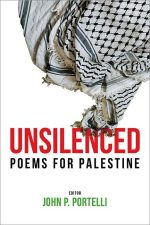
Unsilenced: Poems for Palestine is a collection of poems that convey profound emotions and serious reflections on the ongoing situation in Gaza and Palestine since the Nakba. The anthology seeks to express the moral outrage felt by poets from around the world, highlighting the perceived double standards of the West regarding international law and the suffering of the Palestinian people. The poems examine the daily realities of life and philosophical perspectives on the human condition, using nature as a motif to articulate emotions and explore themes of homeland, childhood, exile, genocide, and war. All proceeds from the sale of the collection will be donated to Gaza, demonstrating the poets’ commitment to fostering positive change through their art. Contributors include diverse voices from various countries, each recognizing the urgency and necessity of addressing the inhumane actions perpetrated against Palestine.
Income from the sale of this title will be donated for Palestine.
Praise for Unsilenced
Haunting verses by poets fluent in the language of death and genocide. Each poem rings out as a piece of memory, a bridge and a dream. This elegy will stand as a testimonial, a witness, by brave voices exhausted by the deafening silence of a traumatized world. —Nnimmo Bassey, author of I See the Invisible (poems) and Laureate of the Right to Livelihood Award 2010
… the priceless value of an anthology of lyrics from yet another encircled, blitzed, strafed, and bombarded commune, ghetto, or kibbutz, is that it bears indelible witness to the unbreakable human spirit yearning for freedom, for peace, for bread and wine and water set amid an olive grove or a lemon orchard. That is what you will unfold in editor John P. Portelli’s Unsilenced: Poetry for Palestine. Poets—Jew and Arab, Muslim and Christian, Atheist and Surrealist—voice suffering, resilience, despair, and hope, speaking out of their fragile humanity to demand that vile atrocities cease. — George Elliott Clarke, author of Canticles I-III, 6 vols, MMXVI-MMXXIII (2016-2023)
Unsilenced shows how poetry is written to trigger and provoke, to bear witness, to look at the sky and shout, over and over, as loudly as necessary against injustice. Immanuel Mifsud, Associate Professor, University of Malta and winner of the European Union Prize for Literature (2011).
Contributing Authors

We have just learned that this book has won a prize from the Eyelands Book Awards https://eyelandsawards.com/2025/12/30/2025-prize-grand-prize-winners/
Congratulatons Njoud Salem!!
These memoirs bear witness to the harrowing reality of survival during the devastating war on Gaza. Through vivid personal narratives, they capture the daily struggle for existence—the scarcity of food and water, the constant threat of bombardment, and the profound psychological trauma. Yet, they delve far deeper than mere physical survival, exploring the profound wounds of displacement: the heartbreak of leaving behind a home, a street, a neighborhood, and the irreplaceable fragments of a life forever shattered.
The pages reveal families huddled in schools-turned-shelters, sharing morsels of bread and whispering prayers for a safe dawn. This collection is both a testament and an act of resistance. It refuses to let the world reduce human beings to mere statistics, insisting instead on honoring every story, every face, and every name. It bears witness not only to the destruction but also to the unbroken spirit of a people determined to live, dream, and rise again.
While rooted in immense suffering, these narratives are also profound meditations on dignity, love, and an unshakable will to persevere. At once personal and collective, they amplify the voices of a generation too often silenced by conflict, posing urgent questions about justice, memory, and the future. They ensure these essential stories are never buried beneath rubble or lost to cold statistics.
In the midst of fire and fear, these words declare: “We are still here. We remember.” This act of testimony—to feel, to survive, and to hold onto love when the world offers none—becomes the most honest act of living. Through these pages, the reader is invited not only into a world of unimaginable hardship but also into the profound depths of human endurance, the richness of Arab culture, and the unwavering faith that guides a people forward.

This is a Bengali translation of Hindutva and its relationship with Zionism, by Amrit Wilson: ISBN 978-1-990263-76-7. Written in December 2022, this text is based on a lecture given earlier at the invitation of the Institute of Palestine Studies. Since then, the relationship between Israel and India has deepened further and atrocities have skyrocketed in both countries. On 5 April 2023, Israeli forces stormed Al Aqsa Mosque compound in occupied East Jerusalem and attacked worshippers inside. At the same time, Israel is facing internal turmoil in a battle between a diverse group, including those who think the current settler colony is a democratic nation and want things to remain as they are, and those who stand even further to the right. Significantly, the BJP, India’s ruling party, supports the latter. This book is about Hindutva, the ideology which drives the Hindu-supremacist Bharatiya Janata Party (BJP) regime of Prime Minister Narendra Modi, and Zionism, the ideology of the Israeli apartheid state. In this era of rising fascism, these two remarkably similar ideologies are crucially important in cementing the economic and military alliance between two of the world’s most repressive right-wing states – while helping to legitimize them in cultural arenas. Israel is, of course, a settler colonial state, but it is also, like India, a fascist state, not only because of ‘the extremist parties that [are] part of the government’ but also because of ‘their enablers – Netanyahu and his chauvinistic Likud party which long strove for a Jewish state dominating both sides of the Jordan River.’ In the words of Marwan Bishara, Netanyahu is ‘the godfather of modern Israeli fascism.’ This essay focuses primarily on Hindutva, discussing Zionism mainly to highlight its similarities, links and increasing alliances with Hindutva.
DarajaPress uses Accessibility Checker to monitor our website's accessibility.