

Partitions of the Heart: Unmaking the Idea of India
In Partitions of the Heart: Unmaking the Idea of India, human rights and peace worker Harsh Mander takes stock of whether the republic has upheld the values it set out to achieve and offers painful, unsparing insight into the contours of hate violence. Through vivid stories from his own work, Mander shows that hate speech, communal propaganda and vigilante violence are mounting a fearsome climate of dread, that targeted crime is systematically fracturing our community, and that the damage to the country’s social fabric may be irreparable. At the same time, he argues that hate can indeed be fought, but only with solidarity, reconciliation and love, and when all of these are founded on fairness.
‘At last a book that turns a powerful searchlight on the evil tide of hatred and violence stalking our country, where our minorities live in fear, and Muslims among us are killed under a government that has declared war on Islam.’ —Nayantara Sahgal, journalist, author of Day of Reckoning: Stories (2015).
‘Harsh Mander’s is the voice of Kabir come alive in our violent times. We can hear it to our redemption, ignore it to our peril.’ —Gopalkrishna Gandhi, former administrator and diplomat, Governor of West Bengal 2004-2009
This book is absolutely mandatory reading. You owe it to the much-vaunted “motherland” which is being abused so shamelessly.’—Kiran Nagarkar, novelist, playwright, film critic and screenwriter.
USD $ 18.00

In Partitions of the Heart: Unmaking the Idea of India, human rights and peace worker Harsh Mander takes stock of whether the republic has upheld the values it set out to achieve and offers painful, unsparing insight into the contours of hate violence. Through vivid stories from his own work, Mander shows that hate speech, communal propaganda and vigilante violence are mounting a fearsome climate of dread, that targeted crime is systematically fracturing our community, and that the damage to the country’s social fabric may be irreparable. At the same time, he argues that hate can indeed be fought, but only with solidarity, reconciliation and love, and when all of these are founded on fairness.
‘At last a book that turns a powerful searchlight on the evil tide of hatred and violence stalking our country, where our minorities live in fear, and Muslims among us are killed under a government that has declared war on Islam.’ —Nayantara Sahgal, journalist, author of Day of Reckoning: Stories (2015).
‘Harsh Mander’s is the voice of Kabir come alive in our violent times. We can hear it to our redemption, ignore it to our peril.’ —Gopalkrishna Gandhi, former administrator and diplomat, Governor of West Bengal 2004-2009
This book is absolutely mandatory reading. You owe it to the much-vaunted “motherland” which is being abused so shamelessly.’—Kiran Nagarkar, novelist, playwright, film critic and screenwriter.
| Book Format | Print Book |
|---|
Customer Reviews
There are no reviews yet.
Only logged in customers who have purchased this product may leave a review.
Related products
-
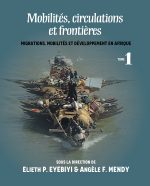
Mobilités, circulations et frontières
USD $ 5.00 USD $ 30.00Price range: USD $ 5.00 through USD $ 30.00Select options This product has multiple variants. The options may be chosen on the product page
Mobilités, circulations et frontières
USD $ 5.00 USD $ 30.00Price range: USD $ 5.00 through USD $ 30.00Ce livre est un apport précieux pour demander à changer de focale et de perspective au sujet des migrations à l’intérieur du continent africain. Celles-ci sont bien plus importantes quan- titativement, mais aussi économiquement et historiquement, que les migrations de l’Afrique vers l’Europe. Elles sont beaucoup plus silencieuses et infiniment moins étudiées que celles du Sud vers le Nord. Ces migrations sont vitales, tant pour les pays de départ que pour ceux d’arrivée. Ainsi, des millions de jeunes partent chaque année pour les pays de la côte, et cela sans susciter les mêmes résistances, fantasmes et peurs qu’en Europe.
Cet ouvrage a le grand mérite d’intégrer les migrations dans la perspective plus large des mobilités, puis d’en examiner les liens avec le développement. Il est rédigé par de jeunes chercheurs africains, qui produisent à partir de leurs terrains spécifiques des analyses à valeur générale sur les sociétés contemporaines. Ils contribuent ainsi au renouvellement des sciences sociales à partir des pays africains.
On peut en revanche souligner que l’ouvrage a relevé un défi important : celui d’éclairer à la fois les dynamiques de l’expérience migratoire, des trajectoires suivies par les migrants et des espaces migratoires à l’intérieur de l’Afrique. — Sylvie Ayimpam, « Mobilités, circulations et frontières. Migrations, mobilités et développement en Afrique », Anthropologie & développement [En ligne], 51 | 2020, mis en ligne le 01 décembre 2020, consulté le 23 février 2021. URL : http://journals.openedition.org/anthropodev/1068 ; DOI : https://doi.org/10.4000/anthropodev.1068
These companion volumes are refreshing because they introduce us to many less well- known instances which amply illustrate just how mobile African populations really are at the regional, intra-regional and global scales. – Paul NUGENT, University of Edinburgh (United Kingdom)
Un ouvrage d’une grande actualité qui aborde la question des migrations sous un angle radicalement nouveau et original : l’articulation dynamique entre la migration, la mobilité et le développement en Afrique de l’Ouest. Ces deux volumes bilingues renouvellent le débat sur les migrations : de quoi faire réfléchir ensemble l’Afrique et l’Europe. – Marie-Caroline SAGLIO-YATZIMIRSKY, INALCO, CESSMA Paris (France)
Christian Bouquet, « Quelques éclairages nouveaux sur les migrations africaines », EspacesTemps.net [En ligne], Books, 2020 | Mis en ligne le 20 November 2020, consulté le 20.11.2020. URL : https://www.espacestemps.net/en/articles/quelques-eclairages-nouveaux-sur-les-migrations-africaines/ ; DOI : 10.26151/esapcestemps.net-jc2a-6b03
Avec la participation de Naluwembe BINAISSA, Alimou DIALLO, Nyalo Barkissa DRABO, Sylvester KOHOL, A. Aziz MOSSI, Loppa NGASSOU, Lawrence Rafaih OKELLO, Mutiat Titilope OLADEJO, Zakaria SORÉ, Astadjam YAOUBA et Irissa ZIDNABA.
Select options This product has multiple variants. The options may be chosen on the product page -

Revolutionary Hope vs Free-Market Fantasies Keeping the Southern Africa Liberation Struggle Alive: Theory, Practice, Context
USD $ 5.00 USD $ 20.00Price range: USD $ 5.00 through USD $ 20.00Select options This product has multiple variants. The options may be chosen on the product page
Revolutionary Hope vs Free-Market Fantasies Keeping the Southern Africa Liberation Struggle Alive: Theory, Practice, Context
USD $ 5.00 USD $ 20.00Price range: USD $ 5.00 through USD $ 20.00John S. Saul, born and first educated in Toronto, Canada, moved to Tanzania almost sixty years ago and, since then, has also taught in Mozambique and South Africa as well as back in Canada at York University. In Tanzania, he discovered the centrality of the war for freedom from white rule and global capitalist dictate then taking shape further south – in Mozambique, Angola, Zimbabwe, Namibia and South Africa. Both his scholarly interest and his activist bent drew him to support and to seek to better understand the struggles in these nations-in-the-making, a political choice that now culminates in a final trilogy of books under the general title, The Rethinking Southern African Liberation Trilogy. The first volume of this trilogy, On Building a Social Movement: The North American Campaign for Southern African Liberation Revisited, was published by Africa World Press / Fernwood Books (2017). The present book is the second in that trilogy, with a third volume entitled Class, Race and the Thirty Years War for Southern African Liberation – A History set to conclude his work to be published by Cambridge University Press in 2022.
Here, Saul’s extended first chapter lays out the broad premises of the thinking that has guided his endeavours, ideas that takes the core reality of economic production and exploitation centrally but that are alive to the tangible impact on outcomes of a wide range of other social realities, including class, race, gender, sexuality, nationalism, the environment, politics and the state. A second section covers the essential unity of theory and political practice that underpins Saul’s findings. And a third and final section paints illuminating pictures of some core aspects of the diverse regional contexts — sites of both recolonization and continuing struggle, and all contexts whose trajectories will be further explored in his forthcoming third volume.
Select options This product has multiple variants. The options may be chosen on the product page -
 Select options This product has multiple variants. The options may be chosen on the product page
Aporias de Moçambique pós-colonial: Estado, Sociedade e Capital
USD $ 20.00Moçambique celebrou, em Junho de 2020, 45 anos de sua independência. Os ganhos e avanços que o país alcançou nesta quase meia década de independência são inegáveis, mas os desafios que subsistem são muitos. Este livro reflecte sobre Moçambique contemporâneo nos seus vários aspectos, destacando a formação e o papel do Estado, a democracia, a participação dos cidadãos, a política económica e social e o desenvolvimento. Como se pode ver, o livro não é temático e oferece diversas perspectivas de autores e autoras que se dedicam à investigação, ao jornalismo e ao activismo. O livro pretende exactamente oferecer uma leitura do país a partir dos olhos daqueles que não ocupam uma posição de poder mas que vivem, experienciam e lêem a realidade do país a partir de uma perspectiva crítica da sociedade.
O objectivo deste livro é dar uma melhor compreensão do que tem sido o processo de independência em Moçambique e porque é que o país pós-colonial ainda é ‘colonial’ na sua estrutura política e económica. Assim, são dados muitos exemplos para dar ao leitor a possibilidade de confrontar as perspectivas teóricas aqui utilizadas com os casos concretos.
Todos os estudos deste livro mostram que quarenta e cinco anos de independência não foram vividos da mesma forma pelas elites que governam o país e pelas populações que vivem sob o seu domínio. Por um lado, as elites no poder e os seus parentes beneficiaram, e ainda beneficiam, dos recursos do país, enquanto que uma grande parte da população continua à espera das promessas da independência. De um ponto de vista político e económico, os estudos que compõem o livro destacam como o “desenvolvimento” em Moçambique tem estado em contradição com as necessidades do país. Significa que o actual modelo de desenvolvimento responde muito mais ao capital internacional do que à transformação social de Moçambique.Select options This product has multiple variants. The options may be chosen on the product page -

The imperative of Utu / Ubuntu in Africana scholarship
USD $ 5.00 USD $ 15.00Price range: USD $ 5.00 through USD $ 15.00Select options This product has multiple variants. The options may be chosen on the product page
The imperative of Utu / Ubuntu in Africana scholarship
USD $ 5.00 USD $ 15.00Price range: USD $ 5.00 through USD $ 15.00Written in commemoration of the 50th anniversary of Africana Studies and Research Center, Cornell University, this publication celebrates the birth of Black studies as a liberated academic zone. Professor Mũgo reflects upon the significance of Africana studies, specifically within the context of America’s predominantly White universities, revisiting the hers/his/torical context that birthed Black studies as a field of knowledge. She reflects on the ownership of knowledge, its production, dissemination and custodianship while proposing utu/ubuntu as imperatives in defining transformative education. The hypothesis and heart of the argument is that knowledge and scholarship can either be colonizing, alienating and enslaving; or, alternatively, they can be conscientizing, humanizing and liberating, creating new human beings with the agency to transform life and the world, for the better. he dismisses the false myth of dominating, colonizing and imperialist cultures that claim to have a monopoly of knowledge and whose purpose is to justify the dehumanization of the conquered, the attempted erasure of their knowledges, heritages and ultimately, entire cultures.
Select options This product has multiple variants. The options may be chosen on the product page -

Decolonization and Afro-Feminism
USD $ 10.00 USD $ 30.00Price range: USD $ 10.00 through USD $ 30.00Select options This product has multiple variants. The options may be chosen on the product page
Decolonization and Afro-Feminism
USD $ 10.00 USD $ 30.00Price range: USD $ 10.00 through USD $ 30.00In Decolonization and Afro-Feminism, Sylvia Tamale presents a powerful and urgent call for Africa’s intellectual, cultural, and political liberation through an Afro-feminist lens. The book critically examines how colonialism has deeply entrenched systems of oppression—based on race, gender, sexuality, class, and knowledge production—and argues that true decolonization requires more than political independence; it demands a radical rethinking of African identities, histories, and futures.
Tamale challenges Eurocentric and patriarchal frameworks that continue to dominate African societies, institutions, and academia. She explores themes such as:
-
The coloniality of gender and sexuality, using case studies like Caster Semenya to expose how Western norms pathologize African bodies.
-
The importance of intersectionality in understanding overlapping systems of oppression.
-
The role of Afro-ecofeminism in reconnecting African ecological wisdom with social justice.
-
The need to decolonize African academia, law, and family structures to recenter Indigenous knowledge and epistemologies.
-
The potential of Ubuntu as a framework for justice, community, and relationality.
The book is both a scholarly critique and a visionary roadmap, emphasizing that decolonization must be a feminist, inclusive, and holistic project—one that reclaims Africa’s dignity, autonomy, and intellectual sovereignty.
Written with clarity and passion, Decolonization and Afro-Feminism is essential reading for students, activists, scholars, and anyone committed to understanding and advancing Africa’s liberation in the 21st century.
Select options This product has multiple variants. The options may be chosen on the product page -
-

Politics, Democratization and Academia in Uganda: The Case of Makerere University
USD $ 6.99 USD $ 20.00Price range: USD $ 6.99 through USD $ 20.00Select options This product has multiple variants. The options may be chosen on the product page
Politics, Democratization and Academia in Uganda: The Case of Makerere University
USD $ 6.99 USD $ 20.00Price range: USD $ 6.99 through USD $ 20.00As the oldest (and arguably best-known) university in Uganda and the wider eastern and central Africa region, Makerere University looms large in the history of higher education on the continent. Alma mater to presidents, public intellectuals and pundits of all disciplines, Makerere has attracted considerable scholarly and popular attention, both in respect of its prominence and achievements, and well as with regard to its failures and foibles. The proposed book focuses on a particularly understudied aspect of the place of higher education in the African context, i.e. the relationship between a public university of unique historical importance and the contestations over democratization that have taken place both within campus and outside of it. It is built around the late-1980s struggle by the Makerere University Academic Staff Association (MUASA) for improved living conditions against the backdrop of the early programs of structural adjustment and economic reform that the National Resistance Army/Movement (NRA/M) government adopted soon after taking power in 1986. Although seemingly introverted in focus, in many respects the MUASA action represented the earliest forms of political struggle against a regime of governance that promised a great deal, but disappointingly delivered considerably less.
The focus on MUASA provides a critical entry-point to a wider debate about the place of organized democratic action by academics in a post-conflict context where the traditional institutions of political and civil society, i.e. political parties and non-governmental organizations (NGOs) have either been severely compromised or discredited, or where they are too weak and inorganic to provide any form of significant counter-juxtaposition to the government in power. By organizing the first strike by academic staff in the sixty-seven (67) year history of the university, for a time MUASA became the focal-point for democratic organizing against a regime that was yet to fully expose its nefarious and anti-democratic colours. The book examines the broader issues concerning the relationship between organized academic action and democratization; the place of the Media in reviewing these struggles; the position of students as a critical component of academe; “big P” and “small p” politics affecting female academics, and finally, the paradoxical role of the School of Law in both aiding and inhibiting the struggle against dictatorship in a country which has enjoyed
Select options This product has multiple variants. The options may be chosen on the product page -

For the love of the struggle: Memoirs from El Salvador
USD $ 5.00 USD $ 18.00Price range: USD $ 5.00 through USD $ 18.00Select options This product has multiple variants. The options may be chosen on the product page
For the love of the struggle: Memoirs from El Salvador
USD $ 5.00 USD $ 18.00Price range: USD $ 5.00 through USD $ 18.00From his home in El Salvador, the author shares an intimate personal and political memoir that follows his remarkable journey from the comfort and security of a picturesque New England town to a stirring and heroic engagement in common cause with the struggle for peace and justice in El Salvador. After four years as a Peace Corp worker in northern Liberia beginning in the late 1960’s, followed by a stretch back in the United States as a street worker in the ghettos of North Philadelphia, McKinley finds himself in Central America as an aid worker in 1978. He quickly becomes engulfed by the political violence of the region and engaged with the people and their struggles against five decades of military dictatorship, centuries of poverty and exploitation. The story is marked by terror, adventure and courage, by trials and tragedy redeemed by the beauty and transcendence of people in struggle. Originally based in Guatemala heading up a Catholic relief agency, his commitment to the struggles for change in the country attracts the attention of the military, and his own government, forcing him to leave the country in late 1980. He moves to El Salvador where he begins a gradual incursion into the revolutionary struggle of this country, in a commitment that will last the rest of his life. Interwoven with this personal journey, is the story of Teresa Rivas, her husband Antonio, and their five children, a peasant family It also describes their life after the war, with resettlement in the lowlands of Guazapa where many ex-combatants were building a new life. It explains in detail the gradual emergence of the objective and subjective conditions for revolution in El Salvador, including the difficult choice for the use of violence as the only available option for transformative change in the country. The book also details the challenges of reconstruction after the Peace Accords that end the war in 1992, and the tragedy of opportunities lost during the immediate post-war period in the face of the ongoing resistance of traditional opponents to reform. As the memoir closes, the author reflects on his choice to be in El Salvador over the past 43 years, and the country as he finds it in these changing times; on the family with whom he has shared love and life there; on his continuing relationship with Antonio Rivas and his surviving family; and his gradual reconciliation, from a distance, with the country of his birth.
Select options This product has multiple variants. The options may be chosen on the product page -

Extracting Profit: Imperialism, Neoliberalism and the New Scramble for Africa
A piercing historical explanation of poverty and inequality in African societies today and the social impact of resource-driven growth, Extracting Profit explains why Africa, in the first decade and a half of the twenty-first century, has undergone an economic boom. Rising global prices in oil and minerals have produced a scramble for Africa’s natural resources, led by investment from U.S., European and Chinese companies, and joined by emerging economies from around the globe. African economies have reached new heights, even outpacing rates of growth seen in much of the rest of the world. Examined through the lens of case studies of the oil fields of the Niger River Delta, the Chad-Cameroon Pipeline and the East African infrastructure boom, this period of “Africa rising” did not lead to the creation of jobs, but has instead fueled the extraction of natural resources, profits accruing to global capital, and an increasingly wealthy African ruling class.
Extracting Profit argues that the roots of today’s social and economic conditions lie in the historical legacies of colonialism and the imposition of so-called “reforms” by global financial institutions such as the World Bank and International Monetary Fund. The chokehold of debt and austerity of the late twentieth century paved the way for severe assaults on African working classes through neoliberal privatization and deregulation. And while the scramble for Africa’s resources has heightened the pace of ecological devastation, examples from Somalia and the West African Ebola outbreak reveal a frightening surge of militarization on the part of China and the U.S.
Yet this “new scramble” has not gone unchallenged. With accounts of platinum workers’ struggles in South Africa, Nigerian labor organizing and pro-democracy upheavals in Uganda and Burkina Faso, Extracting Profit offers several narratives of grassroots organizing and protest, pointing to the potential for resistance to global capital and fundamental change, in Africa and beyond.
And in an updated Preface, the author analyses the implications of the Covid-19 pandemic and escalating climate emergency, as both the crises and resistance to extraction accelerate across the continent.
Reviews-
“Lee Wengraf’s Extracting Profit – Imperialism, Neoliberalism and The New Scramble for Africa is at once historical and contemporary. It unpacks ongoing resource crimes by analytically exposing its historical roots and pointing to ways by which the oppressed can cut off the bonds that lock in their subjugation.” —Nnimmo Bassey, Director, Health of Mother Earth Foundation
“Lee Wengraf provides an important reminder that Africa’s position within the world economy is heavily determined by its unequal insertion into the global capitalist system and ongoing manifestations of imperialism.” –James Chamberlain, Sheffield Political Economy Research Institute
“Lee Wengraf’s Extracting Profit provides a breathtakingly detailed account and analysis of some of the major socioeconomic ills that have been plaguing Africa for centuries. Amongst the host of issues she tackles, arguably the most consequential are mass poverty in African societies, their indefensible economic inequalities and the steady plundering of the continent’s resources, starting from the slave-trade era up till the present-day.” –Remi Adekoya, Review of African Political Economy
“Extracting Profit offers several narratives of grassroots organizing and protest, pointing to the potential for resistance to global capital and fundamental change, in Africa and beyond.” –Developing Economics
“Evidently, this book is well-researched and it contributes to the expansion of the frontiers of Marxist scholarship on Africa’s development dilemma within the global capitalist order. This book lends credence to the pioneering works of such notable radical scholars as Andre Gunder Frank, Walter Rodney, and Samir Amin among several others. It should be read by students and teachers of political economy, development studies, Marxism and philosophy.” –Marx & Philosophy Review of Books
“Extracting Profit provides a great arch of scutiny from the earliest carve-up of the African continent, through colonialism, war, imperialism, to the recent neoliberal takeover. The book demonstrates the continued importance of Marxist analysis on the continent, asserting the centrality of class analysis and a project of revolutionary change. Wengraf provides us with a major contribution, that highlights contemporary developments and the role of China on the African continent that has perplexed and baffled scholars. An indispensable volume.” —Leo Zeilig, author of Frantz Fanon: The Militant Philosopher of Third World Revolution
“The history of resource frontiers everywhere is always one of lethal violence, militarism, empire amidst the forcing house of capital accumulation. Lee Wengraf in Extracting Profit powerfully reveals the contours of Africa’s 21st century version of this history. The scramble for resources, markets, and investments have congealed into a frightening militarization across the continent, creating and fueling the conditions for further political instability. Wengraf documents how expanded American, but also Chinese, presence coupled with the War on Terror, point to both the enduring rivalry among global superpowers across the continent and a perfect storm of resource exploitation. Wengraf offers up a magisterial synopsis of the challenges confronting contemporary Africa.” —Michael Watts, University of California, Berkeley
“One of the most well-known stylized facts of Africa’s recent growth experience is that it has been inequality-inducing in ways that previous growth spurts were not. Lee Wengraf, in her new book Extracting Profit , expertly utilises the machinery of Marxian class analysis in making sense of this stylized fact. Along the way we learn much about Africa’s historical relationship with imperialism and its contemporary manifestations. This book should be required reading for all those who care about Africa and its future.” —Grieve Chelwa, Contributing Editor, Africa Is A Country
“In recent years countries in the African continent have experienced an economic boom—but not all have benefited equally. Extracting Profit is a brilliant and timely analysis that explodes the myth of “Africa Rising,” showing how neoliberal reforms have made the rich richer, while leaving tens of millions of poor and working class people behind. Lee Wengraf tells this story within the context of an imperial rivalry between the United States and China, two global superpowers that have expanded their economic and military presence across the continent. Extracting Profit is incisive, powerful, and necessary: If you read one book about the modern scramble for Africa, and what it means for all of us, make it this one.” —Anand Gopal, author, No Good Men Among the Living: America, the Taliban, and the War Through Afghan Eyes
“Thorough and thoughtful, Wengraf’s book has a radical depth that underscores its significance. It’s definitely a must-read for anyone who cherishes an advanced knowledge on the exploitation of Africa as well as the politics that undermines Africa’s class freedom.” —Kunle Wizeman Ajayi, Convener, Youths Against Austerity and General Secretary of the United Action for Democracy, Nigeria
“Extracting Profit is a very important book for understanding why the immense majority of the African population remain pauperised, despite impressive growth rates of mineral-rich countries on the continent. It continues the project of Walter Rodney’s How Europe Underdeveloped Africa. And in several ways, it also goes beyond it, capturing the changing dynamics of global capitalism 45 years after Rodney’s magnus opus.
In this book, Lee Wengraf debunks the myth of “Africa Rising” and the supposed expansion of an entrepreneurial middle-class, revealing “reforms” imposed by international financial institutions as mechanisms for fostering imperialism in an era of sharpening contradictions of the global capitalist economy. The adverse social, economic, political and environmental impact of these are elaborated on as a systemic whole, through the book’s examination of the sinews of capital’s expansion in the region: the extractive industries.
But, Wengraf does not stop at interrogating the underdevelopment of Africa. Her book identifies a major reason for the failures of national liberation projects: while the working masses were mobilised to fight against colonial domination, the leadership of these movements lay in the hands of aspiring capitalists, and intellectuals. The urgency of the need for a strategy for workers’ power internationally, she stresses correctly, cannot be overemphasized.
Reading Extracting Profit would be exceedingly beneficial for any change-seeking activist in the labour movement within and beyond Africa.” —Baba Aye, editor, Socialist Worker (Nigeria)
-